Why Read This
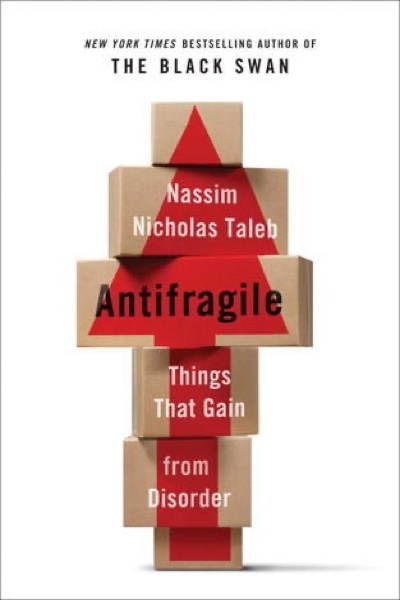
Antifragile is a book by Nassim Nicholas Taleb, a mathematician and derivatives trader. This is the third installment of his Incerto series exploring randomness and uncertainty in life.
Taleb poses a simple question: what is the opposite of fragile? He coined the term antifragile to describe systems that grow when exposed to shocks. Robust systems survive. Antifragile systems thrive after shocks.
This book provides a framework for understanding risk in complex systems: evolution, health, economics, innovation, and ethics. Taleb combines real-world examples, accessible mathematics, and historical narratives.
Taleb reveals patterns of modernity: many consequential decisions made without accountability, numerous interventions that transfer risk to the vulnerable. This book helps you see these patterns and design systems that withstand volatility.
Taleb constructed this book through years of research and hundreds of references, from Greek philosophy to mathematical finance.
Target Readers:
This book is essential for decision-makers operating under uncertainty: entrepreneurs, investors, organizational leaders, regulators, and professionals working with complex systems. The antifragile framework helps you map risks, choose strategies, and manage everyday uncertainty.
Key Insights
-
Antifragile is the opposite of fragile. These systems become stronger after shocks. The immune system strengthens after pathogen exposure, healthy economies emerge from startup failures, evolution advances through natural selection.
-
Modernity creates fragility through stressor deprivation. Eliminating small volatility causes risk to accumulate. Alan Greenspan's efforts to smooth economic cycles led to risk accumulation that triggered the 2007-2008 crisis.
-
Asymmetry determines antifragility. Maximum losses are kept small, potential gains are kept wide. The barbell strategy places 90% in very safe assets and 10% in speculative bets, avoiding the middle-risk zone.
-
Optionality is an antifragile mechanism. Thales of Miletus secured options on olive presses and converted them into massive profits when the harvest was abundant. Nature does something similar through repeated trials, then selects what survives.
-
Nonlinearity creates convexity effects. Losses can accelerate rapidly as variation increases; that's a sign of fragility. When outcomes are convex, variation helps, as explained in Jensen's Inequality.
-
The Lindy Effect reveals robustness. For non-perishable things like ideas and books, longevity signals future longevity. A book that survives 40 years is likely to survive another 40 years.
-
Iatrogenics is the harm from well-intentioned help. Doctors hastened George Washington's death through bloodletting practices. Until the penicillin era, visiting a doctor often increased mortality risk.
-
The principle of skin in the game maintains ethics. People who bear the consequences of decisions are more trustworthy. Hammurabi's Code required builders to live in the buildings they constructed.
The Triad: Fragile - Robust - Antifragile
Taleb divides systems into three categories as the book's backbone.
Fragile: The Sword of Damocles
A sword hangs over your head by a single horsehair. Damage accelerates as shocks increase. One large shock can shatter the system.
Examples of fragile systems: crystal glasses, salaried bank employees vulnerable to layoffs, overly stable financial systems, centralized nation-states, monolithic large projects.
Robust: The Phoenix
The Phoenix returns to its original form after burning. Robust systems withstand shocks and return to their initial state. They don't gain from shocks.
Examples: impact-resistant materials that don't strengthen further, organizations that survive crises, organisms that survive without developing.
Antifragile: The Hydra
The Hydra grows two heads every time one is cut off. Antifragile systems improve after shocks. Each disruption drives improvement.
Examples: immune systems strengthening after pathogen exposure, evolution advancing species, bones densifying after loading, repeated trials yielding innovation.
Asymmetry as the Key
The key to the triad lies in asymmetry. Fragile things lose value faster as variation increases. Antifragile things gain value as variation increases.
Seneca's formula summarizes the principle: antifragility emerges when the potential for large gains exists and losses are limited.
Antifragile Deprivation: The Tragedy of Modernity
Stressors as Information
Complex systems learn from stressors. The body uses hormones and biological signals to adapt. Errors provide crucial information about safe boundaries.
For young children, pain becomes an effective risk management signal. Systems that lose these signals tend toward fragility.
Examples of Deprivation in Health:
The body needs episodic stressors to remain strong. Autopilot makes pilots lose alertness. Excessive antibiotics weaken immune system training. Prescribing Prozac for every mood change eliminates adaptive signals.
Examples of Deprivation in Politics:
Excessive stability accumulates conflict energy. Eliminating the Ba'ath Party in Iraq in 2003 released long-suppressed tensions and triggered massive violence.
Examples of Deprivation in Economics:
Repeated top-down economic interventions make systems fragile. Efforts to smooth boom-bust cycles accumulated risk that exploded in 2007-2008.
Stressor Frequency Matters
Antifragility depends on dose and frequency. Acute stressors with recovery intervals provide benefits. Chronic stressors cause damage.
Good Acute Stressors:
The emotional shock when a snake emerges from your keyboard triggers an adrenaline surge. Adequate recovery intervals, chamomile tea, and baroque music help the body restabilize.
Damaging Chronic Stressors:
Mild pressure from your boss, mortgage worries, tax issues, procrastination guilt, assignments, emails, and daily commutes trap the body. This resembles Chinese water torture that drips continuously on the same spot.
Dose and frequency determine effects. Large but infrequent stressors can strengthen. Small but continuous stressors erode resilience.
Organic vs Mechanical: The Secret of Life
The Fundamental Difference
Living things possess degrees of antifragility. Dead objects lack it and can only be made robust.
Organic/Complex Systems:
Human bodies, economies, cultures, languages, ecosystems, cities. Key characteristics: high interdependence, nonlinear responses, self-repair capabilities.
Mechanical/Simple Systems:
Washing machines, cars, chairs, chess, light switches. Key characteristics: predictable, linear, material fatigue under stress.
Bones densify after periodic loading. Removing certain animals from an ecosystem damages the food chain; predators starve and prey populations explode. Lions exterminated from Mount Lebanon triggered a goat population explosion that eroded tree roots and accelerated deforestation.
Evolution: Layered Antifragility
Antifragility operates through layers and hierarchies. Some units must be fragile for the larger system to remain strong.
Individual restaurants are fragile due to competition. The local restaurant ecosystem benefits from this competition and becomes antifragile. The restaurant industry survives because individual failures occur continuously.
Hormesis vs Evolution
There are two main forms of antifragility.
Hormesis: individual units benefit from small doses of harm. Examples: vaccination, small poison exposure, episodic calorie restriction.
Evolution: individuals are fragile, populations benefit. Natural selection eliminates the weak and passes on strong genes.
Why Organisms Must Die
Immortal organisms would require pre-adaptation for all future random events. Adaptation after events is always slightly late. Generational turnover allows nature to adjust without prediction.
Political Systems and False Stability
Switzerland: A Nation with a Small Central Government
Switzerland remains stable with a small central government. Many citizens don't know their president's name. They know the French or American president.
Switzerland still has governance. The country is managed bottom-up through municipalities and cantons joined in a confederation.
Bottom-Up vs Top-Down Variation:
Local conflicts remain at small levels, like fountain debates or town affairs. Small volatility protects the system from utopian romanticism. Clusters of quarrelsome municipalities produce a stable nation.
"Stalin cannot exist in a municipality."
Employee vs Craftsman: The Illusion of Security
John (Bank Employee):
Worked 25 years in the personnel department of a large bank. Fixed monthly salary: £3,082, benefits, four weeks vacation, gold watch every 25 years. The banking crisis arrived and his job disappeared.
George (Taxi Driver):
Income fluctuates. Annual average equals his brother's. Variability forces adaptation and provides signals about risk.
The great illusion emerges when people view randomness as always harmful, then attempt to eliminate it. This effort often transfers risk into massive explosions.
Income variability forces people to remain adaptive, maintain marketable skills, and avoid false comfort. Each month provides information about what works and what needs fixing. Salaried employees only receive signals when layoffs arrive.
Iatrogenics: The Harm from Well-Intentioned Help
Definition and Manifestations
Iatrogenics is the harm born from healing actions. The term extends to harmful side effects from policymakers and academics.
Classic Example:
In the 1930s, 389 children were presented to doctors in New York City; 174 were recommended for tonsillectomy. Of the remaining 215 children, other doctors suggested surgery for 99 children. Of the remaining 116 children, a third doctor recommended surgery for 52 children.
Unnecessary surgery probabilistically shortens life expectancy.
George Washington:
Washington died in December 1799. His doctors hastened his death through bloodletting of five to nine pounds.
Until the penicillin era, doctor visits often increased mortality risk. Hospitals became sources of deadly "hospital fever."
Ignaz Semmelweis:
Semmelweis observed more women dying during childbirth in hospitals than in streets. He accused established doctors of being dangerous. Many doctors rejected his findings for lack of theory. Semmelweis fell into depression and died in a psychiatric hospital from hospital fever.
Primum Non Nocere: First, Do No Harm
This principle is attributed to Hippocrates: primum non nocere, do no harm. The concept of iatrogenics is rarely discussed outside medicine.
Political and Economic Iatrogenics:
The 2007 crisis stemmed from efforts to smooth economic cycles. Alan Greenspan suppressed short-term volatility and accumulated long-term risk.
Small dangers allowed to emerge often eliminate fragile companies earlier. Economic systems become healthier because small failures happen faster.
Neuroticism from Information Overload
Modernity increases information supply and transforms calm people into anxious ones. Calm people react to real signals. Anxious people react to noise.
Noise is what you should ignore. Signal is what you need to attend to.
Personal physicians can hasten patient deaths. They feel compelled to prove their work, and excessive intervention brings new risks.
Noise-to-Signal Ratio:
The more frequently you view data, the higher the noise proportion. Annual data provides a signal-to-noise ratio of about one-to-one. Daily data transforms it into 95 percent noise and 5 percent signal. Hourly data is almost entirely noise.
Noise dominates. Signal is sparse. That's why news consumers are one step below the deceived.
Fat Tony, Seneca, and Fundamental Asymmetry
Fat Tony: The Sniffer of Fragility
Fat Tony is a street trader from New Jersey. He can smell fragility without complex theories. He sees administrators and bankers easily fooled by their own models.
Kuwait and Oil:
In January 1991, the United States attacked Baghdad. Many analysts predicted oil prices would rise. Fat Tony focused on market behavior and avoided long narratives.
Oil prices actually fell from around $39 per barrel to nearly half. Tony converted $300,000 in capital into $18 million.
"Kuwait and oil are two different things."
Seneca: The Antifragile Stoic
Lucius Annaeus Seneca was a philosopher and the richest man in the Roman Empire. He focused on Stoic practice: managing oneself amid poverty, wealth, and death.
Asymmetry Between Good and Bad:
Livy wrote half a generation before Seneca: "People feel the good less intensely than the bad."
Success adds a portion that can be lost. The pain of losing money surges when holdings increase. Ownership makes humans more sensitive to loss.
Seneca's Practical Method:
Seneca trained himself to imagine losing wealth before the loss occurred. This exercise resembles buying insurance against loss.
He began journeys with simple equipment, as if shipwreck had already happened. This pattern reduced fear of loss.
Fundamental Asymmetry
Fragile: losses increase as variation increases.
Antifragile: gains increase as variation increases.
A system is in an antifragile condition when the potential for large gains exists and losses are limited.
The Barbell Strategy
The barbell is a two-extremes strategy. A large portion is placed in very safe assets. A small portion is placed in high-risk assets.
The first step toward antifragility is limiting losses. After that, let gain opportunities work.
Financial Version:
Keep 90 percent of funds in safe instruments. Place 10 percent in speculative assets. Large losses are limited, upside potential remains open.
Life Version:
Careers can combine stable work and speculative projects. Physical training can combine brief intense sessions and rest days. Reading can prioritize classics and reduce half-baked materials.
Yiddish Proverb: "Prepare for the worst; the best will take care of itself."
Optionality and the Green Lumber Fallacy
Thales and the Power of Options
Thales of Miletus was a poor philosopher. He grew tired of mockery that philosophers couldn't make money.
Thales paid a deposit to use olive presses in Miletus and Chios at low rental prices. The harvest was abundant, demand rose, and he rented the presses back on his own terms. He made massive profits, then returned to philosophy.
Aristotle thought Thales succeeded due to astronomical knowledge. Taleb judges the main factor was the option position giving the right to exploit conditions. Option contracts give buyers rights. Buyers are free to choose whether to exercise those rights. The other party has obligations.
Options are agents of antifragility.
Formula: Options = Asymmetry + Rationality
Rationality emerges from keeping the good and discarding the bad. Nature has filters to maintain the healthy.
Fragile systems lose options. Antifragile systems build many options and choose the most valuable.
Nature and Bricolage:
Francois Jacob introduced the concept of options in natural systems through repeated trials, or bricolage. In the womb, nature selects embryos. About half of embryos undergo spontaneous abortion. This selection is cheaper. Perfect design demands high cost.
Nature understands optionality exceptionally well. Humans often lag behind. Optionality often substitutes for formal intelligence.
The Green Lumber Fallacy
In the book What I Learned Losing a Million Dollars, the protagonist discovers Joe Siegel, the most successful trader in green lumber commodities. He thought green lumber was wood painted green. He still made massive profits.
The green lumber fallacy emerges when people mistake the source of necessary knowledge. Neat narratives often obscure key variables.
Evolution doesn't rely on narratives. Evolution proceeds through trials, sifted by survival itself.
Teaching Birds to Fly
Imagine the story of wheeled luggage. It took thousands of years from the invention of the wheel to attaching small wheels to suitcases. This invention emerged long after humans landed on the moon.
Linear Baconian Model (Incorrect):
Academia → applied science and technology → practice
Actual Process:
Random experimentation → heuristics → practice and apprenticeship → random experimentation
Evidence from Option Formulas:
Taleb and Espen Haug discovered that traders possessed techniques far more sophisticated than formulas. Their practices emerged before academic theory developed.
Traders transact → traders discover techniques → academics formulate theories → new traders believe theory → failures emerge from theory fragility
Practitioners don't write. They do. Birds flew long before lectures on flight aerodynamics existed.
Evidence from Cathedrals:
Master builders relied on heuristics, empirical methods, and tools. Many of them didn't use formal mathematics. Medieval science historian Guy Beaujouan noted that before the 13th century, only a few people in Europe mastered division.
Buildings stood because of material intuition and field testing, accumulated across generations of practice.
Nonlinearity, Convexity, and Fragility Detection
Kerviel and the Fragility of Size
On January 21, 2008, Societe Generale sold approximately $70 billion worth of stocks in the market. Prices fell about 10 percent, company losses around $6 billion.
Point About the Squeeze:
The forced sale of $70 billion caused $6 billion in losses. Selling one-tenth of that, $7 billion, would have resulted in virtually no loss because the market absorbs that quantity.
Small scale provides breathing room. Ten small banks with rogue traders operating separately carry more distributed risk.
Why Planes Don't Arrive Early
Taleb frequently flew London-New York. He recalls a few flights arriving early by about 20 minutes. He also recalls many flights delayed two to three hours.
Travel time cannot be negative. Uncertainty almost always adds duration. This principle applies to projects: costs and time tend to balloon.
How to Lose Grandmother
Don't cross a river if it's four feet deep on average.
The average temperature for the next two hours is 70 degrees Fahrenheit. The first hour is 0 degrees. The second hour is 140 degrees. Grandmother doesn't survive.
Averages lose meaning when systems are fragile to variation.
Jensen's Inequality
Take a standard die and set the outcome equal to the number that appears. The square of the expected value is (1+2+3+4+5+6)/6 = 3.5. Squared, that's 12.25.
The average of the square function is (1²+2²+3²+4²+5²+6²)/6 = 15.17.
The square function is convex. The average of squared outcomes is higher. The square of the average is below it. The difference between 15.17 and 12.25 shows the hidden benefit of antifragility.
Systems with linear outcomes need accuracy rates above 50 percent. Systems with convex outcomes need less. People can be frequently wrong and still obtain good results.
The Lindy Effect, Time, and Neomania
The Lindy Effect: Reverse Aging
Separate perishable from non-perishable things. Humans and singular objects are perishable. Ideas, technologies, and books are non-perishable.
For perishable things, each additional day decreases remaining life. For non-perishable things, each additional day signals longer life.
Example:
A book printed 40 years ago signals 40 more years of life. Time acts as a powerful filter.
Tonight at the Restaurant
Imagine meeting a friend at a restaurant tonight. The taverna has existed for over 25 centuries. The leather shoes you wear are not far from shoes found on humans in glaciers thousands of years ago.
At the table, you use cutlery inherited from Mesopotamia. You drink wine humans have enjoyed for thousands of years. You eat cheese whose process has barely changed.
Technologies that last long often don't feel modern. They blend into daily life.
Technology at Its Best
The best technology works without drawing attention. It replaces what damages the body or social relationships.
The shoe industry once chased super-technological designs. Now many brands are selling shoes that mimic barefoot walking. The goal is simple: protect feet without interfering with natural movement.
Neomania: The Contemporary Disease
Neomania is excessive love for the new. You're driving and passed by the latest model that looks slightly different. Taillights wider, bumpers slightly larger. You feel the need to replace your car.
That's the treadmill effect. We see minor differences and immediately feel left behind.
Ethics, Skin in the Game, and the Alan Blinder Problem
Skin in the Game as an Ethical Principle
Only people who bear the consequences of decisions deserve trust. Hammurabi's Code required builders to live in the buildings they constructed. Ship captains must sink with their ships.
Regulators shouldn't profit from insider knowledge gained from their positions. Doctors should bear risks from medical decisions.
The Alan Blinder Problem: Structural Conflict of Interest
Alan Blinder, former vice chairman of the Federal Reserve, sold investment products that circumvented deposit insurance limits. The super-wealthy obtained unlimited government guarantees.
When asked about ethics, his answer referenced legality and networks of former regulators.
Implications:
Legal doesn't equal ethical. Former regulators have information advantages. Complex regulations create profit opportunities from that knowledge.
Analogy:
In some African countries, officials accept bribes openly. In the United States, many officials are promised high-paying bank jobs if they maintain good relationships.
Collective Tyranny in Academia
Collective error becomes a feature of organized knowledge. The reason "everyone does it" is often used.
A doctoral student says he believes in a certain idea, then adds that the idea doesn't help his academic career. He still follows the current to preserve job prospects.
Ethical Dilemma:
A professor's duty can shift from serving the public to protecting students' careers. This tension forms a closed culture.
Science Crisis:
Science rejects consensus-based arguments. Empirical evidence and logic stand alone, regardless of supporter numbers.
Via Negativa in Ethics
Practical ethics emerges when we eliminate harmful incentives. Reducing options that transfer risk is the first step. The rest will follow.
Practical Implications: How to Live Antifragile
Health and Body
Principles:
The body needs episodic stressors, recovery intervals, and variation.
Applications:
Intermittent fasting for 16-18 hours triggers autophagy. Brief intense training drives hormesis. Moderate cold and heat exposure builds tolerance. Long walks provide natural movement variation. Via negativa eating eliminates processed foods and excessive sugar.
Career and Work
Principles:
Variability and optionality increase career resilience.
Applications:
Barbell career strategy combines stable work and speculative projects. Craftsmen close to the market have greater optionality. Cross-industry skills provide bargaining power. Multiple income sources reduce single-point risk. Skin in the game encourages ownership beyond salary alone.
Investment and Finance
Principles:
Limit losses, leave gain opportunities open.
Applications:
Barbell portfolio: 85-90 percent in conservative assets, 10-15 percent in speculative assets. Medium risk is often most fragile. Debt amplifies fragility in concave outcome positions. Many small bets are safer. One large bet concentrates risk. Time in the market usually beats timing the market.
Learning and Knowledge
Principles:
Negative knowledge is often more robust. Positive knowledge is more fragile.
Applications:
Lindy reading pattern: 80 percent books older than 10 years. Set aside trendy materials that age poorly. Via negativa in learning focuses on real errors. Direct practice and trials yield more durable results. Long-proven heuristics deserve respect. The anti-library maintains awareness of ignorance.
Systems and Organizations
Principles:
Decentralization and small units provide resilience.
Applications:
Decisions reside close to information. Small autonomous units reduce systemic risk. Redundancy provides breathing room during crises. Fast small failures prevent large collapses. Skin in the game governance aligns incentives and consequences.
Core Summary
Essential Insights to Remember:
-
Antifragile differs from robust. Robust survives. Antifragile thrives after shocks.
-
Stressor deprivation accumulates risk. False stability triggers future massive explosions.
-
Barbell strategy focuses on extremes. The middle-risk zone is often most fragile.
-
The principle of skin in the game maintains ethics. Decisions without consequences add system fragility.
-
Optionality drives antifragility. Many small trials open large opportunities.
-
The Lindy Effect tests robustness. Things that last long tend to last longer.
-
Iatrogenics turns good intentions into harm. Excessive intervention often worsens situations.
-
Small scale protects systems. Small failures prevent large collapses.
Q&A
Q: What's the difference between antifragile and robust?
A: Robust survives and returns to original form. Antifragile becomes better after shocks. The Hydra grows two heads when one is cut. The Phoenix returns to original form after burning. Asymmetry appears in the rate of losses and gains.
Q: How do you detect fragile or antifragile systems?
A: Observe responses to variation. Rapidly increasing losses signal fragility. Rapidly increasing gains signal antifragility. Simple example: a river averaging four feet deep remains dangerous because the deepest parts can drown.
Q: What is the barbell strategy and why is it effective?
A: The barbell places a large portion in safe assets and a small portion in high-risk assets. Large losses are limited, upside potential remains open. The middle-risk zone often deceives because it appears safe.
Q: Why can fixed salaries be fragile?
A: Fixed salaries provide false security. John felt secure with £3,082 per month for decades. The crisis eliminated his job. George accepts income variability and continuously adapts.
Q: What is iatrogenics and why is it important?
A: Iatrogenics is harm from actions intended to help. George Washington died sooner due to bloodletting. Until the penicillin era, doctor visits often increased mortality risk. The basic medical principle emphasizes "do no harm."
Q: What is the Lindy Effect and how do you use it?
A: For non-perishable ideas and technologies, longevity signals future longevity. A book that survives 40 years is likely to survive another 40 years. Practical rule: 80 percent of reading older than 10 years, 15 percent older than 50 years, 5 percent new.
Q: Why is small scale safer?
A: The forced sale of $70 billion in stocks caused massive losses. Selling $7 billion would have barely impacted. Ten small units fail separately without toppling the system.
Q: What is skin in the game and why is it important?
A: Decisions deserve trust when their makers bear consequences. Hammurabi's Code forced builders to live in buildings they constructed. Risk transfer from the powerful to the vulnerable damages public ethics.
Q: How do you apply antifragility in daily life?
A: The body benefits from episodic stressors, fasting, and brief intense training. Careers develop through combinations of stable work and speculative projects. Investing can use barbell portfolios. Organizations are more resilient if decentralized with small autonomous units.
Q: What is the green lumber fallacy?
A: Joe Siegel made massive profits in green lumber commodities despite misunderstanding the term. He thought the wood was painted green, when in fact "green" referred to freshly cut timber. This misunderstanding didn't prevent profits. The green lumber fallacy reminds us that clever-seeming knowledge is often irrelevant to outcomes.
Critical Assessment
Strengths
1. Fundamental Concept That Transforms Perspective
Antifragile fills a conceptual gap that long remained empty. We're accustomed to the fragile-robust dichotomy. Taleb adds a category explaining many real phenomena. The fragile-robust-antifragile triad provides a new lens for evaluating systems.
2. Strong Concrete Examples
Taleb provides specific examples: Societe Generale's forced sale, Swiss governance, Fat Tony's stories, the green lumber case. Each abstract concept is supported by memorable real illustrations.
3. Integration of Mathematics and Philosophy
Taleb connects concepts like Jensen's Inequality with Stoic thinking. He unites mathematical finance and classical wisdom. This combination makes arguments feel robust.
4. Structural Critique of Modernity
Taleb dissects stressor deprivation, iatrogenics, and the absence of skin in the game. He provides diagnostic tools for understanding modern system fragility.
Limitations
1. Dense and Meandering Prose
Taleb's writing style is filled with digressions and long notes. This 544-page book could be more concise without losing core content.
2. Aggressive Tone
Taleb often ridicules academics, economists, and public figures. His critiques are sharp, but the aggressive style can distract from core arguments.
3. Generalization from Finance to Other Domains
Many insights originate from derivatives trading. Applications to health, politics, and education can be too direct and lack nuance.
4. Limited Implementation Details
The book is strong in diagnosis. It's weaker on detailed guidance for building antifragile organizations.
Conclusion
Antifragile transforms how we understand complex systems, risk, and uncertainty. The fragile-robust-antifragile triad, stressor deprivation, barbell strategy, and skin in the game represent major contributions. Rating 5/5 because its impact on readers' thinking is tangible.
Recommendation:
This book is essential for entrepreneurs, investors, organizational leaders, regulators, and anyone living under uncertainty. Read with focus on core principles, then apply selectively according to context. Combine with The Black Swan and Skin in the Game to understand the Incerto series completely.
Who Should Skip:
Readers seeking step-by-step guides may feel unsatisfied. Readers avoiding mathematics will find some sections challenging. Readers sensitive to aggressive style may feel exhausted. Starting with the more concise Skin in the Game could be an option.