Why Read This
Eleven speeches by Charlie Munger, Warren Buffett's partner at Berkshire Hathaway, on the latticework of mental models, the psychology of misjudgment, and how to build a mind that resists deceiving itself.
Munger offers no investment formula. What he built over six decades is a thinking system that unifies psychology, mathematics, biology, economics, and history into a single operational framework. The results are visible on Berkshire Hathaway's balance sheet, from ten million dollars at the start to approaching one hundred billion, achieved while consistently ignoring hard-form efficient market theory.
This book rewards readers who already consider themselves sharp and productive, yet keep wondering why their decisions still disappoint. Munger answers in a way that stings: the deepest damage comes from traps hidden inside the mind itself, traps that were already there long before any additional information could have helped.
For anyone managing multiple businesses or navigating decisions across several domains at once, Munger's central lesson reaches well beyond investing. It concerns how minds malfunction systematically, how incentives quietly turn decent people into harmful actors, and how to build a thinking framework sturdy enough to keep working under pressure.
Latticework of Mental Models: How to Read the World
Munger's starting point never changes: most apparently intelligent people carry only one or two analytical models in their heads. To someone who only has a hammer, every problem looks like a nail. The damage this narrow thinking produces, across business, academia, the professions, and daily life, is the theme Munger returns to from speech to speech.
"What is elementary, worldly wisdom? Well, the first rule is that you can't really know anything if you just remember isolated facts and try and bang 'em back. If the facts don't hang together on a latticework of theory, you don't have them in a usable form. You've got to have models in your head. And you've got to array your experience —both vicarious and direct —on this latticework of models."
Useful knowledge rests on a framework of theory. Facts that stand alone, without theory to bind them, cannot be summoned when needed and cannot transfer to new situations.
Munger estimates he carries roughly 100 models, drawn from across the disciplines: psychology, mathematics, physics, biology, chemistry, microeconomics, history, and engineering. Of the hundreds of models one might learn, about 80 to 90 strong ones carry 90 percent of real decision-making weight. And from those, only a handful do the heaviest work.
How It Works
These models function like an organized filing system. When a new fact arrives, the mind knows exactly where to hang it: on which principle it rests, with which concept it connects. Lessons from one situation transfer to another that looks different on the surface but shares the same underlying structure.
What distinguishes the latticework from a mental encyclopedia is that the models interact. A model from biology can illuminate business dynamics. A principle from chemistry can describe how a policy produces layered effects. The compound interest formula from mathematics explains why sitting still in a good investment beats constant activity that merely feels productive.
Munger never took a single course in chemistry, economics, psychology, or business. What he did was absorb the organizing ethos of hard science from basic physics and mathematics, then push it into softer disciplines one by one.
"It's kind of fun to sit there and outthink people who are way smarter than you are because you've trained yourself to be more objective and more multidisciplinary. Furthermore, there is a lot of money in it, as I can testify from my own personal experience."
From the perspective of a business operator running multiple lines simultaneously, the latticework is the difference between a manager who can only function inside one industry and a leader who reads patterns across contexts. Warning signals in an education business often share the same structure as warning signals in a logistics business: misaligned incentives, costs buried beneath reports that look healthy, and people inside the system who stopped bringing bad news long ago.
At amhar.ma, the mental models section organizes a portion of the tools Munger describes, including second-order thinking and inversion, as references available for direct use.
Man-with-a-Hammer and Physics Envy
Two forms of intellectual damage rank highest in Munger's account of professional life. Man-with-a-hammer syndrome is the first: to someone who only has a hammer, every problem looks like a nail. Physics envy is the second: the desire to impose physics-grade precision onto systems far too complex to support it.
"The nature of this failure is that it creates what I always call man-with-a-hammer syndrome. That's taken from the folk saying 'To the man with only a hammer, every problem looks pretty much like a nail.' That works marvelously to gum up all professions and all departments of academia and, indeed, most practical life."
Two Directions of Damage
Man-with-a-hammer operates from both sides. A specialist who knows only one discipline will force every problem into that framework, producing systematically wrong recommendations. There is also a tendency to over-weight whatever can be quantified, because numbers can be processed with statistical techniques taught in school, while factors that resist quantification, often the most decisive ones, get ignored entirely.
Physics envy produces conclusions that appear mathematically precise while being fundamentally wrong. Munger's sharpest example: a consultant who advised the Washington Post against buying back its own shares, citing efficient market theory, when the stock was trading at one-fifth of what, in Munger's words, an orangutan could figure was the plain value per share by just counting up the values and dividing.
"One of the worst examples of what physics envy did to economics was cause adoption of hard-form efficient-market theory... And Washington Post stock was selling at a fifth of what an orangutan could figure was the plain value per share by just counting up the values and dividing. But he so believed what he'd been taught in graduate school that he told The Washington Post it shouldn't buy its own stock."
Warren Buffett then joined the board and persuaded the Washington Post to repurchase more than half its outstanding shares. The remaining shareholders gained over one billion dollars.
The antidote to both syndromes is one: a full kit of tools, used checklist-style.
"The only antidote for being an absolute klutz due to the presence of a man-with-a-hammer syndrome is to have a full kit of tools. You don't have just a hammer, you've got all the tools. And you've got to have one more trick: You've got to use those tools checklist-style, because you'll miss a lot if you just hope that the right tool is going to pop up unaided whenever you need it."
Inversion: Turn the Problem Around
Munger borrowed this principle from the great algebraist Jacobi: "Invert, always invert." Many problems that look difficult from the front open wide when attacked from the opposite direction.
"All I want to know is where I'm going to die, so I'll never go there."
Inversion works at several layers. In life, instead of asking "how do I succeed?" the question becomes "what reliably causes failure, and how do I avoid it?" In investing, instead of asking "what's appealing about this opportunity?" the question becomes "what could make this a disaster?"
Munger's most celebrated speech, at Harvard in 1986, taught nothing about how to be happy. It laid out seven sure-fire prescriptions for becoming miserable, and let the audience read his life wisdom from that inverted mirror. The seven: destroy yourself with chemical substances, let envy fester, nurse resentments, become unreliable, learn only from your own direct experience, give up at the first setback, and ignore inversion itself.
Of all seven, the one delivered most sharply:
"First, be unreliable. Do not faithfully do what you have engaged to do. If you will only master this one habit, you will more than counterbalance the combined effect of all your virtues, howsoever great. If you like being distrusted and excluded from the best human contribution and company, this prescription is for you."
Darwin practiced inversion in scientific research: he spent twenty years actively seeking evidence that would demolish his own theory before publishing it. When the theory of evolution finally appeared, it had already been tested against nearly every objection that could come.
In everyday business practice, inversion shifts the question from "how do we grow?" to "what destroys a business like this?" The answer to the second question, executed with discipline, tends to protect growth better than any expansion plan.
Circle of Competence
Everyone has a circle of competence, the area where their experience and knowledge are genuinely solid. Expanding that circle is very hard. Maintaining the illusion that it is larger than it actually is carries serious consequences.
"Every person is going to have a circle of competence. And it's going to be very hard to enlarge that circle... You have to figure out where you've got an edge. And you've got to play within your own circle of competence."
Circle of competence comes down to one ability: identifying with accuracy the boundary between what you truly master and what merely appears mastered from the surface. Munger acknowledges that if civilization were measured by music, he cannot imagine how low his position would be. That acknowledgment operates as a concrete constraint in every investment decision.
Berkshire Hathaway has consistently avoided high-technology companies because Munger and Buffett hold no edge in understanding there. Competing in arenas where others have the competence advantage is the surest path to systematic loss.
Munger's three-basket system is the operational form of circle of competence: yes, no, and too hard to understand. The first question he asks when he sees an opportunity is whether it belongs in the third basket, asked before any other question.
Munger links circle of competence to the danger of chauffeur knowledge: the ability to mimic the surface patterns of speech without grasping the substance underneath. In the apocryphal story about Max Planck, his driver had memorized the quantum mechanics lecture and delivered it successfully before an audience. When a physics professor asked a hard question, the driver replied: "I'm surprised that in an advanced city like Munich, the question is so elementary. I shall ask my chauffeur to answer it." Knowing the difference between Planck knowledge and chauffeur knowledge within oneself is the heart of circle of competence.
Two-Track Analysis
When facing any decision, Munger runs two tracks of analysis simultaneously. The first track is rationality. The second is the unconscious psychology operating beneath it.
"Personally, I've gotten so that I now use a kind of two-track analysis. First, what are the factors that really govern the interests involved, rationally considered? And second, what are the subconscious influences where the brain, at a subconscious level, is automatically doing these things —which, by and large, are useful but which often misfunction? One approach is rationality, the way you'd work out a bridge problem: by evaluating the real interests, the real probabilities, and so forth. And the other is to evaluate the psychological factors that cause subconscious conclusions, many of which are wrong."
The first track works like a skilled bridge player: evaluate available cards, real probabilities, genuine interests. Business schools and law schools teach this.
The second track is taught almost nowhere. The human brain, beneath the surface of consciousness, runs automatic programs that serve everyday life well. Those same programs often malfunction when a situation calls for cold judgment. Social pressure, fear of missing out, vanity, the tendency to follow crowds, all of these operate quietly.
A person running only the first track walks with one eye closed. They analyze the facts correctly, then skip the question that often matters most: where is unconscious bias working on me right now, or on the person I am evaluating?
Investment Philosophy: Quality Businesses, Large Bets, Sitting Still
Munger and Buffett built Berkshire on three principles that run almost against the grain of the investment management industry: focus on high-quality businesses with deep competitive moats, load up when the odds are genuinely in your favor, then sit still.
"It's not given to human beings to have such talent that they can just know everything about everything all the time. But it is given to human beings who work hard at it —who look and sift the world for a mispriced bet —that they can occasionally find one. And the wise ones bet heavily when the world offers them that opportunity. They bet big when they have the odds. And the rest of the time, they don't. It's just that simple."
The stock market works like a pari-mutuel at a horse track: odds shift with the bets placed. A fine horse with a brilliant record already has its probability priced in. What pays is finding the mispriced bet, where the actual probability is far better than the market believes.
Berkshire does not chase opportunity everywhere. They look for one-foot fences with large rewards on the other side, and wait for those conditions to appear.
"We just look for no-brainer decisions. As Buffett and I say over and over again, we don't leap 7-foot fences. Instead, we look for 1-foot fences with big rewards on the other side."
On when to sell, Munger's answer is almost never, if the business purchased is genuinely great. Behind that answer lies tax mathematics that rarely gets discussed:
"There are huge advantages for an individual to get into a position where you make a few great investments and just sit on your ass: You're paying less to brokers. You're listening to less nonsense. And if it works, the governmental tax system gives you an extra 1, 2, or 3 percentage points per annum compounded."
A business that earns 6 percent on capital over 40 years will deliver roughly 6 percent per year to the investor, regardless of the discount paid at the start. A business that earns 18 percent on capital over twenty to thirty years will deliver extraordinary results even at a price that looks expensive when purchased.
The investment management industry cannot adopt this approach because its incentives point the other way. A manager holding a block of Walmart, Coca-Cola, and one or two other positions, then sitting still, will quickly be questioned by clients: why am I paying fees to someone who does nothing? Activity is how managers demonstrate value to the people paying them. That activity drains fees, cuts into taxes, and degrades long-term performance. Manager incentives and investor incentives are not aligned.
Psychology of Human Misjudgment: Twenty-Five Tendencies
Munger's magnum opus is a catalog of 25 psychological tendencies he assembled himself from decades of observing how minds fail in the real world. He built the system from actual instances of error in business, law, science, and everyday life.
"I sought good judgment mostly by collecting instances of bad judgment, then pondering ways to avoid such outcomes."
Reward-and-Punishment Superresponse
The first tendency Munger places, and the one he believes is most consistently underestimated, even by those who think they already understand it.
"I place this tendency first in my discussion because almost everyone thinks he fully recognizes how important incentives and disincentives are in changing cognition and behavior. But this is not often so. For instance, I think I've been in the top 5 percent of my age cohort almost all my adult life in understanding the power of incentives, yet I've always underestimated that power. Never a year passes but I get some surprise that pushes a little further my appreciation of incentive superpower."
Federal Express could not fix its night shift for years despite sustained moral persuasion and tight supervision. One change in how workers were paid, from hourly to per-shift, solved the problem overnight. Employees who had moved slowly suddenly moved fast, because the only way to leave early was to finish the work faster.
Incentive-caused bias is the more dangerous consequence: people who are fundamentally decent slowly drift toward harmful behavior because the incentives point there, and they rationalize each step. A surgeon in Nebraska removed healthy gallbladders from patients who did not need the surgery for years, genuinely believing he was acting out of compassion. Management consultants who always recommend more consulting. Accountants who permit questionable bookkeeping because they are paid by the party being audited. These are all variations of the same drift.
"Perhaps the most important rule in management is 'Get the incentives right.'"
Inconsistency-Avoidance and First-Conclusion Bias
The brain conserves programming space by resisting change. First conclusions act like fertilized eggs: once one conclusion is accepted, the brain erects barriers against all contradicting evidence.
Darwin is the antidote. He trained himself to actively seek evidence that would demolish his own hypotheses, especially the ones he liked best.
"One of the most successful users of an antidote to first-conclusion bias was Charles Darwin. He trained himself, early, to intensively consider any evidence tending to disconfirm any hypothesis of his, more so if he thought his hypothesis was a particularly good one. The opposite of what Darwin did is now called confirmation bias, a term of opprobrium."
Deprival-Superreaction
Losing ten dollars hurts far more than gaining ten dollars feels good. And "almost getting" something registers much like "truly losing" it.
"The quantity of man's pleasure from a $10 gain does not exactly match the quantity of his displeasure from a $10 loss. That is, the loss seems to hurt much more than the gain seems to help. Moreover, if a man almost gets something he greatly wants and has it jerked away from him at the last moment, he will react much as if he had long owned the reward and had it jerked away."
Munger acknowledges that he once declined 1,500 shares of Belridge Oil at $115, when two years later the stock was acquired by Shell at approximately $3,700 per share. The opportunity cost: roughly $5.4 million. He calls it a demonstration of how expensive psychological stupidity can be.
Social-Proof Tendency and Influence-from-Mere-Association
The human brain evolved to take shortcuts: observe what others are doing, then follow. That tendency works well when finding directions to a stadium in an unfamiliar city. In situations requiring independent judgment, especially when everyone around you is doing something wrong, the same tendency becomes a source of destruction.
"If only one lesson is to be chosen from a package of lessons involving social-proof tendency and used in self-improvement, my favorite would be: Learn how to ignore the examples from others when they are wrong, because few skills are more worth having."
Coca-Cola advertisements never run alongside bad news because the feeling in an image transfers as association into the product. Leaders who refuse to hear bad news, like CBS chairman William Paley, eventually inhabit a bubble of unreality and make one poor decision after another.
"At Berkshire, there is a common injunction: 'Always tell us the bad news promptly. It is only the good news that can wait.'"
Lollapalooza: The Confluence Effect
The twenty-fifth tendency is the one most ignored by psychology textbooks and most dominant in real life.
"25. Lollapalooza tendency —the tendency to get extreme consequences from confluences of psychological tendencies acting in favor of a particular outcome"
When several psychological tendencies combine and all push in the same direction, the result becomes extreme, far beyond the simple sum of each one. The Milgram experiment, in which ordinary people agreed to press "electric shock" buttons on strangers, can be explained by at least six tendencies working simultaneously: authority-misinfluence, social-proof, doubt-avoidance, inconsistency-avoidance, and two others.
The McDonnell Douglas case is a lollapalooza in the business world: the company repeated an aircraft evacuation test that had produced twenty serious injuries that morning, and generated twenty more injuries that afternoon, including one permanent paralysis. Reward-superresponse, authority-misinfluence, inconsistency-avoidance, social-proof, doubt-avoidance, and deprival-superreaction all pushed in the same direction. The disaster was a systemic product born from accumulated psychological pressure, with every individual inside it acting according to their normal impulses.
"Tendency is not always destiny, and knowing the tendencies and their antidotes can often help prevent trouble that would otherwise occur."
Lifelong Learning and the Ethics of Wisdom
Munger describes the acquisition of wisdom as a moral duty, something that reaches far beyond a career advancement strategy.
"The acquisition of wisdom is a moral duty. It's not something you do just to advance in life. And there's a corollary to that idea that is very important. It requires that you're hooked on lifetime learning. Without lifetime learning, you people are not going to do very well. You are not going to get very far in life based on what you already know. You're going to advance in life by what you learn after you leave here."
Munger observed one consistent pattern throughout his life: the people who rise are learning machines. They go to bed every night a little wiser than they were that morning, regardless of how intelligent or industrious they were to begin with.
"I constantly see people rise in life who are not the smartest, sometimes not even the most diligent. But they are learning machines. They go to bed every night a little wiser than they were that morning. And boy, does that habit help, particularly when you have a long run ahead of you."
The Danger of Ideology and Munger's Iron Prescription
"Another thing to avoid is extremely intense ideology, because it cabbages up one's mind... And if you're young, it's particularly easy to drift into intense and foolish political ideology and never get out."
Munger's iron prescription for maintaining his own sanity: he holds no entitlement to an opinion unless he can state the arguments against his position better than the people who oppose him.
"I have what I call an iron prescription that helps me keep sane when I drift toward preferring one intense ideology over another. I feel that I'm not entitled to have an opinion unless I can state the arguments against my position better than the people who are in opposition."
The Seamless Web of Deserved Trust
Munger closed his 2007 USC Law School speech with an idea he called the highest form civilization can reach: a seamless, non-bureaucratic web of deserved trust.
"Complex bureaucratic procedure does not represent the highest form civilization can reach. One higher form is a seamless, non-bureaucratic web of deserved trust. Not much fancy procedure, just totally reliable people correctly trusting one another. That's the way an operating room works at the Mayo Clinic."
The Mayo Clinic operating room runs without elaborate legal procedure because it is staffed by people who are genuinely trustworthy and who trust one another in turn. Bring in lawyers and impose litigation-style procedure, and more patients would die. The seamless web of deserved trust is the most efficient and most admirable form of human operation.
There is only one path to it: being worthy of that trust.
"Luckily I had the idea at a very early age that the safest way to try to get what you want is to try to deserve what you want. It's such a simple idea. It's the golden rule. You want to deliver to the world what you would buy if you were on the other end."
Connection with Naval Ravikant
Readers already familiar with The Almanack of Naval Ravikant will find two thinking systems that depart from the same starting point, each emphasizing a different axis.
Naval places leverage and the compounding of knowledge at the center of his argument, with strong emphasis on the domains of technology and capital. Munger places the recognition of cognitive traps as his primary weapon, with the conviction that most damage in decision-making traces back to systematic errors of the mind.
Both agree on one thing: a continuously updated thinking framework is the most productive asset anyone can build, and most of your competitors are not building one seriously.
Key Takeaways
-
The latticework of mental models is how Munger built an analytical edge that held for six decades. He absorbed the organizing ethos of hard science from physics and mathematics, then pushed it into psychology, biology, economics, and history one discipline at a time. Of roughly 80-90 strong models, only a handful do the heaviest work. The system functions because the models interact: a principle from chemistry describes the layered effects of a policy, a compound interest formula from mathematics explains why sitting still in a good investment beats constant activity. Without a coherent framework to hang facts on, learning across disciplines produces only a pile of isolated knowledge that cannot be called on when needed.
-
The power of incentives is always underestimated, even by people who believe they already understand it. Federal Express solved a night-shift problem that years of persuasion and supervision had failed to fix with a single change: replacing hourly pay with per-shift pay. No motivation campaigns, no oversight, no speeches. Munger places reward-and-punishment superresponse first in his catalog of 25 tendencies because it is the root of nearly all moral drift in organizations. The surgeon who removed healthy organs and genuinely believed he was being compassionate illustrates how silently this bias operates.
-
Inversion is the method of attacking problems from the unguarded side. Jacobi formulated the principle and Darwin practiced it for two decades before Munger made it a daily habit: ask what will reliably cause failure, then avoid it with discipline. Darwin spent twenty years seeking evidence that would demolish his own theory of evolution before publishing. The result was a theory armored against nearly every objection that came.
-
The lollapalooza effect explains why large disasters always feel surprising when they were predictable all along. When six or seven psychological tendencies push in the same direction at once, the outcome is extreme and compounding, far beyond simple addition. McDonnell Douglas repeated an evacuation test that had already injured twenty people that morning and produced twenty more injuries that afternoon, including one permanent paralysis, because reward-superresponse, authority-misinfluence, inconsistency-avoidance, social-proof, and doubt-avoidance were all working together. No individual intended harm. Every person acted according to their normal impulses.
-
Circle of competence is an exercise in honesty about one's own limits. Berkshire has consistently avoided high-technology companies because Munger and Buffett acknowledge they hold no advantage there. Munger's three-basket operational system, yes, no, and too hard to understand, begins with the third-basket question. Most people skip it because they move to analysis too quickly.
-
The people who rise in life are learning machines. They go to bed every night a little wiser than they were that morning. Munger describes the acquisition of wisdom as a moral duty, something operating at a level deeper than career strategy.
-
The seamless web of deserved trust is the highest form of organizational efficiency. The Mayo Clinic operating room runs without elaborate bureaucratic procedure because everyone in it is genuinely trustworthy. The only path there is being worthy of that trust, one fulfilled commitment at a time.
Critical Assessment
Strengths
Rare empirical depth. Munger builds his arguments from real cases, Federal Express, the Washington Post, McDonnell Douglas, Berkshire Hathaway, then organizes them into broader principles. Abstraction must pass the concrete test first. This produces a book that feels sharply different from mental models books that collect concepts without operational evidence.
The catalog of 25 psychological tendencies is an original contribution. Munger assembled it himself from decades of field observation. Standard psychology textbooks were never his source. Many items, lollapalooza effect above all, had no counterpart in mainstream psychology literature when these speeches were first delivered. This is psychology as applied science, cut to the requirements of real decision-making.
The speech compilation preserves the authentic voice. The speech format lets Munger speak with directness, full of apocryphal stories and dry wit that takes obvious sides. A version "edited into a textbook" would lose all of that.
Limitations
A curriculum that never arrives. The latticework sounds compelling. In the hands of an ordinary reader, it is difficult to operate consistently. Munger never provides an explicit curriculum: where to begin, how long to spend per discipline, how to test whether a model is truly integrated. Most readers will close the book with a good understanding of why this system matters, then face a near-total absence of guidance on how to build it.
Substantial repetition across speeches. Eleven speeches delivered over two decades means Munger returns to the same themes repeatedly. For readers who want efficiency, the repetition can feel exhausting by the fourth or fifth speech.
Survivorship bias, unacknowledged. Munger is an extraordinary investor who validated his thinking system with measurable results. The book does not address how many people with similar thinking systems achieved ordinary results, or which specific market conditions favored Berkshire's investment style. The absence of that discussion makes the universality claims slightly overconfident, even as the system itself remains solid.
Conclusion
Poor Charlie's Almanack rewards readers who are already operating at a senior level in their career or business and have begun asking why decisions that seemed rational keep producing disappointing results. The book delivers no daily tactics. What it delivers is a different set of questions.
Rating 5/5 for depth and originality. Readers expecting a systematic manual should adjust their expectations: this is compiled oral tradition, and its strength lies precisely there.
Related Reading
- The Almanack of Naval Ravikant by Eric Jorgenson, a complementary perspective from Silicon Valley with emphasis on leverage and specific knowledge
- Thinking, Fast and Slow by Daniel Kahneman, the academic foundation for a subset of the tendencies Munger cataloged empirically
- The Checklist Manifesto by Atul Gawande, a real-world demonstration of why checklists work in operating rooms and aviation
FAQ
Should this book be read before or after other investing books like The Intelligent Investor?
The ideal order is the reverse of what most people expect. Read Poor Charlie's Almanack first because it builds the right questions, then technical investing books will carry far more weight. Read it afterward, and you will see why Graham's margin of safety operates as a mirror of circle of competence, measuring how far you truly stand inside your own competence boundary.
How many of the 25 psychological tendencies actually need to be memorized?
Munger himself does not expect anyone to memorize the list. What he expects is sensitivity to this class of error, an alertness to recognize it in the moment. The five most damaging tendencies in professional life, reward-superresponse, first-conclusion bias, deprival-superreaction, social-proof, and influence-from-mere-association, already cover the majority of situations you will encounter.
Is this book relevant for entrepreneurs who do not invest in public markets?
Highly relevant, perhaps more so. The investment philosophy occupies only one of nine major themes. Psychology of Human Misjudgment, inversion, circle of competence, and the principles of incentive design all operate at a level far more general than stock markets. Munger built his system from business, law, medicine, science, and organizational life, with investing as the domain where outcomes are most easily measured.
Munger was known for several controversial public statements in his later years. Does that diminish the value of this book?
The question is fair. There is a separation between Munger as a thinking system and Munger as a person with particular views on specific issues. His catalog of 25 tendencies, the latticework principle, and his philosophy of incentives all stand as arguments testable on their own terms. Disagreeing with statements he made outside this book does not invalidate the analytical framework inside it.
Is the 2023 Stripe Press edition different from earlier editions?
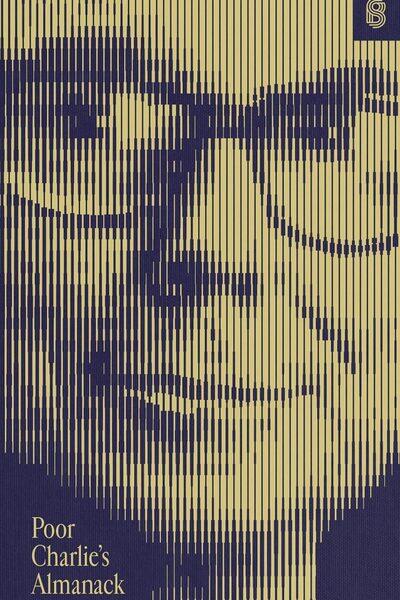
The Stripe Press edition is the most readable version, with typography and layout far superior to earlier editions that were famously difficult to handle due to their large, heavy format. The speech content is the same; the new edition adds several editorial notes. For anyone coming to this book for the first time, start with the Stripe Press edition.
How long does it take to read, and does it need to be read cover to cover?
Linear reading is optional. Speech 1 (Munger's Approach) and the Psychology of Human Misjudgment speech are the densest. Many readers find that reading the first speech, then jumping directly to the catalog of 25 tendencies, builds a working framework before returning to the remaining speeches. With that approach, roughly 6-8 hours is enough to establish a solid working understanding.
What is the single hardest thing in this book to practice daily?
Two-track analysis. Running the rational track is already demanding. Adding the psychological track, actively asking "where is unconscious bias working on me right now?" before every significant decision, requires a habit that takes years to build. Most readers grasp the concept, then apply it rarely because the second track is uncomfortable.