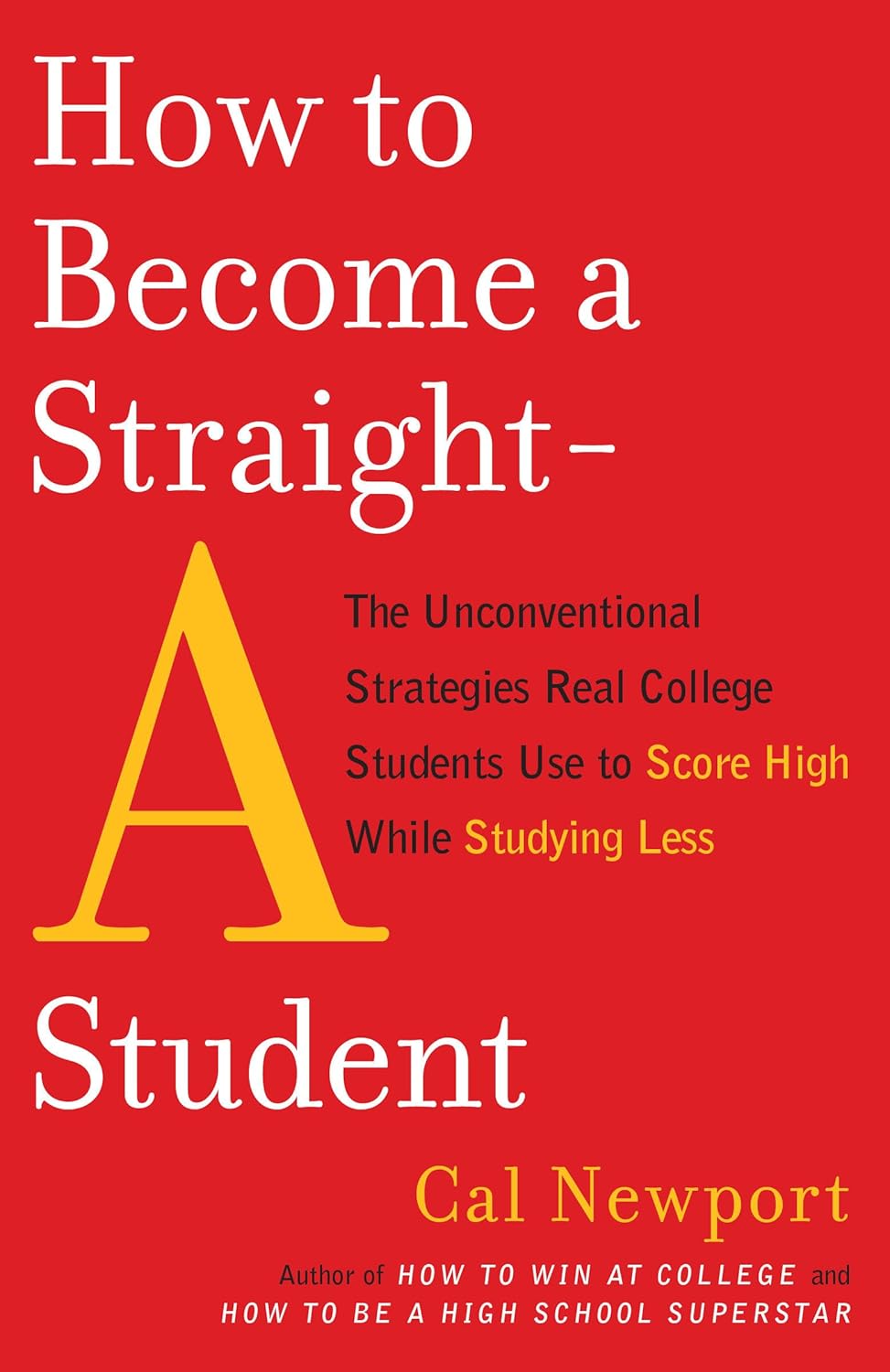
Cal Newport spent two years interviewing dozens of high-achieving students from Harvard, Dartmouth, Yale, and Princeton. He sought proven study patterns used at the most competitive campuses in America. Every finding emerged from field experience, grounded in observation.
His key discovery is simple: learning results equal time invested multiplied by focus intensity. Students who master this formula can complete difficult work in a fraction of the time their classmates need. Newport packages these strategies into a practical system anyone can replicate.
This book stands out among productivity literature by presenting step-by-step methods you can test immediately. The reader receives practical tools that transform how you study, write, and manage energy.
Why Read This
This book explains how to convert exhausting hours of studying into short, high-quality sessions. The system emphasizes intensity, routines, and strategic decisions about what deserves attention.
Newport maps out three main pillars: five-minute daily time management, study methods based on self-testing, and energy-efficient paper-writing frameworks. Each section includes field tips from straight-A students so readers understand what real execution looks like.
The principles remain relevant for students, freelancers, researchers, and remote professionals. Life full of digital distractions demands the ability to produce high-quality work with limited time, and this book provides the way to achieve it.
Key Points
- Pseudo-work drains energy without results; full focus in short durations produces greater output.
- Five-minute time management system ensures realistic agendas and prevents impossible to-do lists.
- Five anti-procrastination battle plans rely on environmental design that makes productive behavior the path of least resistance.
- Learning is most effective when done in the morning or afternoon, in isolated locations, with regular breaks.
- Quiz and recall methods improve retention because the brain practices actively retrieving information.
- Question-evidence-conclusion structure makes lecture notes ready for reuse.
- Triage-based reading strategy helps select readings that provide the greatest value.
Who This Book Is For
Good fit for:
- Students wanting to raise grades without pulling all-nighters.
- Young professionals frequently trapped in busywork.
- Readers who prefer step-by-step research-based guides.
Less suitable for:
- Seekers of motivational stories or long biographies.
- Readers unwilling to tinker with daily routines.
Core Ideas
1. Pseudo-Work: The Hidden Productivity Enemy
Students often feel productive because they sit in the library for hours. In reality, much time is wasted on daydreaming, scrolling social media, or reviewing material without real concentration. Newport calls this pattern pseudo-working.
The productivity formula he presents reads: Work Accomplished = Time × Focus Intensity. Two hours of study with full concentration can match eight hours of casual studying. High focus makes the brain process material faster, store information longer, and discover new connections within the same content.
Pseudo-work triggers a negative spiral. The body feels tired from sitting long. Academic targets haven't progressed. This condition pushes additional study sessions that are again done with low focus. The only way out is to increase intensity: clear distractions, set specific goals per session, and end once the goal is achieved.
2. Five-Minute Time Management System
Newport offers a daily scheduling method completed in five minutes. The steps are simple: list all tasks, mark deadlines, then plot each piece of work into real time blocks on your daily calendar. If there's no space, move the task earlier or break it into several parts.
This approach forces students to calculate actual capacity within the hours truly available. The calendar functions like a clear flight plan: each block has a defined load, no more nine-item to-do lists that are impossible to complete. Once the schedule is set, focus simply follows the established route.
This system is easy to restart after failing for a few days. Simply open the calendar, review existing commitments, then reschedule. This flexibility maintains consistency without prolonged guilt.
3. Five Anti-Procrastination Battle Plans
Newport discovered five patterns that help students fight the urge to delay:
- Progress journal. Record every reason for delaying in a dedicated notebook. This habit triggers discomfort that pushes action.
- Fuel up. Manage eating patterns, hydration, and caffeine so mental energy stays stable. A hungry brain is hard to force into focus.
- Create special events. Move heavy tasks to new locations like a quiet café or city library. Intentional travel marks the task as important.
- Build weekly routines. Set fixed hours for certain courses or projects. Time becomes an automatic trigger to start working.
- Establish heavy days. Choose one or two days per week to complete large loads in a planned manner so deadlines no longer surprise you.
All five strategies share the same principle: they change context so productive behavior feels natural. None depend on sudden bursts of motivation.
4. Study Time, Place, and Duration
Straight-A students manage three important variables: when to study, where to study, and how long each session lasts. Newport's interview data shows the majority study in the morning or afternoon because mental energy is still high. Evenings are left for socializing, light exercise, or recovery.
Location is also carefully chosen. Dorm rooms, cafeterias, and public workspaces are full of distractions. Favorite choices include small libraries, basement reading rooms, or quiet cafés off campus. Isolated places lower the chance of distraction and send a strong signal that this time is dedicated to work.
Duration per session rarely exceeds one hour. After 45 to 60 minutes, they walk briefly, drink water, or read something light before returning to material. This interval pattern follows the human body's ultradian rhythm that naturally alternates between peak focus and energy decline.
5. Quiz and Recall Methods
Reading notes repeatedly gives a sense of busyness without strengthening memory. Newport suggests quiz and recall methods. The approach: after studying material, close the book, then explain in your own words as if teaching someone else. If any part gets stuck, reopen the source, clarify, and repeat the exercise.
Research from Henry Roediger and Jeffrey Karpicke shows active recall practice improves long-term retention up to fifty percent better than simply rereading. Students interviewed by Newport use this method for both theory-based and quantitative courses.
The quiz method also provides a clear endpoint. Once one round of quizzes proceeds without significant errors, the study session can be closed. This reduces anxiety because the success target is clearly defined.
6. Notes with Question, Evidence, Conclusion Framework
Effective lecture notes follow the professor's argument flow: main question, supporting evidence, and conclusion. Newport suggests students create columns for each section. Every time the professor starts a topic, record the question being answered, summarize important evidence, then write a brief conclusion.
This format produces notes that are easy to scan when approaching exams. Students can immediately see the material's logic without having to reread long paragraphs. Notes also become ready-to-use base material for quiz and recall methods.
7. Tactical Reading Strategy
Reading assignments in college often multiply to the point they're impossible to complete entirely. Newport recommends reading triage. The first step is identifying primary sources that always appear in class, such as textbooks or course readers. This material must be read completely.
Supporting readings are treated differently. Journal articles presenting new arguments receive high priority and are read carefully. Texts describing important events or figures just need scanning to extract key facts. The rest, speech transcripts, newspaper clippings, or light essays, can be skipped when time is tight.
When reading important sources, use the question-evidence-conclusion framework to note main points along with page numbers. One chapter rarely produces more than one page of neat notes. Ideal duration per reading ranges from 20 to 30 minutes so study time remains efficient.
8. Paper Writing Completed Without Drama
Newport breaks the writing process into three phases: planning, targeted research, and execution. The first phase starts by choosing a sharp thesis. After the thesis is locked in, create a detailed outline and list of research questions that need answers. This approach avoids endless information surfing sessions.
Research is conducted like a sniper, aimed at specific references with clear targets. Use bibliographies from primary sources to find supporting references. Record important quotes complete with page numbers so the citation process goes quickly. Once materials are sufficient, start writing by following the outline. Focus on one section per session and end once that section is polished.
This method makes paper writing feel like assembling LEGO, with each block clicking into its place. Students who follow it rarely pull all-nighters because each phase has a clear duration and micro-deadlines.
Quick FAQ
Q: Are these strategies relevant for remote workers? A: Very relevant. The concepts of focus intensity, routines, and task triage directly apply to knowledge-based work.
Q: What if the class schedule is packed and there are no free time blocks? A: Use thirty-minute gaps between classes for quick review sessions. Newport emphasizes that short, high-intensity sessions remain effective.
Q: Can the quiz method be applied to math courses? A: Yes. Transform the quiz format into practice problems or step-by-step explanations of core concepts.
Further Resources
- Deep Work, explores high-quality work with extreme focus in greater depth.
- Digital Minimalism, strategies to reduce digital distractions and maintain focus.
- Cal Newport's blog, weekly articles about school productivity and knowledge work.