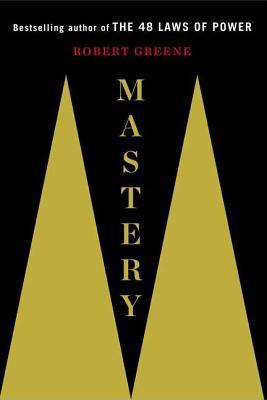
Mastery
Author: Robert Greene Publisher: Viking (2012) Pages: 352
Key Takeaways
-
Life's Task is Your Unique DNA - Everyone is born with distinctive inclinations. Darwin was obsessed with collecting since childhood, Einstein was captivated by a compass at age four. Life's Task means discovering then pursuing this inclination. Following others' expectations ends in a dead end.
-
Apprenticeship Phase is Mandatory Investment - At least 10,000 hours of deliberate practice is the entry ticket to mastery. Darwin spent five years on HMS Beagle without meaningful pay. This period is purely for accumulating capability.
-
Mentors Accelerate the Learning Curve - The right mentor cuts years of futile trial and error. Leonardo apprenticed under Verrocchio, Faraday under Humphry Davy. Compatibility and timing determine the relationship's effectiveness.
-
Social Intelligence is the Force Multiplier - Genius without social skill gets trapped. Franklin was skilled at reading human dynamics; Einstein relied on Grossmann to navigate campus politics. The ability to manage relationships amplifies technical skill impact.
-
Creative-Active Phase is the Synthesis Stage - After mastering the rules, experts create original work by boldly bending the rules. Mozart understood musical conventions before breaking through them. A strong foundation is an absolute requirement; skipping apprenticeship then going straight to "being creative" is just an illusion.
-
Mastery Culminates in High-Level Intuition - At peak capability, many decisions happen intuitively. Bobby Fischer saw chess patterns that escaped other players. The brain is rewired through thousands of hours of practice.
Why Read This
"Mastery" synthesizes biographies of dozens of masters throughout history: Leonardo da Vinci, Mozart, Darwin, Einstein, Benjamin Franklin, Temple Grandin, to Cesar Rodriguez. Greene maps the universal patterns of their journey to excellence.
The main question: is genius born or made? Greene argues that almost everyone has potential for mastery in their respective fields. Most fail because they're tempted by shortcuts, follow trend currents, or give up too quickly. Mastery is democratic as long as we're willing to pay the price of focused practice over years.
This book dissects concrete strategies and pitfalls at each journey phase. It becomes a practical roadmap reinforced by historical evidence.
Core Idea 1: Discover Your Calling - Life's Task
Understanding Life's Task
Life's Task is the realization of natural inclinations that emerge from childhood, an effort to rediscover yourself.
Darwin was obsessed with collecting beetles and shells despite his father's opposition; this obsession led him to the theory of evolution. Einstein as a young boy was amazed by a compass and spent his life pursuing the mystery of invisible forces until relativity was born. Leonardo loved drawing anatomy and water flow; Temple Grandin found calm in cattle squeeze machines and later revolutionized livestock facility design.
Important lesson: early inclinations are the compass to Life's Task.
Finding Your Path
Greene maps three stages to activate Life's Task:
Stage 1: Reconnect with Early Inclinations
Trace childhood footprints. What activities made time pass unnoticed? What sparked natural curiosity? These signals appear before social pressure forces us to conform.
Stage 2: Redirect Career
Work is the medium, not the goal. We might take "just to survive" jobs, but don't sever the connection with calling. Buckminster Fuller worked odd jobs while deepening geometry; V.S. Ramachandran shed the doctor track for neuroscience research. Bold decisions are easier to make the earlier they come.
Stage 3: Navigate Obstacles
The path to Life's Task isn't straight. Family, market, and economy can resist. Mozart's father opposed his son's desire to write opera, but Mozart chose his own path and produced masterpieces. The key: move gradually, build side capabilities, prepare cushion before full transition.
Pitfalls in Finding Life's Task
Pitfall 1: Surrendering to Expectations
Parental or cultural pressure to choose the safe path dulls the true calling. Benjamin Franklin's father wanted him to be a minister; Franklin chose printing and writing.
Pitfall 2: Chasing Money or Status Too Early
Prioritizing salary or prestige traps us in a "golden cage". Darwin had financial privilege but still pursued natural history because it was his calling.
Pitfall 3: Cynicism and Impatience
Sentences like "passion is excessive", "just take any job", or "mastery is only for geniuses" are defense mechanisms hiding the fear of commitment. The mastery journey takes more than a decade; few people are willing to persist that long.
Core Idea 2: Submit to Reality - The Ideal Apprenticeship
Three Apprenticeship Phases
Apprenticeship is the most crucial yet often underestimated phase: investment phase without instant results for 7-10 years or more than 10,000 hours.
Phase 1: Deep Observation (Passive Mode)
Absorb every detail. When Michael Faraday became Humphry Davy's assistant, he spent the first year just observing how his mentor designed experiments, solved problems, and networked. This step builds mental models.
Mode: sponge.
Phase 2: Skill Acquisition (Practice Mode)
Build basic skills deliberately. Leonardo spent years training anatomy drawing, perspective, and lighting techniques. Franklin dissected The Spectator essays: analyzed structure, rewrote, then compared. Deliberate practice like this makes skills soar.
Skill acquisition rules:
- Focus on one skill at a time.
- Get immediate feedback.
- Push yourself slightly beyond comfort zone.
Phase 3: Experimentation (Active Mode)
After a strong foundation, take initiative. Propose projects, try new approaches, allow yourself to fail. Boxing coach Freddie Roach developed unique methods after mastering basic techniques. This stage grows personal style; rules are bent intelligently.
Strategies for Undergoing Apprenticeship
Strategy 1: Prioritize Learning Over Money
Darwin's journey on HMS Beagle was full of risk and minimal pay, but the observation skills, specimen cataloging, and geological analysis he accumulated became the foundation of evolution theory. Don't reject opportunities just because compensation is small if the learning offered is large. Calculate return in terms of capability.
Strategy 2: Expand Horizons
Darwin combined geology, botany, zoology, and breeding. Ramachandran merged neuroscience, psychology, and philosophy to explain phantom limb pain and synesthesia. Cross-disciplinary knowledge produces combinations that can't be replicated.
Strategy 3: Maintain Beginner's Mind
When already competent, the temptation to feel "expert" is very strong. Stay curious. Professor Yoky Matsuoka always approached problems with beginner's mind despite being renowned.
Strategy 4: Trust the Long Process
Apprenticeship feels slow and unappreciated. The temptation to seek shortcuts is great. But true masters persist because they trust the process. Santiago Calatrava studied architecture and structural engineering for more than a decade before having a distinctive style.
Pitfalls in Apprenticeship
Pitfall 1: Impatience and Entitlement
The comment "I've worked two years, why am I not an expert yet?" shows minimal perspective. Darwin needed five years of expedition and more than two decades of analysis before publishing "On the Origin of Species".
Pitfall 2: Excessive Dependence on Mentors
Mentors are guides, not destinations. Einstein learned from professors at ETH Zurich, but eventually took his own path and surpassed them.
Pitfall 3: Passive Learning
Training, books, or videos without direct practice produce no progress. Franklin didn't just read essays; he copied and rewrote them to train style.
Core Idea 3: Absorb the Master's Power - Mentor Dynamics
The Importance of Mentors
Mentors accelerate learning several levels. They've already experienced mistakes we haven't encountered, know shortcuts and pitfalls. Leonardo who apprenticed under Verrocchio surpassed his teacher in 6-7 years. This relationship must be two-way: mentor invests time, apprentice shows dedication.
Four Types of Mentor Relationships
Type 1: Intensive Apprenticeship
Classic master-apprentice model with daily interaction. Faraday followed Davy everywhere, observed experiments, and was gradually given autonomy. Benefit is accelerated learning; drawback is hard to find and requires physical proximity.
Type 2: Informal Mentoring
Unofficial mentors who give advice when needed. Franklin had a network of advisors like James Ralph and Governor Keith. He actively sought their perspectives.
Type 3: Peer Mentors
Peers can fill each other's gaps. Einstein had Marcel Grossmann who helped with relativity mathematics and Michele Besso as thought experiment discussion partner.
Type 4: Distance or Historical Mentors
Learning from past figures through their works and biographies. Greene himself "apprenticed" to hundreds of masters through deep research.
How to Find and Maintain Mentors
Step 1: Choose Based on Access and Compatibility
Seek figures you can meet and align with goals. Verrocchio opened a workshop suitable for Leonardo because it gave access to various projects.
Step 2: Prove Seriousness
Mentors are reluctant with half-hearted apprentices. Show up on time, do small tasks-however menial, show hunger to learn. Faraday wrote detailed notes from Davy's lectures as proof of seriousness.
Step 3: Become a Contributor
This relationship must be mutually beneficial. Faraday helped administrative tasks and experiment setup so he was useful to Davy. Don't just ask; also give value.
Step 4: Know When to Be Independent
The end goal is surpassing the mentor. Leonardo left Verrocchio's workshop, Faraday developed electrical chemistry beyond Davy. Healthy separation marks success.
Core Idea 4: See People As They Are - Social Intelligence
Why Social Intelligence Matters
Technical excellence without social intelligence produces limited impact. Einstein needed support from the scientific community, Grossmann helped navigate university politics. Franklin was expert at building networks so his ideas spread widely. Many geniuses failed because they couldn't manage relationships: Nikola Tesla was technically brilliant but bad at business politics so he went bankrupt, while Edison thrived.
Laws of Social Intelligence
Law 1: See People Based on Their Actions
We tend to be too optimistic about others' character. Observe real behavior and long-term patterns. Franklin learned early that most people are driven by self-interest.
Law 2: Master Nonverbal Communication
Body language, tone, and micro-expressions convey important messages. Temple Grandin developed methodology to read these signals systematically.
Law 3: Understand Power Dynamics
Formal structure often differs from actual influence networks. Leonardo had to understand Medici court politics; Franklin navigated colonial and French power. Know who are allies, who are competitors, and who are connectors.
Law 4: Manage Envy
Success triggers jealousy. Faraday's success made Davy envious, but Faraday remained humble and appreciative of his teacher. Einstein built the image of "absent-minded professor" to not seem threatening.
Avoiding Social Pitfalls
Pitfall 1: Naive About Reality
Thinking pure meritocracy applies makes us blind to politics and emotions that affect decisions.
Pitfall 2: Total Cynicism
Viewing everyone as an enemy creates paranoia and alienates. Balance: realistic without bitter.
Pitfall 3: Isolating Yourself
"I focus on work, let politics be" rarely works. Isolation makes us vulnerable. Build alliances and maintain relationships.
Core Idea 5: Awaken Dimensional Mind - Creative-Active Phase
From Mastery to Creativity
After apprenticeship completes, the brain has mapped new pathways. Skills become automatic and give room for creativity. Mozart mastered musical conventions before breaking through them; Einstein learned classical physics before formulating relativity. Picasso was skilled at realistic painting before creating Cubism.
Three Steps to Creative-Active
Step 1: Master Fundamentals
Mozart composed works from age five, but his masterpieces were born after decades of practice. Foundation must be embedded in the subconscious.
Step 2: Expand Knowledge Base
Breakthroughs often come from cross-field combinations. Leonardo combined anatomy, engineering, optics, and botany. Darwin's evolution theory grew from mixing geology, economics, breeding, and nature observation. Cross-pollination creates unique insights.
Step 3: Accept Uncertainty
Creative process is full of ambiguity. Einstein struggled for years with general relativity mathematics. His breakthrough came after long frustration. Persisting through discomfort is key.
Strategies for Igniting Dimensional Mind
Strategy 1: Embrace Serendipity
Great discoveries sometimes emerge from coincidences noticed by prepared people. Fleming discovered penicillin from contaminated dishes. Note anomalies, follow curiosity.
Strategy 2: Balance Focus and Release
Deep work needs to be balanced with breaks. Walking, sleeping, or other activities give room for the brain to process in background. Einstein pondered while walking; Darwin had daily walking routes.
Strategy 3: Use Constraints as Springboards
Strict rules force creativity. Composer Bach worked with rigid musical structures; Twitter's 140-character limit forced concise messages. Constraints channel creative energy.
Evolution to Mastery
At the highest level, intuition and logic merge. Bobby Fischer could play blindfold chess against many opponents because of automatic pattern recognition. Temple Grandin "thinks in pictures" so she can visualize livestock facility designs three-dimensionally before building. Intuitive mastery is born from long-term practice on top of strong skill foundation.
Core Idea 6: Unite Intuitive with Rational - Achieving Mastery
Picture of Mastery
Mastery is the point when rational analysis and intuition reinforce each other. Rules have seeped in so we can act spontaneously yet still explain decisions. Magnus Carlsen relies on intuition in chess but can break down his logic. Yo-Yo Ma plays with deep emotion and technical precision.
Characteristics of Masters
Characteristic 1: High-Level Intuition
Thousands of hours of practice change the brain. Pattern recognition happens automatically. Fischer could play multiple blindfold games simultaneously because his neural pathways were honed.
Characteristic 2: Holistic Perspective
Masters see the system as a whole. Darwin viewed evolution as biology's unifying theory; Einstein saw space-time as one fabric.
Characteristic 3: Execution Appears Easy
What's hard for beginners becomes easy for masters. Mozart wrote symphonies quickly because his foundation was strong from childhood.
Characteristic 4: Flexible Adaptation
Masters aren't rigid. Muhammad Ali adjusted fighting style for each opponent; Elon Musk adjusts business strategy across industries.
Final Push to Mastery
Mastery occurs when the work itself becomes the reward. Darwin was obsessed with understanding nature; the final product is the gift from lifelong dedication.
Living as a Master
Mastery is never final. True maestros maintain beginner's mind, keep learning, keep experimenting. Picasso at eighty continued creating new styles. The end goal is often entering total flow state, making meaningful contributions, and growing endlessly.
Critical Assessment
Book Strengths
Strength 1: Based on Biographical Evidence
Greene studied dozens of masters across centuries and fields, scientists, artists, athletes, entrepreneurs, and found consistent patterns. Darwin, Einstein, Leonardo, Franklin took similar paths.
Strength 2: Applicable Framework
The book gives practical steps: finding Life's Task, designing apprenticeship, seeking mentors, honing social intelligence.
Strength 3: Honesty About Difficulty
Greene doesn't promise shortcuts. Mastery takes decades, heavy practice, and social endurance. This honesty is refreshing in an instant era.
Strength 4: Examples Across Cultures and Eras
Stories from West and East, historical and contemporary figures, show principles transcend time and culture.
Book Limitations
Limitation 1: Survivor Bias
Examples lifted are mostly those who succeeded. Failure stories get less space so there's selection bias.
Limitation 2: Privileged Starting Points
Many figures had financial support or educational access. The book explores less how to pursue mastery when facing economic constraints or discrimination.
Limitation 3: 10,000 Hours Simplified
Greene popularized the 10,000-hour number, but practice quality is far more important than quantity. Haphazard practice for that long doesn't automatically produce mastery.
Limitation 4: Luck Factor Underemphasized
Success is a blend of capability, momentum, and luck. Einstein appeared when physics was ready for revolution. This luck aspect is touched on briefly.
Final Conclusion
"Mastery" is required reading for anyone serious about pursuing excellence. Its framework is clear: find calling, undergo apprenticeship, build mentor relationships, master social dynamics, then push creativity. While it has weaknesses, survivor bias and initial privilege, the core message remains solid: mastery can be achieved by those willing to practice deliberately long-term. My rating: 5 out of 5. Read slowly, make notes, and use as repeated reference for the decades-long journey.