Why Read This
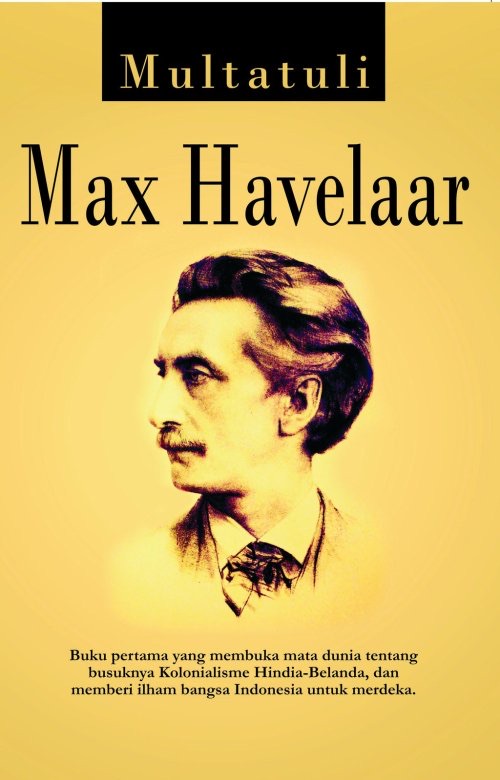
Max Havelaar is an 1860 novel by Multatuli that exposed the brutal exploitation of Dutch colonial rule in the East Indies (present-day Indonesia). Pramoedya Ananta Toer, Indonesia's literary giant, called it "the book that killed colonialism." Based on Multatuli's firsthand experience as Assistant Resident in Lebak, Banten (1856), the book reveals the Cultivation System (Cultuurstelsel) as a machine of systematic extraction. Through layered narratives contrasting coffee broker Droogstoppel's hypocrisy with Max Havelaar's idealism, Multatuli created a searing irony that forced Dutch readers to confront their own complicity.
This is the prototype of modern whistleblowing, reaching far beyond the form of an ordinary novel, showing how institutions protect themselves by silencing truth-tellers. Max Havelaar triggered public debate that eventually forced the Dutch government to adopt the Ethical Policy and open education to Indonesians. The first generation who could read became the generation that launched the independence movement.
Essential reading if you want to understand how one person can transform corrupt systems through moral courage and documentation. Critical for anyone facing institutional corruption and seeking strategies to bring truth to light despite personal risk.
Key Takeaways
-
Colonial systems are extraction machines with layered incentives - The Cultuurstelsel (Cultivation System) created a structure where Governor-General, Residents, Regents, down to village heads all received bonuses from harvest yields. As a result, Javanese farmers were forced to abandon their own rice fields to plant coffee and sugar, causing famine in a fertile land. Havelaar documented 32 cases of buffalo theft in a single month in one district alone.
-
Oaths of office become impossible to uphold when structures punish truth - Every Assistant Resident swore to protect indigenous people from oppression. Havelaar kept that oath and was immediately dismissed. His predecessor, Slotering, reported crimes and was found dead after lunch at the district chief's house. The system rewarded those who covered up crimes and destroyed those who told the truth.
-
Droogstoppel mirrors the hypocrisy of the Dutch bourgeoisie - This pious coffee broker lives comfortably from colonialism while claiming to love truth. He believes poverty is proof of sin and prosperity is God's blessing. Every time he says "virtue needs no reward," he's justifying the injustice that benefits him.
-
Saijah and Adinda give a human face to dry statistics - This young couple is destroyed because their families lose buffalo to extortion. Saijah works three years in Batavia (Jakarta) to buy new buffalo and marry Adinda. When he returns, Adinda has been killed by Dutch soldiers in Lampung. This story makes readers feel the loss that no list of victims' names could achieve.
-
Documentation is the weapon against systematic forgetting - Havelaar writes everything in numbered, dated letters. He forces Controller Verbrugge to write his confession: "Write that you don't dare!" This method is the prototype of modern whistleblowing. Without documentation, conflict is Havelaar's word versus the Resident's word. With documentation, evidence becomes undeniable.
-
Long-term courage beats short-term victory - Havelaar lost the immediate battle. He was dismissed, fell into poverty, never met the Governor-General. The Regent of Lebak was never punished. But he won the larger war. Max Havelaar triggered debate that forced the Ethical Policy reform and inspired decolonization movements worldwide.
The Colonial System as a Machine of Systematic Extraction
The Cultuurstelsel (Cultivation System) introduced by Governor-General Van den Bosch in 1830 required Javanese farmers to surrender a portion of their land and labor to cultivate export commodities like coffee, sugar, and indigo. The colonial government set purchase prices unilaterally, usually far below market value. Farmers had no option to refuse or sell to other buyers. As a result, they often had to abandon their own rice fields to work export crops, causing famine in a fertile land.
Multatuli exposed a horrifying paradox: "Famine? In the rich, fertile, blessed land of Java? Yes, reader. Only a few years ago entire districts died of starvation. Mothers offered their children for sale to get food. Mothers even ate their own children."
How the Layered System Works
The system operated through layers of power that protected each other. The colonial government in Batavia set high production targets for export commodities. Residents and Assistant Residents received bonuses based on harvest yields. This created incentives to squeeze out as much production as possible without regard for people's welfare.
Regents (Bupati) and indigenous district heads had four income sources: fixed salary, compensation for rights taken over by the government, bonuses from harvest yields, and most dangerously, arbitrary power over people's labor and property. The common people became victims at every layer. They had to pay taxes to the colonial government, surrender harvest yields at unilaterally determined prices, work without pay on the regent's estates, and lose livestock or property taken by force.
What made this system hard to dismantle was that every layer had an interest in covering up crimes of the layer below. An Assistant Resident who reported extortion by a regent would make the Resident look like he failed to supervise. A Resident who reported problems to Batavia would appear incompetent. A Governor-General who acknowledged serious problems would be questioned by the government in The Hague. So everyone lied in official reports. Everyone wrote that their region was prosperous, peaceful, and the people satisfied.
Havelaar's Documentary Evidence
Havelaar found notes from his predecessor Slotering, who wrote in capital letters: "The depopulation of Parangkujang is entirely due to the CRUEL treatment of its people." In just one month, Havelaar documented thirty-two cases of buffalo theft in one district. Multiplied by five districts and twelve months, the numbers reach hundreds of cases per year. And that's just buffalo. Not counting unpaid forced labor which is far harder to track.
This system was not the fault of evil individuals. It was a structure that created incentives to exploit. Even well-intentioned officials were trapped in the system's logic. Havelaar himself lent his personal money to the Regent of Lebak, hoping the regent wouldn't need to extort people if his financial needs were met. This shows Havelaar understood the Regent as another victim of a system that pressured him from above, beyond any reading of pure evil.
Key insight: Whenever we build systems with wrong incentives, we create crimes that don't require evil people to operate. Production targets without considering social impact will always produce exploitation. Bonuses based on results without considering process will always produce abuse. Reports valued only if positive will always produce lies.
Oaths of Office Impossible to Uphold
Every Assistant Resident who is sworn in takes a special oath to protect indigenous people from oppression, abuse, and extortion. This oath sounds noble. The problem: the system is designed so that upholding that oath is nearly impossible without destroying one's own career.
Havelaar took this oath with a tone as if to say, "This is obvious. I would do it even without the oath." For most other officials, this oath is an empty ritual. For Havelaar, it is a binding call of conscience.
Structural Barriers
Dependence on regents creates a paradox. The Assistant Resident is formally head of the regency, but the regent has hereditary influence, wealth, and control over the people. If the regent is unhappy, he can make the region ungovernable. Rebellion can be triggered. So the central government fears an angry regent more than suffering people.
No witnesses dare speak. When people are called to testify against the regent, they crawl and beg for mercy. "No, I wasn't forced to surrender my buffalo. I'm sure I'll be paid double." They know that after the trial, they must return to the village and live under the power of the person they accused. Better to withdraw the accusation than be found floating in the river the next day.
European officials rotate out, regents stay forever. People knew the Assistant Resident would be transferred in two or three years. The regent would remain in power indefinitely. Who deserves their loyalty? An official who'll be gone next year, or a regent who'll remember every complaint for generations?
Oral reports are preferred over written reports. The Resident doesn't like written reports about abuse of power. Written reports get filed in archives. Someday it could be evidence that the Resident was informed long ago about problems but did nothing. Oral communication leaves no trace. The Resident is free to choose whether to follow up or ignore.
Slotering's Fate
Slotering, Havelaar's predecessor, repeatedly reported abuses orally to Resident Slymering. The result? People who complained were called in, forced to withdraw accusations, then whipped. Some were found dead in the river. Slotering became frustrated and decided if there was no change by year's end, he would report directly to the Governor-General. That decision was made in November. Shortly after, he had lunch at the district chief of Parangkujang's house and was carried home in a wretched state, screaming "Fire, fire!" A few hours later he died. Official diagnosis: liver abscess. His widow was certain he was poisoned but didn't dare speak.
This is a case study in how structure can make good intentions irrelevant. It doesn't matter how noble the oath we swear if the system is designed to punish anyone who actually keeps it.
Havelaar faced the same dilemma as many truth-tellers across eras: speak and be destroyed, or stay silent and live with guilt forever. Most people choose the middle path: speak half-heartedly, just enough to calm their conscience but not enough to change anything. Havelaar rejected this middle path. He called it "halfness" and considered it cowardly.
Key insight: In his harsh letter to Controller Verbrugge, Havelaar wrote: "Halfness leads nowhere. Half good is not good. Half true is not true." We cannot protect people halfheartedly. We cannot uphold justice with half courage.
Bourgeois Hypocrisy: Droogstoppel as Society's Mirror
Batavus Droogstoppel, a coffee broker in Amsterdam, is a brilliant representation of the Dutch bourgeois class that lives comfortably from colonialism while claiming to love truth and virtue. Every time he says "I love truth," he's justifying lies. Every time he says "virtue needs no reward," he's justifying injustice.
Multatuli uses Droogstoppel as narrator to make us see our own hypocrisy reflected back, well removed from any aim to win our sympathy for the character. Droogstoppel is a mirror. If we feel uncomfortable reading his words, it's because we recognize a bit of ourselves there.
Rotten Principles
Droogstoppel has principles that sound noble on the surface but rot from within. Take his example of Lukas, an old warehouse worker who was fiercely honest. Now Lukas is poor, crippled with rheumatism, useless. Droogstoppel sees this as proof that virtue shouldn't be rewarded. If Lukas got a decent pension, all workers would become honest. And that's not God's will, because if everyone is good, there's no special reward in the afterlife. This logic is horrifying. It's a moral framework designed to justify letting good people suffer.
He also believes poverty is proof of sin. Prosperity is a sign of God's blessing. With this logic, he doesn't need to feel guilty enjoying wealth built on others' suffering. God is on his side. The poor deserve poverty because they are sinners.
Every time he talks about principles, he means profit. In a letter to Stern, Droogstoppel writes: "Principle is sacred to me, and I don't hesitate to state my opinion... Tell your father that Busselinck & Waterman's daughter ran away, they're frauds, and I'll lower the broker's commission to one-sixteenth percent below their offer."
The contrast between "principle is sacred" and "I'll undercut competitors" in one sentence is both comedy and tragedy. Droogstoppel genuinely doesn't see this contradiction. To him, undermining competitors with slander and price cuts is part of healthy business principles.
Religion as Justification
Droogstoppel is not an unrealistic extreme character. He's an accurate representation of how most people operate: we all have extraordinary ability to deceive ourselves. We can all wrap greed in the language of virtue. We can all justify injustice that benefits us with theology or philosophy that sounds noble.
What makes Droogstoppel timeless is that he's not evil in the conventional sense. He's devoutly religious. Goes to church every Sunday. Gives to charity. Teaches his children about God. Yet none of this stops him from building wealth on others' suffering. His religion doesn't challenge his comfort, it justifies it.
Pastor Waffler in his sermon says: "Look around you. Isn't there much wealth here in the Netherlands? That's the blessing of true religion. Aren't the Javanese poor? That's because they're heathens. The longer the Dutch associate with the Javanese, the more wealth will come to us. That's God's will!"
Droogstoppel is deeply impressed by this insight. He sees thirty million guilders more gained from selling products provided by heathens. Isn't this a sign that God rewards true faith? Isn't this proof that the straight and narrow path is the profitable path?
Key insight: We are all Droogstoppel to various degrees. We all have the ability to justify injustice that benefits us with language that sounds noble. The question we must ask ourselves: what systems make our lives comfortable, and who pays the price for that comfort?
The Story of Saijah and Adinda: Human Faces Behind Statistics
Saijah and Adinda are a young couple from Badur village, promised to each other in marriage. Saijah's father owned buffalo for working the rice fields. When the District Head of Parangkujang repeatedly confiscated their buffalo, Saijah's family fell into poverty. Saijah traveled to Batavia (Jakarta, Indonesia's capital city) to work for three years, hoping to save enough to buy two buffalo and marry Adinda. They promised to meet under the ketapang tree after thirty-six months.
Saijah returned home with a heart full of hope and pockets full of money. He waited for Adinda from dawn to noon. Adinda did not come. It turned out Adinda's family also lost their buffalo and fled to Lampung to avoid tax punishment they couldn't pay. There they joined rebels against the Dutch. Saijah followed and found Adinda had been killed by Dutch soldiers, brutally raped. Saijah surrendered himself to a soldier's bayonet and was killed.
Fiction That Conveys Truth
This is Multatuli's method of putting a human face on dry statistics, reaching far beyond a sad tale alone. Havelaar had a list of thirty-two names in Parangkujang district alone whose buffalo were confiscated in one month. But a list of names doesn't make people feel anything. Saijah and Adinda make us feel that loss.
Multatuli was very aware of the criticism that would come. He wrote: "I don't know if Saijah really loved Adinda, or if he went to Batavia, or if he was killed in Lampung. I don't know all that. But I know more than that. I know, and can prove, that there are many Adindas and many Saijahs, and their stories are fiction in their parts but truth in their whole."
This is a powerful argument about the function of fiction in political struggle. Does the parable of the Good Samaritan become false just because there may never have been a traveler who fell into robbers' hands? Is Uncle Tom's Cabin untrue just because there may never have been an Evangeline? A writer's task is to create stories that bring dry facts to life, planting the need for reform deep in readers' hearts.
Details That Bring Life
Young Saijah grew up familiar with his family's buffalo. Once a tiger attacked. The buffalo protected Saijah with its own body, severely wounded in the neck. His mother treated the buffalo's wound lovingly, unable to forget how the animal had saved her child. When that same buffalo was slaughtered years later after being stolen by the district head, Saijah was twelve years old and deeply grieving.
Details like this bring the story to life. Buffalo are children's companions, life-savers, family, far beyond their role as production tools. Losing buffalo means losing more than economics, it means losing emotional bonds, the future, the ability to marry and build a family.
Multatuli anticipated criticism that he idealized Saijah and his love. He asked back: what makes you so sure Javanese people can't feel love that deep? Very few Europeans considered it necessary to pay attention to the emotions of coffee and sugar production machines called "natives."
Key insight: Multatuli shifted the burden of proof. He doesn't need to prove all Javanese are like Saijah. The colonial government must prove they didn't commit extortion. If they can't, then all literary criticism of his work is irrelevant.
Documentation as a Weapon Against Forgetting
Havelaar understood that in bureaucracy, spoken words can be twisted. So he documented everything in writing. When Controller Verbrugge admitted he didn't dare speak about extortion because he feared losing his job, Havelaar ordered: "Write that!" When Verbrugge confessed his fear was because his sisters in Batavia depended on his salary, Havelaar demanded again: "Write that!"
This is a strategy to make truth undeniable, reaching well beyond ordinary evidence gathering. Verbrugge might later deny his words. But his own handwriting confessing his fear becomes evidence that can't be refuted.
Havelaar's Documentation Techniques
Havelaar used secret letters before important meetings. Before Resident Slymering came to Rangkasbitung, Havelaar wrote a long letter explaining his entire investigation process, reasons for keeping it secret, and concrete proposals. This letter was sent first so the Resident could read before arriving. Havelaar wanted a written record of what he proposed, so that if there was later manipulation, he had proof he had warned.
Every Havelaar letter has a serial number and clear date. This makes chronology unchangeable. If someone tries to engineer the sequence of events, numbered documents will prove that lie.
Havelaar wasn't satisfied with Verbrugge telling about the Resident's visit giving money to the Regent. He asked Verbrugge to write it officially. This transforms gossip into official testimony.
System Response
When Havelaar wrote his official letter accusing the Regent of Lebak of extortion, he included precise details: witnesses' names, dates of incidents, numbers of buffalo stolen, locations of fields worked by force. Not a vague accusation easy to dismiss, a verifiable list that could be checked item by item.
Resident Slymering responded with a complaint that Havelaar didn't give him a chance to "arrange" the problem unofficially first, set apart from any direct denial of the facts themselves. This is an indirect admission that Havelaar's accusations are true. If the accusations were false, Slymering would immediately refute with counter-evidence.
Havelaar's method is the prototype of modern whistleblowing. In an era where institutions often protect themselves by silencing truth-tellers, documentation is the most powerful weapon. Forwarded emails, copied memos, recorded conversations, message screenshots. All of these are modern versions of what Havelaar did.
Key insight: What makes documentation effective is its power to change the dynamic itself, well beyond serving as ordinary evidence. Without documentation, conflict is Havelaar's word versus the Resident's word. With documentation, conflict becomes Havelaar's documents versus the Resident's documents. And Havelaar's documents are more detailed, more specific, harder to deny.
Critical Assessment
Strengths
1. Brilliant layered narrative structure
Multatuli uses Droogstoppel as narrator to create piercing irony. Readers see bourgeois class hypocrisy expose itself. Every time Droogstoppel says "I love truth," we become more certain he lives in lies. This technique makes social criticism far sharper than a direct essay.
2. Balance between documentation and emotion
Havelaar presents facts with verifiable detail: 32 cases of buffalo theft in one month, witnesses' names, dates of incidents. This gives credibility. Then Multatuli adds the story of Saijah and Adinda to give a human face to those numbers. This combination is highly effective for triggering reform.
3. Timeless relevance for fighting corrupt systems
The patterns Multatuli exposed still happen everywhere: systems with wrong incentives, institutions that protect themselves by silencing truth-tellers, official reports that lie to maintain reputation. Havelaar's strategies about documentation and publication remain a guide for modern whistleblowers.
Limitations
1. Complex structure can confuse readers
Switching between the voices of Droogstoppel, Stern, Havelaar, and Saijah's story sometimes makes readers lose the thread. Multatuli deliberately created a layered structure for artistic effect, though this sacrifices accessibility. Some sections require rereading to understand who is speaking.
2. Idealization of Havelaar's character
Though Multatuli tries to show Havelaar's weaknesses (arrogant, sometimes impractical), his character remains too heroic. In reality, Multatuli himself was dismissed for moral courage along with personal conflicts with superiors and inability to compromise. The novel is less honest about the actual moral complexity.
3. Limited representation of Javanese people
Saijah and Adinda are moving characters, though they're still depicted from a European perspective. They appear as passive victims who need saving, with their own ways of resisting left unspoken. Multatuli doesn't give voice to active Javanese resistance. This is a 19th-century perspective limitation that's hard to avoid.
Conclusion
Max Havelaar is essential reading for anyone who wants to understand how one person can transform corrupt systems through moral courage and documentation. Relevant for civil servants witnessing corruption, journalists investigating abuse of power, activists confronting self-protective institutions. Critical for historians studying colonialism and decolonization movements.
This novel proves that well-documented truth, bravely published, can defeat systems that seem invincible. Havelaar lost the short-term battle but won the long-term war. Max Havelaar triggered debate that forced the Ethical Policy reform and inspired independence movements worldwide. Pramoedya Ananta Toer was right: this is the book that killed colonialism.
Rating 4.5/5 for timeless relevance, brilliant narrative structure, and proven historical impact. Minus 0.5 for occasionally confusing structure and limited indigenous perspective.
Related Content
Continue your learning journey with related resources that deepen themes of colonialism, whistleblowing, and social reform:
- Books: Learn more about colonial history and its impact through our literature resource collection
- Essays: Read in-depth analysis on organizational ethics, moral courage, and corrupt systems
- Podcasts: Listen to interviews with contemporary whistleblowers and social reform practitioners
Join our newsletter for weekly insights on mental models, history, and strategies for social change.
FAQ
Q: Is Max Havelaar a true story or fiction? A: Max Havelaar is a novel based on Multatuli's real experience as Assistant Resident in Lebak, Banten (1856), Indonesia. The character Max Havelaar is a fictionalized version of Multatuli himself. The Regent of Lebak, Resident Slymering, and the documented crimes are real. The story of Saijah and Adinda is composite fiction representing the fate of thousands of Javanese families who lost livestock and land to extortion.
Q: Why did Multatuli use a pseudonym? A: Multatuli comes from Latin "multa tuli" meaning "I have suffered much." Eduard Douwes Dekker used this pseudonym to protect his identity when first publishing the book. He also wanted the pseudonym to reflect the suffering he experienced after being dismissed from colonial service and falling into poverty because of his moral courage.
Q: What was the book's real impact on Dutch colonial policy? A: Max Havelaar triggered intense public debate in the Netherlands. As a result, the Dutch government introduced the Ethical Policy in 1901 that opened education access to Indonesians, built infrastructure, and officially acknowledged responsibility for the welfare of colonial subjects. The first generation to receive this education became the generation that launched Indonesia's independence movement.
Q: Why is the book's narrative structure so complex with many narrators? A: Multatuli deliberately used a layered structure to create irony. Droogstoppel, the hypocritical coffee broker, tells the story from his narrow viewpoint. The contrast between Droogstoppel's hypocrisy and Havelaar's idealism makes the social criticism sharper. Readers see for themselves how the Dutch bourgeois class justified exploitation with the language of virtue.
Q: Did Havelaar succeed in saving the people of Lebak? A: Not in the short term. Havelaar was dismissed, lost his career, fell into poverty, and never got a chance to defend himself before the Governor-General. The Regent of Lebak was never punished. The colonial system continued for decades after Havelaar left. However, he won in the long term by writing a book that triggered policy reform and inspired independence movements.
Q: How did the Dutch colonial government respond to this book? A: The colonial government initially tried to refute Multatuli's accusations with technical arguments: procedures weren't followed correctly, reports didn't go through official channels. However, they could never refute the core facts about extortion. Governor-General Rochussen resigned in 1861. The public debate triggered by the book forced the government to acknowledge serious problems in the colonial system.
Q: Why is this book important for Indonesia's independence movement? A: Max Havelaar was one of the first works to expose colonial exploitation to the international public. The book was translated into many languages and inspired anti-colonial movements worldwide. Pramoedya Ananta Toer wrote that Max Havelaar was "the book that killed colonialism." The first generation of Indonesians who could read were those who received education from the Ethical Policy, which was triggered by debate from this book.
Q: Are Havelaar's documentation methods relevant for modern whistleblowers? A: Extremely relevant. Havelaar documented everything in numbered, dated letters, forced oral confessions to be written, and kept copies for self-protection. This is the prototype of modern whistleblowing. In the digital era, forwarded emails, copied memos, recorded conversations, message screenshots are modern versions of Havelaar's strategy. Documentation changes the power dynamic from "my word versus their word" to "my documents versus their documents."
Q: What's the biggest lesson from Max Havelaar for facing corrupt institutions? A: Corrupt systems aren't dismantled with one heroic act. They're dismantled by making truth undeniable. Havelaar failed short-term because all internal channels were closed. He won long-term by publishing truth widely. If institutions close all internal doors, take it to the public. If local media won't cover it, go national. If the government won't listen, go international.
Q: How did Multatuli respond to criticism of the Saijah and Adinda story? A: Multatuli brilliantly shifted the burden of proof. He wrote: "I don't need to prove all Javanese are like the sentimental Saijah. The colonial government must prove they didn't commit extortion. If they can't, then all literary criticism of my work is irrelevant." This is a powerful argument about the function of fiction in political struggle: stories give a human face to dry statistics.