Why Read This
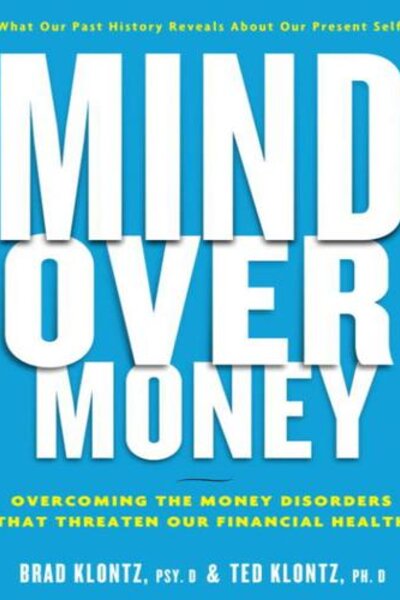
The roots of destructive financial behavior run deep, buried in unconscious money scripts formed in childhood. Brad Klontz, a clinical psychologist and certified financial planner, exposes the psychological mechanisms behind money disorders and maps out a proven path toward lasting transformation.
There is a long-standing assumption in the world of personal finance: if someone still struggles with money, they lack discipline, knowledge, or willingness. The prescription, then, is another seminar, another how-to book, another budgeting spreadsheet. Brad Klontz and Ted Klontz, both clinical psychologists with decades of experience treating clients with financial problems, reject that assumption entirely. This book demonstrates that the most destructive financial behaviors do not arise from ignorance or laziness. They arise from hidden beliefs formed long before a person was old enough to evaluate them critically.
This book traces where our financial beliefs come from, acknowledges that many of our financial patterns are inherited from family and culture far more than they are chosen, and begins the work of rewriting stories that have quietly controlled our decisions for far too long. Mutual funds and budget tables are not the subject here.
The readers who will benefit most are those who already know what they should be doing financially, and still cannot do it consistently. Also anyone who wants to understand why intelligent people make irrational financial decisions, repeatedly, across an entire lifetime.
Core Questions
This book answers five questions that most personal finance books never ask:
- Why is adequate financial knowledge not enough to change a person's financial behavior?
- Where do our beliefs about money actually come from, and how are they formed?
- What are the most common money disorder patterns, and how do you recognize them in yourself?
- Why can financial trauma be passed down across generations, even without being explicitly discussed?
- What does it actually take to produce permanent financial change that outlasts temporary improvement?
About the Authors
Brad Klontz is a clinical psychologist and certified financial planner, founder of Klontz Consulting Group, and a researcher in the field of financial psychology. He developed the concepts of money scripts and money disorders through empirical research published in peer-reviewed academic journals. Ted Klontz, his father, is a clinical psychologist who has founded several residential intensive therapy programs and has worked with clients struggling with destructive financial behavior for more than three decades.
Together, they founded Onsite Workshops, an intensive therapy program that integrates psychological intervention with financial planning. Their approach became the foundation for what is now known as financial therapy, a field that merges traditional psychotherapy with financial consultation.
Central Thesis
Our most destructive financial behaviors do not originate in the conscious mind. Their roots are anchored deep in childhood, in beliefs formed when we were too young to accurately understand the adult world. These beliefs, which the authors call money scripts, operate beneath the surface of awareness and continue to direct financial decisions every day, often in the opposite direction of everything we know rationally.
Klontz makes one observation that reframes everything: giving financial information to someone with a money disorder is like giving aspirin to treat a brain tumor. The symptoms might ease slightly. The underlying cause remains untouched. What is actually needed is an understanding of where these patterns came from, and the willingness to change them at the root.
Key Concepts
Money Scripts
Money scripts are hidden beliefs about money formed from childhood experiences that continue operating beneath conscious awareness. These beliefs have never been critically examined because they were formed before we had the cognitive capacity to do so. Common money scripts include: "rich people are greedy," "money can't buy happiness," "money is the root of all evil," or at the other extreme, "money is the only true measure of success."
What makes money scripts so powerful is that they are partially true. A statement like "money can't buy happiness" has genuine empirical grounding. When it becomes an absolute behavioral guide, however, it can quietly drive a person to sabotage their own financial growth.
The Triune Brain and Financial Decisions
Neuroscientist Paul MacLean mapped the human brain into three layers. The reptilian brain handles survival. The limbic brain handles emotion. The neocortex handles rational thought. All three work in concert under normal conditions. When we feel financially threatened, the first two layers seize control before the neocortex has a chance to think.
The emotional brain has five times as many neural pathways leading to the rational brain as the reverse. Emotions shape our thinking far more easily than thinking shapes our emotions. Three ancient responses appear in financial decisions every day: the fight response surfaces as anger when experiencing investment losses, the flight response drives someone to liquidate all assets when prices fall, and the freeze response leaves a person unable to open their financial statements at all.
Researchers Whitson and Galinsky found that when people feel a loss of control, their ability to analyze financial reports declines significantly. In other words, when we are most stressed about money, our brains are in their worst possible state for making decisions about money.
Financial Flashpoints
Financial flashpoints are emotionally charged childhood experiences related to money. Money scripts are formed from these flashpoints. A flashpoint does not have to be a major trauma. Everyday observations of the adults around us, spoken and unspoken messages, all of these leave marks far deeper than we realize.
Research using fMRI has shown that trauma literally alters the physical structure of the brain. Neural pathways formed during traumatic events can persist for decades. Financial trauma can also flow from one generation to the next. Generations that lived through the Great Depression continued hoarding money and food even during prosperous times, and those habits often passed to children who never experienced poverty directly.
Three Categories of Money Disorders
Money Avoidance: Fleeing from Money
The first group includes people who systematically avoid money or anything related to it. The underlying belief is that money is dangerous, dirty, or something they do not deserve to have.
Financial denial is the refusal to face financial reality. People with this pattern do not open bills, do not check their balance, do not discuss money with their partner. The strategy works remarkably well in the short term: not looking at the numbers means not feeling the panic. Behind that calm, interest accumulates and crises that should have been small grow large because they were addressed too late.
Financial rejection may be the most surprising pattern because it appears to contradict all logic: a person actively sabotages themselves to avoid becoming wealthy. Kathy Trant, who lost her husband in the September 11 attacks and received nearly five million dollars from various settlements, spent half of it within two years on things she did not even need. Her own explanation: "I wanted my husband back. That money was blood money I didn't want." Nearly eighty percent of NFL players go bankrupt or face serious financial difficulties within two years of retiring, largely because of their psychological unpreparedness to maintain the identity of a wealthy person.
Underspending occurs when someone cannot enjoy what they have because of fear, guilt, or a belief that they are not worthy of it. This is different from consciously choosing a simple life. A woman from a wealthy family would not buy a decent car or take a vacation, even though she could afford both. She was afraid of being targeted, a belief born from a single sentence spoken by a bank teller to her mother decades earlier.
Excessive risk aversion is when caution transforms into paralysis. A person so afraid of potential loss that they cannot take any step at all. What often goes unrecognized: standing still carries its own quiet cost. Inflation erodes the value of savings, and opportunity does not wait.
Money Worship: Making Money a God
The second group includes people who place money above everything else. The underlying money scripts hold that money is salvation, money is self-worth, money is happiness.
Hoarding is accumulation that cannot be switched off, even when there is no rational reason for it. For hoarders, the objects they collect serve as substitutes for love and security, far beyond ordinary possessions. Research shows many hoarders have a history of scarcity in childhood. Children who experienced hunger in foster care systems often hide food in their rooms even when the refrigerator in their new home is always full. The brain has been programmed: there will never be enough. That program keeps running even after the actual circumstances have changed completely.
Workaholism is the only addiction society applauds. People say "I'm a workaholic" with a tone of pride. Its consequences are just as damaging as any other addiction: more family conflict, anxiety, depression, health problems.
For a workaholic, work is where they feel most competent and most accepted. At home they feel out of place. The unconscious belief: I must be productive in order to have value. One patient held one full-time job and five part-time jobs, believing that was his way of expressing love for his family, never realizing that "all that hard work was actually stealing the relationship he could have had with them."
Compulsive buying disorder occurs when shopping becomes a clinical addiction. The mechanism works like a drug: when thinking about shopping, the brain releases dopamine. That sensation arrives, peaks, then fades, leaving an emptiness deeper than before. One in twenty Americans struggles with this problem, roughly the same prevalence as clinical depression.
Pathological gambling is excessive risk-taking at its most destructive extreme. Research shows a history of trauma and post-traumatic stress symptoms are strong predictors. Many gamblers report the same starting point: a first big win they interpreted as evidence of skill, with the role of random luck pushed aside. From that single moment of fortune, a belief formed that slowly consumed the rest of their savings.
Relational Money Disorders: When Money Damages Relationships
The third group consists of money disorders rooted in relationships. The common thread is secrecy and shame.
Financial infidelity is deliberately concealing significant financial secrets from a partner. A survey of more than a thousand respondents found that 40 percent had lied to their partner about the price of a purchase. When these lies surface, trust collapses far beyond money matters. The betrayed partner begins asking: if they lied about this, what else have they lied about? That question creeps into every corner of the relationship.
Financial incest occurs when parents involve children in adult financial burdens. A mother asks her young daughter to keep purchases secret from her father. An eight-year-old becomes a go-between in the financial arguments of divorcing parents. Children forced to carry adult roles tend to struggle later in life with recognizing and meeting their own needs.
Financial enabling is the irrational need to keep giving money to others even when doing so clearly does not serve the recipient's long-term interests. Enabling happens because many people equate money with love. Giving money feels like loving. Stopping feels like rejection. A retired couple still sending large sums every month to four adult children (and when one partner tries to stop, the other quietly continues) illustrates how enabling can operate silently between two well-intentioned people.
Financial dependency is the belief that someone stronger will eventually arrive and rescue everything. Financial dependency is a primary reason many people remain in unhealthy relationships. In one study, nearly half of domestic violence survivors cited the lack of financial resources as the main reason they returned to their abuser.
The Path to Transformation
Completing Unfinished Business
Genuine financial change does not begin with a budget spreadsheet. It begins with the courage to face memories that have been avoided.
Emotions that were never fully processed remain. They settle into the unconscious and resurface whenever a similar situation arrives. A person who cannot invoice for work that is rightfully owed to them may not lack negotiation skills. Their body still remembers what it felt like to be a burden, watching their father sign a check while delivering a lengthy speech about his sacrifice.
Researcher Elizabeth Loftus demonstrated that human memory is not a video recording played back identically each time. Memory is something living that shifts slightly each time we recall it. We cannot erase the past. We can change the meaning we attach to it. When revisiting a flashpoint through the eyes of a wiser adult, we can see things that were invisible before: perhaps the parent who once seemed cruel was actually struggling with their own fears.
The authors offer the Money Atom exercise: draw a visual map showing all the influential figures in your family of origin, how each of them related to money, and how money flowed through that family. From that map, the money scripts that formed begin to come into clearer view.
Rewriting Money Scripts
Rewriting money scripts does not mean discarding them entirely. Every financial belief has a history, and most made sense within the context in which they formed. The work is to rewrite them with a more nuanced and complete version.
For the script "money doesn't matter," an honest rewrite reads: "I hold values that matter more to me than money, like family and integrity. And precisely because of that, I manage money responsibly so it can serve those values." A patient who grew up believing that wealthy people are bad people arrived at a more accurate middle ground: some wealthy people are corrupt, and some have integrity. With that more nuanced belief in place, he was finally able to hear advice from a financial planner without becoming defensive.
A money mantra is a positive statement that captures a new money script. It is not a hollow affirmation. Research by Dr. Eric Kandel, a Nobel Prize-winning psychiatrist, explains why repetition works biologically: long-term memory requires the formation of new synapses, and repetition is the mechanism that both creates and strengthens those new neural pathways.
The authors also emphasize the importance of recognizing emotional triggers before they take control. In addiction recovery communities, vulnerable states are captured by the acronym HALT: Hungry, Angry, Lonely, or Tired. Klontz adds one more: Fearful. The deeper we are in any one of those states, the more vulnerable we become to financial decisions we will later regret.
Financial Therapy as Real Intervention
Permanent financial change requires intervention across four areas simultaneously. First, thought, through identifying and rewriting money scripts. Second, emotion, through processing traumatic memories that are still alive beneath awareness. Third, behavior, through taking action even before we feel fully ready, because action forges a new identity. Fourth, physiology, through meditation, deep breathing, and in certain cases, medical support.
The authors remind readers that change cannot happen in isolation. We did not fall into destructive financial patterns alone, and we will not climb out of them alone. Finding a therapist who is comfortable discussing money is an investment more life-changing than any investment seminar.
For couples, the authors offer a conversation protocol they call the Knee-to-Knee Exercise: choose a time outside of moments of conflict, check emotional intensity on a scale of 1 to 10 and take a break if either person is at 6 or above, use "I feel" statements and avoid "you always," and listen with the goal of understanding.
Relevance in the Indonesian Context
The concepts in this book resonate strongly within the Indonesian context, though they are rarely discussed openly there.
The idea of a financial comfort zone explains dynamics visible across Indonesian society. People who have recently moved up an economic class often feel compelled to signal their new status in ways that quietly drain their finances: car payments disproportionate to their income, wedding ceremonies far beyond their means, or home renovations funded by debt. Behind these behaviors, the brain is working hard to secure acceptance in a new peer group while avoiding rejection by the old one.
In Indonesia, where extended family structures are deeply interconnected, financial enabling has become close to a cultural norm. A successful child is expected to support the entire family. The giving feels like love and responsibility. Seen through the framework of this book, much of that practice is financial enabling conducted in the name of love, with consequences the authors describe in precise detail.
In many Indonesian families, discussing money openly is considered rude or even unlucky. Children grow up without ever seeing money managed transparently or hearing where it comes from. This is fertile ground for financial denial and financial dependency. Adults who were never taught how to talk about money will struggle to talk about it with their partners, and financial infidelity becomes far more likely when financial honesty was never modeled to begin with.
Indonesia has also lived through a series of economic crises that left deep marks. The generation that survived the 1998 financial crisis (which saw the Indonesian rupiah lose roughly 80 percent of its value within months) carries particular fears about money, banks, and stability, fears that may still be operating in their financial decisions today. Their children have inherited those anxieties without having experienced the original events, exactly as the authors describe with the children of Great Depression survivors.
Key Takeaways
-
Financial knowledge alone does not change behavior. Ninety percent of heart bypass patients do not change their lifestyle within two years of an expensive, life-saving surgery. If life-or-death medical information is not enough, financial information will not be enough without also changing the emotional patterns beneath it.
-
Money scripts form before the age of conscious evaluation. The most powerful financial beliefs take shape when we are still too young to examine them critically. Brad Klontz himself emptied his bank accounts and lived with folding chairs as furniture when he first started earning six figures annually. His brain was working hard to pull him back to an old comfort zone, entirely without the knowledge of his conscious mind.
-
Financial trauma can be inherited across generations. Japanese-American communities forced into internment camps during World War II passed deep financial anxiety to subsequent generations who never experienced the original events. The brain does not distinguish between trauma lived directly and trauma absorbed from the family environment.
-
Twelve money disorders fall into three broad categories. Money Avoidance covers financial denial, financial rejection, underspending, and excessive risk aversion. Money Worship covers hoarding, workaholism, compulsive buying, and pathological gambling. Relational Money Disorders cover financial infidelity, financial incest, financial enabling, and financial dependency.
-
Herd instinct explains speculative bubbles. Neurologist Read Montague scanned the brains of subjects investing in a simulated market and found that watching others earn larger gains immediately activated the region of the brain connected to regret. Tulip mania in the seventeenth century, the dot-com bubble of the 1990s, and the 2008 housing bubble are all biological expressions of the same instinct.
-
Financial therapy works across four areas simultaneously. Thought (rewriting money scripts), emotion (processing traumatic memories), behavior (acting before feeling ready), and physiology (meditation, deep breathing). An approach that touches only one area will not produce lasting change.
FAQ
Q: What are money scripts, and how do I identify my own?
A: Money scripts are hidden beliefs about money formed from childhood experiences. To identify yours: pay attention to strong emotional reactions when facing certain financial situations: receiving a bill, asking for a raise, or looking at your account balance. Disproportionate reactions often signal an active money script. Klontz developed the Klontz Money Script Inventory, which is available as a formal diagnostic tool.
Q: Can money disorders be resolved without professional therapy?
A: Self-awareness practices such as the Money Atom exercise and money script rewriting can produce meaningful progress. For deeper money disorders, especially those rooted in significant trauma, financial therapy with a trained professional tends to produce more lasting change. The authors recommend finding a therapist who is comfortable discussing money, beyond a general psychologist or a conventional financial planner.
Q: What is the difference between workaholism and a healthy work ethic?
A: A healthy work ethic is grounded in clear purpose and can be switched off when needed. Workaholism cannot be switched off because work is how a person regulates anxiety and proves their worth. Indicators of workaholism include feeling more at ease at the office than at home, being unable to enjoy leisure time without guilt, and having relationships that feel distant because they are always deprioritized.
Q: How is financial enabling different from ordinary kindness or family support?
A: The difference lies in long-term impact and underlying motivation. Healthy support builds the recipient's independence. Financial enabling maintains dependency because the giver needs to feel needed, far removed from genuinely serving the recipient's long-term wellbeing. Signs of enabling: giving money even when you know it will not be used wisely, hiding the giving from your partner, or feeling anxious and guilty when you try to stop.
Q: Why do highly intelligent people still make poor financial decisions?
A: Intellectual intelligence and emotional financial intelligence are two separate systems. Researchers Whitson and Galinsky demonstrated that when people feel a loss of control, their financial analytical ability declines significantly, even among highly intelligent individuals. When most stressed about money, the brain is in its worst state for making decisions about money. Intelligence does not protect a person from the primitive brain instincts that take over when threat is perceived.
Q: Is financial infidelity as damaging as a romantic affair?
A: Research suggests financial infidelity is often equally or more damaging to trust in a relationship. This is because money touches every shared domain of life: housing, the future, the security of children. When financial deception is uncovered, the betrayed partner re-evaluates honesty across every dimension of the relationship, far beyond the money itself.
Q: How do you start a conversation about money with a partner without it turning into a fight?
A: Klontz recommends the Knee-to-Knee Exercise protocol: set a dedicated time outside of emotionally charged moments, check emotional intensity on a 1-to-10 scale and take a break if either person is at 6 or above, use "I feel" statements and avoid "you always," and agree that the goal of the conversation is mutual understanding. Beginning with each person's family history around money, before jumping straight into current financial problems, tends to be more productive.
Q: Is excessive risk aversion as dangerous as excessive risk-taking?
A: Over the long term, yes. People who avoid risk heavily often fail to recognize that inaction is itself a financial decision with real costs: inflation erodes savings, safe investment opportunities are missed, and dependence on a single income source increases vulnerability. Financial inactivity carries losses just as real, only slower to become visible.
Q: How large a role does culture play in shaping money scripts?
A: An enormous one. Money scripts form from two sources simultaneously: personal experience and cultural narratives absorbed from childhood. Norms such as "a successful child must support the whole family" or "talking about money is impolite" function as collective money scripts passed from generation to generation through parenting, folklore, and social expectation.
Q: What is the most important first step when someone recognizes themselves in one of these money disorders?
A: The first step is separating behavior from identity: "I am doing something financially destructive" is different from "I am a financial failure." Shame is the single greatest barrier to change. Once shame diminishes, the next step is tracing where the pattern originated through the Money Atom exercise, then considering professional support if the pattern has persisted for a long time and resists change on its own.
Best Quotes
"Giving aspirin to someone who has a brain tumor will not cure the tumor. Neither will a financial seminar for someone who has a money disorder."
"We did not choose our money scripts. They came to us, from our parents, from our childhood experiences, from family traumas that may have occurred even before we were born. What we can choose is what we do once we become aware of them."
"Our financial problems are not about the numbers in our accounts. They are about the thoughts we carry in our minds about those numbers."
"Real financial change starts from within. The financial work we do on the outside is the work of the inside."
Who Should Read This Book
This book is the right fit for readers who already know what they should be doing financially, and still cannot do it consistently. Also for anyone who wants to understand why the same money conflicts keep recurring in their relationships, or why the same financial patterns repeat no matter how many times they have committed to change.
This book is not for those seeking investment strategies or practical saving guides. There are no recommended portfolios here, no compound interest calculators. What is here instead is a more fundamental question: where did your financial beliefs come from, and are they still relevant to the life you are living now?
For practitioners, counselors, or anyone who works with people struggling with financial problems, this book offers a highly useful framework for understanding why information-based intervention alone so rarely works.
Related Resources
- Mental Model: Money Scripts - A framework for understanding hidden beliefs about money
- Mental Model: Mental Accounting - How the brain irrationally categorizes money into separate buckets
- Mental Model: Loss Aversion - Why the pain of losing feels twice as powerful as the pleasure of gaining
- Mental Model: Herding Behavior - Herd instinct in financial decisions and investing
- Book: Thinking, Fast and Slow - Daniel Kahneman on the two systems of thought relevant to financial decisions
- Book: The Psychology of Money - Morgan Housel on the emotional and behavioral dimensions of managing money