Why Read This
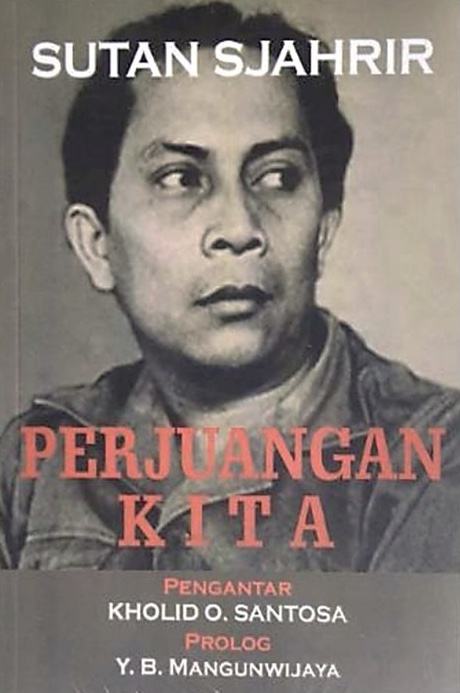
Sutan Sjahrir wrote Perjuangan Kita (Our Struggle) on November 10, 1945, the same day as the Battle of Surabaya, a pivotal clash between Indonesian independence fighters and British-backed Dutch forces. The pamphlet offered a roadmap for building a democratic state after centuries of colonial rule.
This document became a coherent program for the national independence struggle during the armed conflict with the Netherlands. Benedict Anderson, the eminent scholar of Southeast Asian nationalism, called it a revolutionary roadmap at a moment when many leaders were still caught up in the euphoria of the proclamation of independence.
Sjahrir dissected the central dilemma of revolution: how to build strength while preserving the soul of democracy and popular sovereignty. He wrote with analytical calm in the midst of acute danger.
The questions he raised remain alive today. Has our independence been filled with substance, or is it still a name without content?
Key Points
-
Colonial fascism preceded European fascism, The Dutch established Boven Digul (a colonial concentration camp in Dutch New Guinea) before Hitler built Buchenwald. Colonialism fused modern rationality with feudal oppression into a sophisticated machine of control.
-
Democracy as the foremost priority, Nationalism functions as the glue of struggle. Democracy keeps the revolution from collapsing into feudal fascism, as happened in Italy and Germany. Hitler, Mussolini, and Franco demonstrated where nationalism without a democratic foundation leads.
-
Independence must have substance, People need land, fair wages, education, and healthcare. The symbols of independence do not change lives if policy never touches basic needs.
-
Democratization starting from the village, The village is democracy's foundation. Sjahrir argued for representative councils at every level, from village to capital, so that ordinary people could participate in governing themselves.
-
Class consciousness prevents manipulation, People need to understand power relations within an independent nation. Nationalism, religion, and ethnicity can easily be used to conceal economic injustice.
-
The military is an instrument of revolution, The military protects the revolution. The goal remains popular democracy. The spirit of the people provides the compass for defense.
-
Revolution requires organization, Great energy without structure quickly dies out. A disciplined cadre party transforms the energy of the people into a directed movement.
-
Sovereignty moves along a spectrum, A nation exists within a global network. Room to maneuver must be expanded through calculated openness.
Critique of the Japanese Fascist Legacy
The Planted Poison of Propaganda
Sjahrir surveyed Indonesia's condition two months after the proclamation of independence. The state was born in chaos. The people were anxious. Leaders were uncertain. The energy of youth was overflowing without strategic direction.
Japanese propaganda redirected popular hatred toward other targets. Young people were trained to be obedient soldiers, not independent thinkers. They were conditioned to submit to the cult of the leader.
Secret movements such as the Black Dragon and the Black Fan further shaped a fascist mentality. Many young people rejected Japan on the surface while absorbing fascist logic in their everyday actions.
Colonial Fascism That Preceded Europe
Sjahrir argued that fascism in the colonized territories appeared before fascism in Europe. The Dutch combined modern rationality with local feudalism. That system produced a colonial fascism that was old and well-entrenched.
The Pangrehpraja, the Dutch-era colonial civil service apparatus that governed rural populations, was a tool of control inherited from feudalism. Villagers were treated as semi-slaves. Boven Digul was built before Buchenwald.
Core idea: Colonialism is an early form of fascism. The struggle against colonialism means fighting a system of oppression that transcends national borders.
People's Revolution and Narrow Nationalism
Two Faces of the Indonesian Revolution
The Indonesian Revolution carried both a national dimension and a popular dimension. From the outside, it appeared as a struggle for independence. From the inside, it became an effort to dismantle the feudal structures that had persisted for so long.
Feudalism still clung to the village. The colonial rulers had preserved feudal remnants to resist change. Villagers lived within structures that held back social progress.
The Danger of Nationalism Without Democracy
Sjahrir issued a sharp warning. A national revolution requires foundations of democracy and social justice. These foundations keep the revolution from sliding into feudal fascism.
Consciousness about feudalism is the key. Without this awareness, people may ally themselves with the very structures that oppress them. The solidarity that emerges will be hierarchical, not popular.
Democracy must be the foremost priority. The national revolution is the product of a democratic revolution. Inciting hatred toward foreign nations is easier, but that path fades quickly. Hitler, Mussolini, and Franco proved what happens to nationalism that loses its democratic direction.
A Different Context from the French Revolution
Indonesia's context differed vastly from eighteenth-century France. The world already knew atomic energy, trusts, cartels, the telegraph, radio, large factories, and modern capital.
The French Revolution opened the way for capitalist imperialism. The Indonesian Revolution was directed toward ending that history. The social struggle had become a global current as a consequence of the capitalist-imperialist system.
Core idea: The symbols of independence are not enough. The substance of freedom arrives through living democracy and concrete social justice.
Democracy as Both Goal and Instrument
A Genuinely Democratic Constitution
Sjahrir positioned the Republic of Indonesia as an instrument of democratic struggle. A constitution influenced by fascism needed to be replaced with a genuinely democratic one.
A new constitution places the rights of the people at its foundation. Freedom of thought, speech, religion, and the press; the right to a decent livelihood, education, and universal suffrage, these form the central pillars. State power is derived from the rights of the people, and is limited by those rights.
Democratization from the Village
Sustained revolution is rooted in the village. That is where the majority of the people live and work.
Thorough democratization must run from the village to the center. People's representative councils at every level connect policy with real needs. The old Pangrehpraja is redirected toward supervisory or technical functions.
A democratically organized village contains disorder at its root. Villagers can organize themselves, solve problems, and carry out reforms.
Independence That Has Substance
Independence is meaningful when democracy is alive. A victory with substance means concrete change for the people.
Symbols are not enough. Flags and national anthems do not provide food. People need land, fair wages, education, healthcare, and genuine political participation.
Core idea: Democracy is born from an organized and rights-conscious popular struggle. A strong village foundation keeps the center from breaking down.
Indonesia in the International Context
The Hard Reality of Geopolitics
Indonesia stood in the midst of great-power competition. The Netherlands held on in the Indonesian archipelago because of British support.
Japan had expelled the Dutch. The United States then became the dominant power in the Pacific. Opportunities opened; constraints appeared alongside them. Full independence was difficult to achieve as long as imperialism and global capitalism remained strong.
Dependence on World Change
Sjahrir acknowledged that Indonesia's fate was tied to international transformation. Major shifts in the global order would determine the room a new nation had to maneuver.
Independence often arrives as independence in name only. Small nations remain within the orbit of large capitalist powers. Full independence demands a transformation in the structure of the world.
Realism in Foreign Relations
Sjahrir rejected naivety. Indonesia needed economic relations with the outside world. Isolation weakens a state that is still fragile.
Openness must be calculated with care. The safety of the people is its boundary. Strong democracy prevents hatred rooted in nationality.
Core idea: Sovereignty lies on a spectrum. Room to maneuver must be expanded through strategy that is conscious of the global context.
The Role of Workers, Farmers, and Youth
The Working Class and International Class Consciousness
Global capital was concentrated in major centers such as Wall Street. War debts made the power of capital international in character. The labor struggle needed to be organized across national borders.
National solidarity is important during the period of revolution. That solidarity must then rise to become international solidarity. Excessive nationalism weakens class consciousness.
Workers must demand popular rights: freedom of speech, writing, assembly, and meeting; the right to strike; job security; healthcare, education, and fair wages.
Farmers and Revolution in the Village
Independence becomes meaningful for farmers when popular sovereignty is alive in the village. The revolution must eliminate feudalism in rural areas, both in the form of landlordism and in feudal governance structures.
Java's population density demanded concrete action. Transmigration and planned industrialization formed a dual path. Industrialization would absorb rural labor. Remaining villages could raise their standard of living through cooperative enterprise.
Peasant unions would serve as a bridge between farmer and worker. Organization kept farmers from fragmentation and oppression.
Youth as Pioneers
Sjahrir corrected the illusion about the role of youth. The energy of young people arises from social conditions that are already ripe for change. Youth respond to a situation that is already ready to transform.
The true victors of revolution are the many: workers, farmers, the educated, and youth. The main driving force lies with organized workers and conscious farmers.
Youth play the role of pioneers. They open the path for the people who come after them.
Core idea: Class consciousness protects ordinary people from elite manipulation. Identity can be used to distract attention from economic injustice.
Organization and the Revolutionary Party
The Party as an Ideological Army
Sjahrir emphasized the need for strong organization. Revolution requires structure, strategy, and leadership that understands modern struggle.
A disciplined cadre party is a vital instrument. Theoretical knowledge and modern organization direct the energy of the people toward effective movement.
Party leadership demands specific qualifications. Strategy is realized in concrete decisions: when to move, when to hold back, what instruments to use, and which forces to deploy.
The Strategic Function of the Party
The party manages the social forces that can be mobilized. The party sets strategy and tactics. The party forms and uses the instruments of struggle.
The party is rooted in the people. The interests it defends are the interests of the broad public. Balance is maintained between listening to aspirations and providing guidance based on a broader political understanding.
Core idea: The party is a political school, a strategic center, and a fighting organization. Trained cadres who are rooted in the people are an urgent necessity.
The Danger of Militarism
Necessity and Danger
Indonesia needed a modern military and a people's militia system. Military development was a priority given the harsh geopolitical situation.
Sjahrir issued a strong warning. Military necessity must not displace the goals of the revolution. People's revolution remains the direction.
State instruments are necessary in the struggle. The spirit of popular sovereignty must guide them so that the military does not develop into a power that suppresses the people.
The Military as an Instrument of Struggle
Sjahrir emphasized the boundary between defense and militarism. This boundary must be maintained through political discipline and the spirit of popular sovereignty.
A revolution can die from militarism. Many revolutions have collapsed when the instrument of defense became the ruler.
Core idea: Sjahrir's warning proved prescient. Post-independence history shows how militarism came to dominate politics. The New Order (Orde Baru) regime under Suharto exposed the wound he had feared.
Further Reading
Related Mental Models
Sjahrir's thinking connects to several mental models:
- Class Consciousness, People need to understand class dynamics to avoid being easily manipulated.
- Second-Order Thinking, Revolutionary decisions carry long-term consequences.
- Margin of Safety, Calculated openness preserves national sovereignty.
- Leverage, A small, disciplined organization can transform a large society.
Historical and Academic Sources
- Primary Text: Perjuangan Kita (1945), Digital archive, National Library of Indonesia.
- Academic Commentary: Benedict Anderson, Java in a Time of Revolution (1972).
- Historical Context: George McTurnan Kahin, Nationalism and Revolution in Indonesia (1952).
- Political Thought: Sutan Sjahrir, Out of Exile (1949), his letters and reflections from Dutch internment.
Q&A
Q: Why is Perjuangan Kita called the most important political pamphlet of the Indonesian Revolution? A: Benedict Anderson described it as a coherent program for the national independence struggle during the armed conflict of 1945–1949. The pamphlet provided clear analysis and a democratic roadmap when many leaders still lacked a common direction.
Q: What sets Sjahrir's vision apart from other revolutionary leaders? A: Sjahrir placed democracy as the foremost priority. He saw the national revolution as the product of a democratic revolution. When democracy is not the foundation, nationalism easily transforms into feudal fascism.
Q: Why did Sjahrir criticize the legacy of the Japanese occupation? A: The Japanese occupation planted fascist poison. Young people were trained to be obedient soldiers. Propaganda redirected hatred toward foreign nations and toward the Chinese-Indonesian community. Secret movements shaped the way young people thought.
Q: What did Sjahrir mean by independence that has substance? A: Substantive independence means concrete change: land for farmers, fair wages for workers, education for children, healthcare, and genuine political participation.
Q: Why does democratization need to begin from the village? A: The village is where the majority of the people live. The central structure is fragile if the village is not democratic. People's representative councils at every level keep the revolution rooted in the people.
Q: How did Sjahrir view the role of political parties? A: A disciplined cadre party is a political school and a strategic center. The party transforms the energy of the people into an organized movement with clear tactics.
Q: What danger of militarism did Sjahrir warn against? A: A military built to protect the revolution can become the ruler. Indonesian history shows how militarism once dominated politics and weakened democracy.
Q: Why did Sjahrir argue that colonial fascism preceded European fascism? A: The Dutch built a colonial system that combined modern rationality with feudalism. Boven Digul was established before Buchenwald. The Pangrehpraja was a tool of control that resembled fascism.
Q: How did Sjahrir view Indonesia's position in international politics? A: He saw sovereignty as a spectrum. Indonesia needed carefully calculated openness to protect its room to maneuver within global capitalist dominance.
Q: Is Sjahrir's vision still relevant today? A: Its relevance remains strong. Indonesia continues to wrestle with nationalism and social justice, symbol and substance, elite and people, military and civilian, local and global. The question of independence that has genuine substance remains open.
Critical Assessment
Strengths
1. Analytical Clarity in the Middle of Chaos
This pamphlet was born when the political situation was volatile. Sjahrir wrote with analytical calm and the courage to speak unpopular truths.
2. Long-Term Vision
Sjahrir saw democracy and social justice as a long project. He reminded readers that expelling the colonizers was only the first step.
3. Balanced Political Realism
He combined democratic idealism with geopolitical realism. This balance keeps the pamphlet relevant as a guide to practical politics.
4. Intellectual Courage
Sjahrir criticized narrow nationalism, militarism, and illusions about the role of youth. This stance demonstrates strong intellectual integrity.
Limitations
1. Assumptions about the Growth of Class Consciousness
Sjahrir hoped that class consciousness would develop quickly through organization and education. Historical experience shows the process is far more difficult.
2. Dependence on the Quality of Party Leadership
The cadre party vision rests on leaders who are knowledgeable and have integrity. The institutional mechanisms for guaranteeing succession are not discussed in detail.
3. Implementation Details of Democratization
The pamphlet does not yet answer the technical details of building people's councils within feudal structures and with limited resources.
4. Limited Gender Perspective
The analysis focuses heavily on male workers, farmers, and youth. The role of women in the revolution does not receive adequate attention.
Conclusion
Perjuangan Kita is an important political document with sharp analysis and a clear vision. The pamphlet offers a democratic direction rooted in popular sovereignty.
A rating of 5/5 reflects its historical significance, analytical depth, and enduring relevance. It is essential reading for anyone who wants to understand the intellectual roots of Indonesian democracy and the challenges of revolution that tend to recur.
Next Steps
After reading Perjuangan Kita, you can broaden your understanding by:
- Exploring related mental models, Class consciousness, second-order thinking, and margin of safety help in reading political dynamics.
- Reading contemporary analysis, Compare Sjahrir's ideas with Indonesia's current political practice.
- Comparing with other thinkers, Trace the visions of other revolutionary figures to see the different paths taken.
A reflective question: has the democratic revolution that Sjahrir envisioned been achieved, and which parts still need to be fought for?