Why This Book Matters
Imagine waking up one morning and realizing the world that has felt stable is changing fundamentally. The dollar is losing value. China, once a developing country, now rivals America. Political polarization is getting worse. Government debt is exploding. Central banks are printing money in amounts never seen before in history.
Is this the first time? Or a pattern that has repeated hundreds of times throughout history?
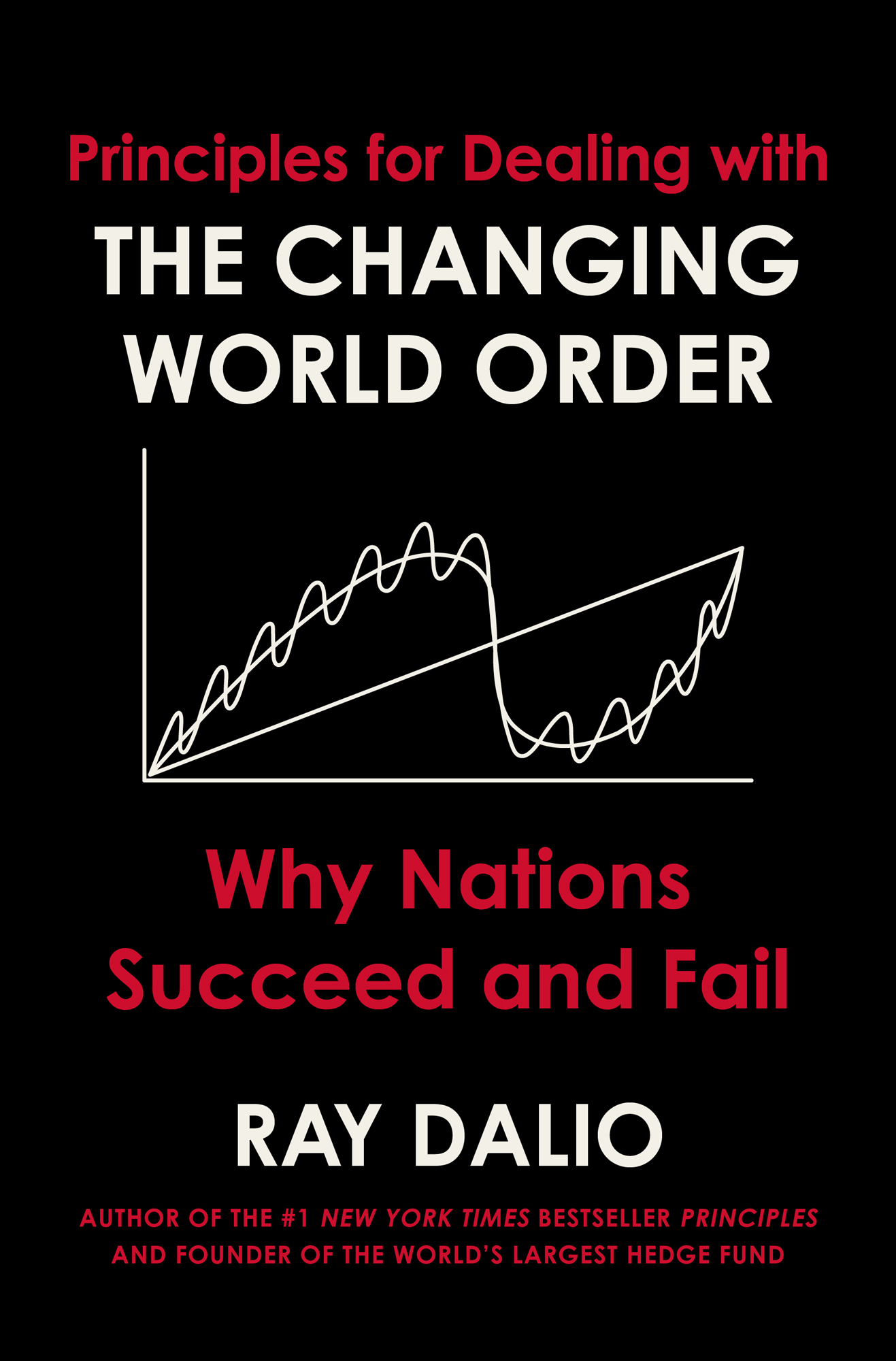
Ray Dalio answers with extraordinarily deep research. He studied 500 years of history of major empires, including the Dutch, British, American, and Chinese, plus Chinese dynasties since 600 AD. He found clear, repeating patterns: the world moves in big cycles driven by the struggle to create, capture, and distribute wealth and power.
His conclusion is striking. The United States is now in the late stages of a Big Cycle that began in 1945. All the classic markers are present. Large debts that cannot be paid with normal money. Widening wealth gaps. Extreme political polarization. Massive money printing. The emergence of rival power China challenging the existing order.
This book provides a lens to see what is coming and how to prepare. Dalio does not offer certainty because no one can. He provides understanding of patterns, probabilities, and principles to navigate the major changes happening now.
Core Summary
Every major empire follows three predictable phases: rise, peak, and decline. This pattern comes from empirical observation across hundreds of years of historical data.
The rise phase begins when strong leadership designs systems that increase wealth and power. The country innovates, creates new technology, develops capital markets. The Dutch created the first public company (Dutch East India Company) and the first stock market. Amsterdam became the world's financial center when the Dutch excelled, London when Britain peaked, New York now.
The peak phase is when success is embedded but the seeds of decline begin to grow. People in wealthy countries become more expensive and less competitive. Values shift from the generation that struggled to achieve wealth to the generation that inherited it. Wealth gaps grow. Having a reserve currency gives the privilege to borrow more money, which gets the country deeper in debt.
The decline phase usually comes from internal economic weakness combined with internal battles, costly external battles, or both. When debt becomes very large, the country can no longer borrow money to pay its debts. Countries almost always choose to print lots of money, which lowers the currency's value and raises inflation. These turbulent conditions undermine productivity and cause more conflict.
The framework Dalio built provides a lens to see what is coming and how to prepare. The United States is now in the late peak phase or early decline phase. All the markers are present: large debt above 100% of GDP, extreme wealth gaps at levels like the 1930s, severe political polarization, and a rising rival power in China.
History doesn't repeat, but it rhymes.
Key Concepts
The Big Cycle: Three Eternal Phases
All major empires follow three predictable phases: rise, peak, and decline. This comes from empirical observation across hundreds of years of historical data.
The Rise Phase
This phase begins when strong leadership successfully designs systems that increase wealth and power. These systems always involve strong education that teaches knowledge alongside character and work ethic, respect for rules and law, and productive cooperation.
Successful countries then innovate and create new technology. The Dutch at their height created a quarter of the world's major inventions. They built ships that could sail around the world and capitalism as we know it today. As countries become more productive, their share of world trade increases. To protect trade routes, they develop military power.
Countries then develop capital markets for lending, bonds, and stocks that allow people to turn savings into investments. The Dutch created the first public company in the Dutch East India Company and the first stock market. Amsterdam became the world's financial center when the Dutch excelled, London when Britain peaked, New York now.
When a country becomes the largest trading empire, its transactions are paid in its own currency. People around the world want to save in it. That currency becomes the world's leading reserve currency, allowing the country to borrow more at lower interest rates.
The Peak Phase
This phase is when success is embedded but the seeds of decline begin to grow. Over time, obligations accumulate and undermine the conditions that drove the rise.
As people in wealthy countries earn more, they become more expensive and less competitive. Other countries naturally copy the methods and technology of the leading power. British shipbuilders hired Dutch designers to design better ships built by cheaper British workers. Britain rose and the Dutch declined.
When people become wealthier, they tend not to work as hard as they used to. They enjoy more leisure time and at extremes become decadent. Values shift from generation to generation: from those who struggled to achieve wealth to those who inherited it. The new generation is less tested, drowning in luxury, accustomed to the easy life.
When people grow accustomed to success, they bet that good times will continue and borrow money to do so, causing financial bubbles. In capitalist systems, wealth gaps grow. The wealthy use their resources to expand power and give privileges to their children like better education, causing value, political, and opportunity gaps to expand.
During the peak, the financial picture of the leading country changes. Having a reserve currency gives the privilege to borrow more money, which gets the country deeper in debt. This increases purchasing power in the short term and weakens it in the long term. The costs of maintaining and defending the empire become greater than the revenues it brings.
The Decline Phase
This phase usually comes from internal economic weakness combined with internal battles, costly external battles, or both. The country's decline comes gradually and then suddenly.
Internally: when debt becomes very large and there is an economic downturn, the country can no longer borrow money to pay its debts. This forces the country to choose between defaulting or printing lots of new money. Countries almost always choose to print lots of money. This lowers the currency's value and raises inflation.
At times like this, when government funding problems collide with bad financial conditions and large wealth gaps, internal conflict between the rich and the poor intensifies. Political extremism emerges as left-wing or right-wing populism. Those on the left seek to redistribute wealth. Those on the right seek to defend wealth.
Externally: when a rising great power becomes capable of challenging the existing power, the risk of major international conflict increases, especially if internal conflict already grips the existing power. Defending against foreign rivals requires large military spending, which must happen even when domestic economic conditions worsen.
When all these forces align, including large debt, civil war or revolution at home, war abroad, and loss of confidence in the currency, change in the world order is usually near.
Key insight: This three-phase framework captures the essence of complex patterns in a usable model. Most useful is its ability to diagnose a country's position in the cycle. The United States now sits in the late peak phase or early decline phase.
The Long-Term Debt Cycle: The Engine That Drives Everything
Money and credit are the biggest influences on how wealth and power rise and fall. If you don't understand how they work, you cannot understand what is coming.
There are two debt cycles: the short cycle of about 8 years that we know as the business cycle, and the long cycle of 50-75 years. Most people only know the short one and are surprised when the long one happens because it only happens once in a lifetime.
Six Stages of the Debt Cycle
Stage 1: Little or No Debt and Hard Money. The debt burden from the last cycle is mostly wiped out by debt restructuring and monetization. Because of the consequences of this, especially inflation, there is a return to hard money like gold and silver. Gold is the only financial asset that is not someone else's liability.
Stage 2: Claims on Hard Money. Because carrying a lot of metal coins is risky and impractical, credible parties emerge that put hard money in a safe place and issue paper claims on it. Soon people treat these paper claims as if they were the money itself. This type of system is called a currency-backed system or gold standard.
Stage 3: Increasing Debt. Paper claim holders and banks discover the magic of credit and debt. The whole society loves it because it causes asset prices and production to rise. More lending happens repeatedly, there is a boom, and the number of claims on money rises relative to the amount of actual goods and services.
Stage 4: Debt Crisis, Default, and Devaluation. Banks face the choice of letting money flow out of debt assets, which would raise interest rates and worsen economic problems, or printing money to prevent interest rates from rising. Central banks eventually break the link, print money, and devalue because the alternative causes an unbearable deflationary depression.
Stage 5: Fiat Money. Central banks want to stretch the cycle as long as possible. So when the hard money system becomes too painfully restrictive, governments usually abandon it in favor of fiat money. The risk is that those who control the printing press will create more money and debt assets until the time comes when those holding large amounts of debt will try to exchange them for goods and services.
The last shift occurred in the U.S. on August 15, 1971. President Nixon told the world that the dollar would no longer be tied to gold. In the years leading up to 1971, the U.S. government had spent a lot of money on military and social programs paid for by borrowing money. Smart investors saw that the amount of outstanding claims on gold was far greater than the amount of gold in the bank, so they exchanged their claims.
Stage 6: Flight Back to Hard Money. Excessive fiat currency printing eventually leads to selling debt assets and bank run dynamics, which reduce the value of money and credit, driving people to flee from the currency. History shows people usually switch to gold, silver, stocks that maintain their real value, and currencies in other countries that don't have these problems.
Fundamental Principles of Debt
Debt eats equity. This means debt must be paid above all else. If you own a house and cannot make mortgage payments, the house will be sold or taken. Creditors will be paid before homeowners.
There is no fixed amount of money and credit. Central banks can create them easily. People enjoy it when central banks make lots of money because it gives them more purchasing power. When money and credit are spent, most goods, services, and investment assets rise in price. It also creates debt that must be paid back, which requires people to eventually spend less than they earn, which is difficult and painful.
Historical data shows that of about 750 currencies that have existed since 1700, only around 20 percent remain, and all have been devalued. Go back to 1850 and the world's major currencies look nothing like what exists now. Some were completely wiped out, mostly in countries that had hyperinflation or lost wars. Some were merged into new currencies, as individual European currencies merged into the euro. Some remained but were devalued, like the British pound and the U.S. dollar.
Key insight: The long-term debt cycle framework is Dalio's most important contribution to our understanding of economics and geopolitics. Most economists focus on the 8-year business cycle. They miss the far larger 50-75 year cycle because it only happens once in a lifetime.
The Internal Cycle: From Order to Chaos
Internal order usually changes through a relatively standard sequence of stages, like the progression of a disease. By looking at the symptoms we can tell which stage a country is in.
Six Stages of the Internal Cycle
Stage 1: A New Order Begins. The stage after civil war or revolution, when the winners gain control and the losers must submit. At its worst, this produces the most brutal periods, like the Reign of Terror after the French Revolution and the Red Terror after the Russian Revolution. At its best, they resemble the period after the U.S. Civil War or Roosevelt's peaceful revolution of the 1930s.
Stage 2: Systems Are Built and Refined. The stage when the design and creation of systems matters most. The work is to design systems that direct people to row in the same direction with respect for rules and law, and to arrange effective resource allocation systems that increase productivity. As Aristotle wrote: "A state tends to be well-governed where the middle class is large."
Stage 3: Peace and Prosperity. The sweet spot of the cycle. People have abundant opportunities to be productive, work well together, produce a lot, and become wealthy. Conditions improve for almost everyone, so most of the next generation lives better than the previous generation. Widespread optimism about the future takes hold.
Stage 4: Period of Excess. Classically there is a rapid increase in debt-financed purchases, so debt growth exceeds future cash flow capacity. Bubbles form. Spending shifts more toward consumption and luxury goods and less toward profitable investments. Large wealth and opportunity gaps emerge alongside resentment between classes.
Stage 5: Bad Financial Conditions and Intense Conflict. The period when interclass tensions and worsening financial conditions reach their peak. The classic toxic mix: the country in bad financial condition, large income and wealth gaps, severe negative economic shock. That convergence usually brings disorder, conflict, and sometimes civil war.
The single most reliable leading indicator of civil war or revolution is bankrupt government finances combined with large wealth gaps. When the government lacks financial strength, it cannot bail out private sector entities that need rescue, it cannot buy what is needed, it runs out of power.
Stage 6: Civil War. Civil wars happen to radically change the internal order. They include a total restructuring of wealth and political power. These changes follow naturally from needing big changes that cannot be made within the existing system. Civil war periods are usually very brutal. Elites and moderates generally flee, get imprisoned, or are killed.
The United States' Current Position
The United States is now in Stage 5. The evidence is overwhelming:
- Bad financial condition: Federal debt more than $30 trillion, above 100% of GDP. Deficits more than $1 trillion per year even in a good economy. Unfunded obligations like Social Security and Medicare exceeding $150 trillion.
- Extreme wealth gap: The top 1% controls more wealth than the bottom 90%. Gap levels like the 1930s.
- Severe political polarization: Media trust at all-time low of 13%, political violence increasing, people from both sides increasingly see opponents as existential enemies.
- Rising populism: Trump on the right, Sanders/Warren/AOC on the left, both anti-establishment and promising radical change.
- Truth lost: No agreed-upon facts anymore. Each side lives in its own information bubble.
With 60-80% of red flags present, Dalio estimates about a 1-in-6 chance of severe internal conflict. This is a probability assessment based on history.
The External Cycle: International Law of the Jungle
The international order follows the law of the jungle far more than international law. Unlike internal systems with laws, police, judges, and clear consequences, at the international level power wins over agreements, rules, and laws every time.
Five Types of Interstate Battles
Trade/Economic Wars: Conflicts over tariffs, import or export restrictions, and other ways to economically harm rivals.
Technology Wars: Conflicts over which technologies are shared and which are held as protected national security aspects.
Geopolitical Wars: Conflicts over territory and alliances resolved through negotiation and commitment, with combat held in reserve as a last resort.
Capital Wars: Conflicts enforced through financial tools like sanctions and restricting foreign access to capital markets.
Military Wars: Conflicts involving actual shooting and deployment of military forces.
Most battles start with the first four types and escalate over time until military war begins. Once military war starts, all other dimensions get used as weapons to the maximum extent possible.
The U.S.-China Conflict Now
If you pay attention, all types of war except military war are already active:
Trade War (2018-present): Trump tariffs on Chinese goods, China retaliates with tariffs on U.S. goods. Escalation continues under the Biden administration.
Technology War (2019-present): U.S. ban on Huawei, chip export controls, restrictions on Chinese students in sensitive tech fields. China responding with the Made in China 2025 program to achieve tech independence.
Capital War (2020-present): U.S. threatening delisting of Chinese companies from stock exchanges, sanctions on Chinese officials, restrictions on U.S. investment in Chinese companies. China implementing dual circulation strategy to reduce dependency on the dollar system.
Geopolitical War (ongoing): Conflicts over Taiwan, South China Sea, Belt and Road Initiative vs U.S. alliances. Both sides building coalitions. The U.S. with the Quad including India, Japan, and Australia. China with the Shanghai Cooperation Organization.
Only Military War has not happened yet. But all ingredients are present. History shows that when the first four types of war are already active, military war often follows.
Most dangerous is the Taiwan issue. For China, Taiwan is existential. They will go to war for it. For the U.S., Taiwan is a commitment that is difficult to back away from. A classic prisoner's dilemma that has not been resolved.
Key insight: The probability of major conflict, economic or military, between the U.S. and China within 5-10 years is high, perhaps 60-70% based on historical patterns. The driver here is structural forces that push empires toward conflict when one is rising and one is declining.
Practical Lessons
For Investors and Decision Makers
Geographic diversification is crucial. Don't put all eggs in one country basket. Companies that only operate in the U.S. or only in China face vulnerability from policy changes, currency devaluation, or conflict. Build exposure to multiple jurisdictions.
Prepare for deglobalization. The 1945-2020 era was peak globalization. We are now entering an era of competing blocs. Supply chains that span U.S.-China geopolitical fault lines will be disrupted. Build resilience through redundancy and optionality.
Understand currency risk. Holding pure dollar assets or pure renminbi assets is a bet that the currency will stay stable. History shows this is a bad bet. Of about 750 currencies that have existed since 1700, only around 20 percent remain, and all have been devalued. Diversify currency exposure.
Watch debt levels carefully. Companies with high leverage are vulnerable when the credit cycle turns. Cash-rich companies with low debt survive crises and even thrive, since they can acquire distressed assets cheap. Debt becomes a deadly weapon when the cycle changes.
For Personal Life
Build financial resilience. Emergency fund in multiple currencies. Hold some hard assets like gold and real estate. Don't assume the dollar or your local currency will hold value. All currencies devalue or die. History proves this without exception.
Create geographic optionality. Have the option to relocate if things deteriorate. Second passport, property in another country, skills that are portable across borders. These are modern insurance. Elites and moderates generally flee when internal conflict reaches its peak.
Understand cycles and your position. Know which phase your country is in the Big Cycle. If late-cycle like the U.S. now, be more defensive. If early-cycle, be more aggressive. Strategies that work in the Rise Phase, like leverage for growth, are fatal in the Decline Phase.
Don't fight the Fed, but don't trust it either. Central banks will print money to avoid depression. Good for assets in the short term as stocks and real estate rise. Bad for savings in cash. Position accordingly. Own assets that benefit from monetary expansion. Don't hold excess cash.
For Strategic Decision Making
Think in probabilities. Dalio does not predict that war or crisis will definitely happen. He estimates probabilities based on historical patterns. A 60-70% chance of conflict falls short of certainty, yet remains high enough to prepare seriously.
Have multiple scenarios. Best case is peaceful transition and cooperation. Base case is managed conflict and deglobalization. Worst case is hot war and financial collapse. Prepare for all three, weight according to probabilities. Most people prepare for the best case and get shocked when the base case or worst case happens.
Monitor leading indicators. Dalio's model identifies leading indicators: debt levels, wealth gaps, political polarization, external tensions. Watch these. When multiple indicators flash red, risk is rapidly increasing. A single indicator can be a false alarm. Multiple indicators converging is a serious warning.
Stay humble about predictions. Nobody can predict the future perfectly. Dalio with all his resources, data, and models still expresses uncertainty. Prepare for a range of outcomes. Don't bet everything on a single prediction. Optionality beats prediction.
Related Reading and Further Resources
This book intersects with several important mental models and frameworks that can deepen your understanding:
- Second-Order Thinking: Dalio uses second-order thinking to analyze the long-term impacts of economic policies and geopolitical decisions.
- Systems Thinking: The three-cycle framework covering debt, internal order, and external order is a strong example of systems thinking in geopolitics.
- Historical Pattern Recognition: The ability to see repeating patterns in history is key to Dalio's insights.
Books and resources that complement this understanding:
- The Rise and Fall of American Growth by Robert Gordon, on economic growth and secular trends.
- The Meritocracy Trap by Daniel Markovits, on wealth inequality and social mobility.
- A Man for All Markets by Edward O. Thorp, on probability and decision-making.
FAQ
Q: Will the United States definitely experience a major crisis like previous empires?
A: There are no certainties, only probabilities. Dalio shows that the U.S. is in the late stages of the Big Cycle with all classic markers present: large debt above 100% of GDP, extreme wealth gaps, severe political polarization, and a rising rival in China. Based on historical patterns, the probability of major disruption within 5-10 years is high, perhaps 60-70%. The situation is dangerous because three cycles converge at once: debt cycle ending, internal conflict intensifying, external order challenged.
Q: Why do all fiat currencies eventually experience devaluation?
A: Because of the incentive structure. Politicians who cut spending lose elections. Politicians who print money to finance popular programs win. When debt becomes too large, governments face a choice: default, which is very politically painful, or print money, which carries hidden consequences. They almost always choose to print money. Of 750 currencies since 1700, only 20% remain and all have been devalued. Nixon broke the dollar's link to gold in 1971 for the same reason.
Q: How can I protect myself from currency devaluation and financial crisis?
A: Diversification is key. Hold assets in multiple currencies. Own hard assets that maintain real value, such as gold, real estate, and productive businesses. Build geographic optionality. Have the option to relocate if the situation worsens. Avoid excess leverage. Cash-rich companies with low debt survive crises. Understand cycles and adjust strategy accordingly. Don't assume stability will continue forever.
Q: Is military conflict between the U.S. and China inevitable?
A: Not inevitable, but highly probable. Of 16 cases in history when a rising power threatens an established power, the so-called Thucydides Trap named after the ancient Greek historian, 12 ended in war. Only 4 were resolved peacefully. The U.S. and China are already engaged in trade war, technology war, capital war, and geopolitical war. Military war is the only one that has not happened yet. Taiwan is the most dangerous flashpoint because it is existential for China and a commitment for the U.S. Both sides have made public commitments that are difficult to back away from.
Q: What can we learn from the empire cycles of the Dutch and British?
A: The same pattern repeats. The Dutch in the 1600s and the British in the 1800s followed three phases. Rise through innovation, education, and productivity. Peak through wealth, complacency, and excess. Decline through debt, conflict, and weakness. Both had reserve currencies, the guilder and the pound, that gave the privilege to overborrow, leading to eventual devaluation. Both experienced internal conflict when wealth gaps widened. Both were challenged by rising powers. Britain challenged the Dutch. America challenged Britain. Transition is always painful, though not always catastrophic.
Q: Why is wealth inequality the most important leading indicator of internal conflict?
A: Because the combination of bankrupt government finances with large wealth gaps creates toxic conditions. The government has no resources to bail out the private sector or buy social peace. Poor people are angry because the system feels unfair. Rich people are afraid their wealth will be taken. Populism emerges from both sides. The left wants to redistribute wealth. The right wants to protect wealth. When people feel the system is broken and there are no agreed-upon rules anymore, violence becomes an option. Of the 50+ civil wars Dalio studied, this pattern is consistent.
Q: How do we know which stage we are in the Big Cycle?
A: Look at leading indicators. Debt levels relative to GDP. Wealth distribution measured by the Gini coefficient, where 0 is perfect equality and 1 is perfect inequality. Political polarization metrics. Reserve currency status. Relative power versus rivals. The U.S. now: debt over 100% of GDP as red flag, wealth gap like the 1930s as red flag, polarization extreme as red flag, dollar still reserve currency but challenged as yellow flag, China rising rapidly as red flag. Multiple red flags indicate late-stage positioning. Single country comparison is not enough. Look at historical patterns from the Dutch, British, and previous empires for context.
Q: Is there a way to break the cycle and avoid decline?
A: Theoretically yes, practically very difficult. Requires: 1) Restructure debt before crisis, very unpopular politically, 2) Reduce wealth gaps through productivity growth that lifts everyone, well beyond simple redistribution, requires decades, 3) Maintain competitiveness vs rising powers, requires sacrifice from interest groups, 4) Resolve conflicts cooperatively, with war held back as a last resort, requires wisdom and humility that are rare. Dalio is cautiously optimistic that understanding patterns can help us make better decisions, though he admits history shows this is rare. Most empires don't break the cycle. They complete it.
Conclusion
Ray Dalio has made an extraordinary contribution with this book. He takes 500 years of historical data and distills it into an actionable framework for understanding where we are now and where we are headed.
The core lesson from history is that patterns repeat because human nature does not change. All empires rise and fall in three phases. Rise through innovation, education, and productivity. Peak through wealth, power, and overconfidence. Decline through debt, conflict, and weakness. Three big cycles, debt, internal order, and external order, reinforce each other and create moments in history when major transitions happen. We are now approaching one of those moments.
The book's value extends beyond historical analysis to the implications for today. The United States sits in the late stages of the Big Cycle. China is rising. This configuration historically leads to conflict 75% of the time. A probability assessment based on patterns.
The most profound insight is that cycles happen because success naturally breeds excesses. You cannot have a prosperity phase without eventually having a decline phase. They are two sides of the same coin. Wealth leads to complacency. Power leads to overextension. Reserve currency leads to overborrowing. Success sows the seeds of eventual failure.
For individuals, the message is clear. Understand where you are in the cycle and prepare accordingly. Don't assume good times will continue forever. Don't trust that the government will protect you. History shows they rarely do. Diversify across countries, currencies, assets. Build optionality and resilience. Stay humble because the future is uncertain. Understanding patterns gives you an edge.
We stand at one of the major turning points in history. The outcome is not predetermined. With wisdom, cooperation, and understanding of these patterns, we might navigate the transition peacefully. The odds, based on history, are against us. Prepare accordingly.
Dalio is cautiously optimistic. He believes that understanding cycles and patterns can help us make better decisions. History is a blueprint. By studying this blueprint carefully, we have a chance to avoid the worst outcomes and navigate toward better futures.
The window for action is closing. The longer we delay reforms, the more painful the eventual transition will be. That is the sobering message from 500 years of history Dalio has mapped for us.