Why Read This
Picture a man of sixty-five, in the middle of a Europe shattered by the Napoleonic wars, opening a book in translation. On its first pages, he meets a Persian poet who had died four centuries before him. Within a handful of pages, he feels he has found the twin of his own soul.
That is what happened to Johann Wolfgang von Goethe when he read Joseph von Hammer-Purgstall's German translation of the Divan of Hafiz of Shiraz in 1814. Goethe, the greatest poet Germany had ever produced, had already written Faust, The Sorrows of Young Werther, Iphigenie, and dozens of other masterworks. He was tired. Europe was bleeding. The old order had collapsed. He needed a different air to breathe.
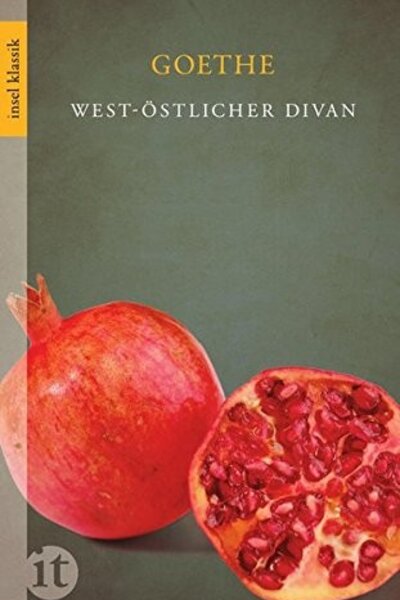
West-östlicher Divan (1819) was born from that meeting: twelve books of poetry that became the greatest cultural bridge ever built by a Western poet toward the East. Goethe wrote them as a student of Hafiz, as a Zwilling (twin), as someone willing to be transformed by what he found in Persian verse.
In this work, Goethe moves well beyond translation or imitation. He enters the Sufi tradition with a humility rarely encountered in Western literature. His poems carry images from Hafiz, the candle and the moth, wine and the cup-bearer, desert and oasis, and channel them into German with equal rhythmic force. Several stanzas quote the Quran directly. He places himself at the threshold of Islamic paradise as a guest who honours his host.
This book will resonate most deeply with readers who seek a bridge between two worlds, who long for love that transforms the soul, who wish to see how a Lutheran poet from Germany could quote the Quran with complete sincerity. For readers with roots in the Islamic tradition, the Divan offers something rare: a mirror of one's own inheritance, seen through the eyes of a genius from another civilisation who came to learn.
Key Points
-
Hijra to the East as purification of the soul - Goethe turned toward the East as Napoleon's wars tore Europe apart. He moved toward the source with steady steps: toward the air of the Patriarchs, toward an older sun, toward a civilisation whose words still carried weight.
-
Hafiz as a brother of the soul across seven centuries - Separated by seven hundred years, two languages, two continents, Goethe and Hafiz experienced the world in the same way: love as a spiritual path, beauty as a window toward the Divine, poetry as the medium between earth and heaven.
-
"Stirb und werde" as the core of transformation - Die and become. Two German words that compress the Sufi philosophy of fana and baqa: without willingness to be broken and reborn, a person remains only a dim guest on a dim earth.
-
"Gottes ist der Orient!" as an ecumenical confession - Goethe drew directly from Quran Al-Baqarah verse 115 and made it the opening verse of the Divan's philosophy. God belongs to every quarter of the wind, reaching across the boundaries of tradition and nation.
-
Ginkgo Biloba as a metaphor for love across ages - A leaf that forks in two, or two leaves that fuse into one. Goethe sent it to Marianne von Willemer on 15 September 1815 as a coded key: two souls recognising each other beneath the pen names Hatem and Suleika.
-
Marianne von Willemer as the hidden poet - Several of the most beautiful poems in the Buch Suleika came from Marianne's own pen. Her identity as co-author was revealed only after her death. It remains one of the most singular love stories in the history of German literature.
-
Sufi wine in the Schenkenbuch - The tradition of khamriyyat flowing from Hafiz and Khayyam: wine as a symbol of Divine love, intoxication as the condition of a soul that releases the grip of the ego, the Saki as spiritual guide.
-
Ashab al-Kahf and Goethe's reverence toward Islam - The closing book of the Divan holds the story of the Seven Sleepers, drawn with vivid care from the Quranic-Persian tradition. Goethe sits at the threshold of Islamic paradise as a guest who honours his host.
-
Love across age is the door to the highest creativity - Goethe wrote the most passionate poems of his long career at sixty-five, in the autumn of his life. Living proof that the capacity to love and create knows no season.
Historical Context: Goethe Meets Hafiz
Hafiz of Shiraz lived around 1315 to 1390. He witnessed the rise and fall of many dynasties, lived under rulers who came and went, and throughout all of it his poems about love, wine, and God became the language of the Persian people for seven centuries. Hafiz was read the way people read a prophet.
In 1812 and 1813, Joseph von Hammer-Purgstall, an Austrian orientalist, published a complete German translation of the Divan of Hafiz. The book reached Goethe in 1814. At almost the same moment, Goethe met Marianne von Willemer in Frankfurt. Marianne was thirty years old, brilliant, a singer and pianist. That meeting ignited something no convention could contain.
Between 1814 and 1819, Goethe wrote twelve books of poetry arranged in the tradition of the Persian Divan. Each book was given a Persian name: Moganni Nameh (Book of the Singer), Hafis Nameh (Book of Hafiz), Uschk Nameh (Book of Love), Suleika Nameh (Book of Suleika), and so on. That structural choice was a declaration: Goethe wrote as a student honouring his master, borrowing even the very architecture of the work.
The collection was first published in 1819 and expanded in 1827. The Noten und Abhandlungen, the notes and long essays that accompany the poems, stand as one of the richest introductions to Persian literature and culture ever written in nineteenth-century Europe.
Central Theme: Hijra to the East
The opening poem of the Divan, "Hegire," is the poet's spiritual declaration of direction.
Nord und West und Süd zersplittern, Throne bersten, Reiche zittern: Flüchte du, im reinen Osten Patriarchenluft zu kosten, Unter Lieben, Trinken, Singen Soll dich Chisers Quell verjüngen.
North and West and South are shattering, thrones crack, kingdoms tremble: flee to the pure East to taste the air of the Patriarchs, amid loving, drinking, and singing the Spring of Khidr shall renew you.
The first four lines map the mental landscape of Europe in the 1810s. "Chisers Quell," the Spring of Khidr, is a deep Sufi reference. Al-Khidr in the Islamic tradition is the eternal servant of God, keeper of hidden knowledge, teacher to those who journey in the spirit. Goethe chose Khidr as the symbol of renewal, setting aside Achilles or Odysseus from his own tradition.
In the following stanza Goethe voices his longing for a primordial language, when words still carried weight:
Wie das Wort so wichtig dort war, Weil es ein gesprochen Wort war.
How weighty the word was there, because it was a spoken word.
Goethe longed for the age when a spoken word was covenant, oath, prayer, and life itself all at once. His hijra to the East was a movement of the soul toward the point where word and truth still shared a single breath.
Seven Masterworks: Verses Every Reader Should Know
1. Selige Sehnsucht: "Stirb und werde"
One of the greatest poems in the German language, considered the summit of Sufi transformational philosophy in Western literature.
Sagt es niemand, nur den Weisen, Weil die Menge gleich verhöhnet: Das Lebendige will ich preisen, Das nach Flammentod sich sehnet.
Keine Ferne macht dich schwierig, Kommst geflogen und gebannt, Und zuletzt, des Lichts begierig, Bist du Schmetterling verbrannt.
Und so lang du das nicht hast, Dieses: Stirb und werde! Bist du nur ein trüber Gast Auf der dunklen Erde.
Tell it to no one, only to the wise, for the multitude will mock at once: I wish to praise the living, which yearns for death in flame... No distance troubles you, you come flying and enchanted, and at last, thirsting for light, you are the moth that burns. And as long as you have not this, "Die and become!" you are only a dim guest on this dark earth.
The image of the moth burning in the candle flame is an inheritance from Rumi, Hafiz, and Attar. Goethe received it and gave it an equivalent in the purest German. Here the Divan proves itself: two of the most august poetic traditions in the world, meeting in a single flame.
2. Talismane: "Gottes ist der Orient!"
Gottes ist der Orient! Gottes ist der Occident! Nord- und südliches Gelände Ruht im Frieden seiner Hände!
God's is the East! God's is the West! The lands of north and south rest in the peace of His hands!
These four lines echo directly from Quran Al-Baqarah verse 115. Goethe invited that verse into his poem with full awareness, then built upon it an ecumenical profession of faith. A bold theological position for a Lutheran German poet in the nineteenth century.
3. Ginkgo Biloba: The Leaf That Shares Itself
The most widely quoted poem of the entire Divan, carved onto plaques, preserved on rings and gravestones across Europe.
Dieses Baums Blatt, der von Osten Meinem Garten anvertraut, Gibt geheimen Sinn zu kosten, Wie's den Wissenden erbaut.
Ist es ein lebendig Wesen, Das sich in sich selbst getrennt? Sind es zwei, die sich erlesen, Daß man sie als eines kennt?
Solche Fragen zu erwidern, Fand ich wohl den rechten Sinn: Fühlst du nicht an meinen Liedern, Daß ich eins und doppelt bin?
(In English: "This tree's leaf, entrusted from the East to my garden, offers secret meaning to savour as it edifies the knowing. Is it one living being that has divided within itself? Are there two who have chosen each other so that the world knows them as one? Such questions answered rightly: I have found the meaning at last. Do you not feel in my songs that I am one and double?")
The ginkgo leaf holds a singular biology: a single leaf notched toward the centre, as though two leaves have joined into one, or one leaf has opened into two. Goethe turned it into a botanical riddle and the deepest possible metaphor for self and beloved. The ginkgo is the oldest tree on earth, a living fossil from 270 million years ago, predating the age of dinosaurs. A choice this perfect could only come from genius joined to sincerity.
4. Wiederfinden: The Reunion of Two Cosmic Souls
The cosmological crown of the Buch Suleika.
Stumm war alles, still und öde, Einsam Gott zum ersten Mal! Da erschuf er Morgenröte, Die erbarmte sich der Qual.
Allah braucht nicht mehr zu schaffen, Wir erschaffen seine Welt.
All things were mute, still and empty, God alone for the first time! Then He created the dawn of morning, which took pity on that suffering... God need create no more, we create His world.
Goethe moves from the personal to the cosmological within a single poem. The reunion of two souls long separated is a re-enactment of the first act of creation. Love is the force that gathers again what was scattered. The final line, "Wir erschaffen seine Welt", is a bold theological climax: human love as participation in God's ongoing act of creation.
5. Baghdad Is Not Far for Those Who Love
Bist du von deiner Geliebten getrennt Wie Orient vom Occident, Das Herz durch alle Wüsten rennt; Es gibt sich überall selbst das Geleit, Für Liebende ist Bagdad nicht weit.
(In English: "If you are separated from your beloved like East from West, the heart runs through all deserts; it gives itself escort everywhere. For lovers, Baghdad is not far.")
Five lines that rank among the most concentrated love verses in world literature. Physical distance loses its power before genuine longing. For those who love, the map of the world contracts to the size of one's own heartbeat.
6. An Suleika: Rose Oil and the Crushing of Souls
Short on the page, heavy in meaning.
Knospend müssen tausend Rosen Erst in Gluten untergehn,
Um ein Fläschchen zu besitzen, Das den Ruch auf ewig hält, Schlank wie deine Fingerspitzen, Da bedarf es einer Welt.
Hat nicht Myriaden Seelen Timurs Herrschaft aufgezehrt?
A thousand budding roses must first dissolve in fire... To possess one small flask that holds the fragrance forever, as slender as your fingertips, a whole world is required. Did not Timur's dominion consume myriads of souls?
Three layers of meaning converge: the distillation of rose oil that melts thousands of blossoms, every luxury that rests upon a mountain of suffering, and a moral question about power and the price of souls. Goethe names Timur Lenk from four centuries before, with precise timing as Napoleon retreated from Russia. Temporal distance is a literary master's way of speaking about what is most dangerous to say directly.
7. Gute Nacht: The Poet's Grand Closing
Twelve lines that carry the weight of the entire Divan.
Nun, so legt euch, liebe Lieder, An den Busen meinem Volke! ... Und in einer Moschuswolke Hüte Gabriel die Glieder Des Ermüdeten gefällig...
Ja, das Hündlein gar, das treue, Darf die Herren hinbegleiten.
Now, rest yourselves, my beloved poems, on the breast of my people!... In a cloud of musk may Gabriel gladly guard the limbs of the weary one... Yes, even the little loyal dog may accompany its masters there.
Goethe closes his greatest work with the image of a small dog admitted to paradise for its loyalty to its master: the dog from the story of Ashab al-Kahf, who slept for centuries beside its companions in the cave of stone. The finest poets know when to release their work. A poem that has found its completion becomes the possession of all who are willing to receive it.
Islam in Goethe's Eyes
West-östlicher Divan was written by a Lutheran poet from Weimar who chose to sit as a student before the Islamic-Persian tradition. Through twelve books, Goethe names Allah, quotes the Quran, venerates Khidr, and describes Hafiz as a brother of the soul. What was born from this is one of the most sincere acts of witness by a Western poet to the majesty of the Eastern spiritual tradition. The following verses reveal Goethe's theological and aesthetic position toward Islam.
Quoting the Quran with Full Awareness
The opening verse of the Divan's philosophy rests on Quran Al-Baqarah verse 115:
Gottes ist der Orient! Gottes ist der Occident! Nord- und südliches Gelände Ruht im Frieden seiner Hände!
God's is the East! God's is the West! The lands of north and south rest in the peace of His hands!
Goethe invited that verse into his poem with full awareness, then built upon it an ecumenical profession of faith: God belongs to every quarter of the wind, reaching across the boundaries of tradition and nation. A bold theological position from a Lutheran German poet in the nineteenth century.
Talismans and the Name of Allah
In the poem "Segenspfänder," Goethe honours the Islamic-Persian tradition of talismanic amulets, Quranic verses engraved in gemstone as protection and remembrance:
Wenn das eingegrabne Wort Allahs Namen rein verkündet, Dich zu Lieb und Tat entzündet.
When the engraved word proclaims the name of Allah in purity, it ignites you for love and for action.
For Goethe, a word spoken with sincerity carries living energy. A Quranic verse in gemstone is testimony that a word can become a shield, and that an invocation can become light that burns the soul into goodness.
Khidr as Spiritual Guide
The opening poem "Hegire" chooses Khidr as the symbol of renewal: the figure who in the Islamic tradition is the eternal servant of God, keeper of hidden knowledge, teacher to those who journey in the spirit.
Unter Lieben, Trinken, Singen Soll dich Chisers Quell verjüngen.
Amid loving, drinking, and singing, the Spring of Khidr shall renew you.
From the full repertoire of Greek and Latin figures he commanded, Goethe called upon Khidr. That choice is a spiritual map: what renews the soul is water from an Islamic source, knowledge guarded by the eternal servant of God.
Hafiz as Memoriser of the Quran
The Buch Hafis opens with a reflection on the origin of the name "Hafis," which in Arabic means "guardian" or "memoriser of the Quran" (Hafiz, the hafidh):
Weil in glücklichem Gedächtnis Des Korans geweiht Vermächtnis Unverändert ich verwahre.
Because in a happy memory I preserve the sacred legacy of the Quran unchanged.
Goethe understood that "Hafiz" is a title for one who has memorised the Quran, and he placed Hafiz of Shiraz within the full fabric of Islamic scholarship: a poet who was also a guardian of scripture, a soul who carried the words of God within his chest.
Sufi Wine and Questions about the Quran
In the Schenkenbuch, Goethe touches on the classical theological debate about whether the Quran is eternal (qadim) or created (makhluk), then chooses the Sufi path:
Ob der Koran von Ewigkeit sei? Darnach frag ich nicht! Daß aber der Wein von Ewigkeit sei, Daran zweifl ich nicht.
Whether the Quran is eternal? That is no concern of mine! That wine is eternal, of this I have no doubt.
Goethe steps away from scholastic dispute and enters the Sufi language of Hafiz, where wine becomes the symbol of Divine love. He places the tradition of khamriyyat, flowing from Abu Nuwas, Ibn al-Farid, Hafiz, and Rumi, as a legitimate spiritual path: the path that speaks of the ego's dissolution before the majesty of the One.
Muhammad's Speech after the Battle of Badr
The Book of Paradise holds the most magnificent moment in the Divan: the speech of the Prophet Muhammad (peace be upon him) beneath a sky full of stars after the Battle of Badr. The martyrs are welcomed by maidens of paradise who wish to know what they had fought for, where their wounds become tokens of fidelity to faith. Goethe writes this scene with the reverence of an outsider who honours the sacredness of a historical moment in the Islamic tradition.
Four Chosen Women in Paradise
"Auserwählte Frauen" names four women who have entered paradise: Suleika, the earthly sun who loved Yusuf; Mary, the mother who bore salvation; Khadijah, the Prophet's first wife who built the very foundation of the call to faith; and Fatimah, daughter and wife, whose soul was the purest within a body like honey-gold. Goethe gathers these four names with equal reverence, equal dignity before the cosmic sublime.
Ashab al-Kahf: The Seven Sleepers
The longest narrative poem in the Divan, "Siebenschläfer," was drawn by Goethe from Surah Al-Kahf and the Persian-Arab tradition with careful attention. Seven young men who fled from an emperor who claimed divinity fell asleep for centuries in a cave of stone, guarded by angels. The proof of the emperor's illegitimacy in Goethe's telling is as simple as it is sharp: even a fly could disturb him at his meal.
Da kommt nun ein verfluchtes Insekt, Den Imbiß ihm zu trüben. Vor solcher Macht erschüttert nicht Die Götterherrlichkeit?
Then comes a cursed insect, troubling his meal. Before such power, does not the splendour of the gods tremble?
Goethe read Al-Kahf as a story of the courage to refuse a ruler who claims divinity, and the conviction that a long sleep under God's protection surpasses all worldly authority. Even the small loyal dog who accompanied the Companions of the Cave enters paradise with them, the closing image of the Divan, a celebration of compassion and fidelity as cosmic values.
The Most Compact Confession about Islam
One of Goethe's most widely cited statements in the literature of religion and aesthetics:
Wenn Islam Gott ergeben heißt, In Islam leben und sterben wir alle.
If Islam means submission to God, then in that submission we all live and die.
Goethe opens the root meaning of the word "Islam" as surrender to God, then places every human being who stands sincerely before the Absolute within that space. A theological profession from a Lutheran poet, born from understanding, with the humility of a student who honours a tradition older than his own.
Personal Reflection: Why the Divan Matters Today
West-östlicher Divan was born in an era that calls to mind our own: a Europe torn by war, an old order collapsing, and amid all of it a poet who chose to build a bridge. While Europe bled through the Napoleonic wars, Goethe chose to write about Hafiz, about Khidr, about Suleika, about the eastern wind carrying word of longing. That aesthetic choice was an ethical choice: answering the age by offering an older source, one that could still heal.
We live in a world that finds it far easier to build walls than bridges. East and West have become two systems of value, two ways of seeing humanity and God and freedom, each regarding the other with suspicion. In such a condition, the Divan stands as evidence that the meeting of civilisations can produce something far grander than tolerance: it can produce brothers of the soul, as happened between Goethe and Hafiz.
What is most striking about Goethe is his humility. He came to Hafiz as a student, as a Zwilling (twin), as someone willing to be changed by what he found. Goethe's understanding of words, of love, of God: all of it shifted after meeting Hafiz. In the Sufi tradition, this is called talaqqi: receiving knowledge with the full presence of the soul.
For readers rooted in the Islamic tradition, a particular feeling arises from reading Goethe quoting the Quran, calling Allah in his verse, writing "Gottes ist der Orient! Gottes ist der Occident!" with genuine conviction. The feeling that one's own inheritance is so rich it could move the finest souls of another civilisation to come, to draw from it, and to return having transformed their world.
The Divan also teaches about age and creativity. Goethe wrote this work at sixty-five, after he had written everything he had written. He proved that the capacity to love and to create knows no season. The most passionate poems of his long career arrived precisely in the autumn of his life.
Selected Quotes from the Twelve Books
Im Atemholen sind zweierlei Gnaden: Die Luft einziehn, sich ihrer entladen. Du danke Gott, wenn er dich preßt, Und dank ihm, wenn er dich wieder entläßt!
In breathing there are two kinds of grace: drawing in the air, and releasing it. Give thanks to God when He presses you, and give thanks to Him when He releases you again.
Daß du nicht enden kannst, das macht dich groß, Und daß du nie beginnst, das ist dein Los. Dein Lied ist drehend wie das Sterngewölbe, Anfang und Ende immerfort dasselbe.
That you cannot end, therein lies your greatness. That you never begin, therein lies your fate. Your song turns like the vault of stars, beginning and end forever the same.
(On Hafiz, from the Buch Hafis)
Wunderlichstes Buch der Bücher Ist das Buch der Liebe. Aufmerksam hab ich's gelesen: Wenig Blätter Freuden, Ganze Hefte Leiden.
The most wondrous book of all books is the Book of Love. I have read it with close attention: a few leaves of joy, whole volumes of suffering.
Was verkürzt mir die Zeit? Tätigkeit! Was macht sie unerträglich lang? Müßiggang!
What shortens time for me? Activity! What makes it unbearably long? Idleness!
Mein Erbteil wie herrlich, weit und breit! Die Zeit ist mein Besitz, mein Acker ist die Zeit.
My inheritance, how glorious, how wide and broad! Time is my possession, my field is time.
Wer schweigt, hat wenig zu sorgen; Der Mensch bleibt unter der Zunge verborgen.
Whoever is silent has little to worry about. A person remains hidden beneath their tongue.
Trunken müssen wir alle sein! Jugend ist Trunkenheit ohne Wein; Trinkt sich das Alter wieder zu Jugend, So ist es wundervolle Tugend.
We must all be intoxicated! Youth is intoxication without wine. If old age can drink itself back to youth, that is a wonderful virtue.
(From the Schenkenbuch, Sufi wine as the symbol of Divine love)
Schwerer Dienste tägliche Bewahrung, Sonst bedarf es keiner Offenbarung.
The daily keeping of arduous service: beyond this, no further revelation is required.
(From the Buch des Parsen, on Zoroastrian teaching)
Wenn Islam Gott ergeben heißt, In Islam leben und sterben wir alle.
If Islam means submission to God, then in that submission we all live and die.
One of Goethe's most widely cited statements on Islam, born from the understanding that the root meaning of "Islam" as surrender to God is the very heart of the entire spiritual tradition of humanity.
FAQ
What is the West-östlicher Divan?
West-östlicher Divan is a collection of poems by Johann Wolfgang von Goethe, first published in 1819 and expanded in 1827. The work contains twelve books of poetry written as a homage to Hafiz, the fourteenth-century Persian poet. The word Divan in the Persian tradition means a collected works of a single poet, usually arranged in Arabic alphabetical order or by theme.
Why did Goethe admire Hafiz so deeply?
Goethe read Joseph von Hammer-Purgstall's translation in 1814 and found in Hafiz a brother of the soul across seven centuries. Both lived love as a spiritual path, beauty as a window toward the Divine, and poetry as the medium between earth and heaven. Goethe called Hafiz his Zwilling, his twin.
Did Goethe convert to Islam?
Goethe remained known as a Lutheran thinker throughout his life, without formally entering Islam. He wrote about Islam with profound humility and sincere theological acknowledgement, as a poet who honoured the spiritual beauty of a tradition different from his birth. He wrote that if Islam means submission to God, then in that submission every human being lives and dies.
Who was Marianne von Willemer and what was her role?
Marianne von Willemer (1784 to 1860) was the woman Goethe loved in his later years. They met in 1814 when Goethe was sixty-five and Marianne was thirty. Marianne was the wife of Goethe's friend, Johann Jakob von Willemer. Their exchange of verses produced some of the most beautiful works in the Buch Suleika, and several poems published under Goethe's name were in fact written by Marianne. Her identity as co-author was revealed only after her death.
What is the symbolism of wine in the Schenkenbuch?
Das Schenkenbuch (Book of the Cup-Bearer) honours the Saki, the cup-bearer in the Persian mystical tradition. Wine here is the symbol of Divine love, following the tradition of khamriyyat from Hafiz, Khayyam, and Rumi. The intoxication referred to is the condition of a soul that releases the grip of the ego and draws near to God. The Saki is the spiritual guide, giver of the intoxication that opens the door of hidden knowledge.
Why has Ginkgo Biloba become so celebrated?
The poem "Ginkgo Biloba" became one of the most quoted love verses in the world because it answers the deepest question two souls in love ask: are we two who became one, or one who opened into two? Goethe sent the poem to Marianne von Willemer on 15 September 1815 with two real ginkgo leaves pressed onto the paper. The ginkgo tree is the oldest on earth, a living fossil from 270 million years, a symbol of love across ages.
What are the most famous quotes from the Divan?
Four verses that are most widely cited: (1) "Stirb und werde!" (Die and become!) from Selige Sehnsucht, as the condensed philosophy of Sufi transformation. (2) "Gottes ist der Orient! Gottes ist der Occident!" from Talismane, as an ecumenical confession. (3) "Für Liebende ist Bagdad nicht weit" (For those who love, Baghdad is not far) from the Buch Suleika. (4) "Eins und doppelt" (One and double) from Ginkgo Biloba.
Can the Divan be read without knowing German?
Yes, with the help of several fine translations: John Whaley's English translation (Suhrkamp), Eric Ormsby's version, and Martin Bidney's rendering. A bilingual German-English edition with footnotes still offers the richest reading experience, as Goethe's verse plays extensively with sound, rhythm, and ambiguity that resists full transfer into another language. Reading the Divan is at once a lesson in Persian literature, German literature, and the spiritual traditions of two civilisations in conversation.
What is the relationship between the Divan and the Sufi tradition?
The relationship runs to the very roots. Goethe drew from many Sufi motifs received from Hafiz, Rumi, Saadi, and Attar: the moth and the candle, wine and the cup-bearer, desert and oasis, lover and beloved, fana and baqa. The phrase "Stirb und werde" is Goethe's rendering of the Sufi concept of fana (the annihilation of the ego) followed by baqa (subsistence in God). The Divan stands as one of the most august encounters between Persian mystical poetry and German lyric verse.
Why does the Divan matter for readers with Islamic roots?
For readers rooted in the Islamic tradition, the Divan offers a mirror: seeing one's own inheritance through the eyes of a genius from another civilisation. Goethe demonstrated that Persian poetry, the Quran, and Sufism are spiritual sources capable of inspiring the greatest Western poetry of the nineteenth century. The experience of reading the Divan is the experience of discovering the treasure in one's own house, suddenly visible in its full depth.
Further Reading
To deepen understanding of the Divan, the following sources are recommended:
- Original text: Reclam Universal-Bibliothek No. 6785-2 (standard edition with complete footnotes)
- English translation: John Whaley, West-Eastern Divan (Suhrkamp, 2014), with academic introduction
- Scholarly analysis: Eric Ormsby, Hafiz and the Religion of Love in Classical Islam, a guide to the background of Hafiz
- Historical context: Geneviève Bianquis, Goethe et l'Orient, a monograph on the Eastern influence on Goethe
- Related Sufism: Annemarie Schimmel, Mystical Dimensions of Islam, the classical map of the wider Sufi tradition
Closing
West-östlicher Divan stands as a document of the meeting of two civilisations, written with the humility of a student before his master. Goethe wrote at sixty-five with the conviction that renewal of the soul is always possible, that love knows no season, that East and West are two hands of the same God.
Reading the Divan is a pilgrimage of the soul. Every poem is a door opening onto Hafiz, onto Saadi, onto Rumi, onto Khidr, onto Suleika, onto Marianne. Every German blockquote on these pages is an invitation to open the complete edition and taste the beauty Goethe left for us.
Begin with "Hegire." Continue to "Selige Sehnsucht." Then let yourself follow the eastern wind that Goethe summoned in the Buch Suleika. For those who love, Baghdad is not far. For those willing to open their soul to beauty across civilisations, Goethe has held the map open for two centuries.
Talismane werd ich in dem Buche Gar verstreuen und versöhnen.
Talismans I shall scatter through this book, and bring them into accord with one another.
So Goethe opened the Divan: with the promise that every page is an amulet, and every reader a recipient of the inheritance.