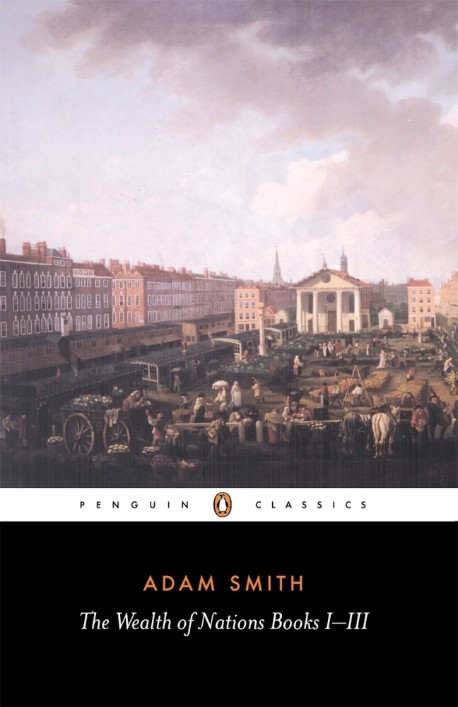
Why Read This
Adam Smith constructs an analytical framework that weaves together production, exchange, prices, distribution, and growth within a commercial economy. He examines each link in detail and demonstrates how they all feed back into one another.
This book offers a systemic perspective. Smith depicts the economy as an imaginary machine that connects real-world movements in everyday life. That analytical apparatus helps us see causes and effects that usually remain hidden.
Smith's ambition is integrative. Economic analysis sits alongside moral philosophy, theories of social development, and political institutions. This broad perspective compels readers to understand economics as part of a larger social ecosystem.
This text is essential for anyone seeking to grasp the foundations of modern economics. Two and a half centuries have passed, yet its core arguments still underpin discussions in policy, business, and social science.
Key Points
-
Division of Labor Multiplies Output 4,800-Fold - Smith's pin factory breaks production into 18 distinct steps. One generalist worker completes just one pin per day. Ten specialized workers produce 48,000 pins, equivalent to 4,800 per person.
-
Natural Price Acts as the Market's Gravitational Center - Market prices fluctuate with supply and demand. Deviations from natural price trigger flows of capital and labor that pull prices back toward equilibrium.
-
Labor Serves as the Consistent Measure of Value - Value is measured by the amount of labor a good can command. Labor embodies the sacrifice of comfort and freedom, making it a reliable standard across time.
-
Capital Accumulation Drives Compound Growth - Savings invested in productive workers raise annual output. These additional returns fuel subsequent savings, triggering compound growth.
-
The Invisible Hand Coordinates Self-Interest - Individuals pursue their own advantage. Their interactions create spontaneous order that allocates resources and shapes social norms without central command.
-
Feudal-to-Capitalist Transition Happened Without Grand Design - Landowners traded follower loyalty for luxury goods. In doing so, they inadvertently weakened their own power base and cleared space for market order.
Division of Labor as the Source of Wealth
Division of labor stands as the primary driver of productivity gains and wealth creation. Breaking production into simple steps lets each worker focus on a single task and perfect their speed and accuracy.
Specialization also creates space for innovation. Highly simplified operations make it easier for workers and inventors to spot automation opportunities, spurring the development of new tools.
Three Mechanisms of Productivity Improvement
- Specialization hones skills as workers repeat identical movements throughout the day, driving productivity upward.
- Task switching diminishes, eliminating time wasted preparing tools and refocusing attention.
- Simplified operations enable inventors to design machines that accelerate specific production steps.
Empirical Evidence: Pin Manufacturing
Smith documents 18 distinct operations in a pin factory. A worker handling every step from start to finish can produce only one pin daily. When ten workers divide the tasks, they assemble 48,000 pins each day, multiplying per-person productivity thousands of times.
This data reveals how division of labor leverages tacit knowledge. Each worker masters micro-techniques that are difficult to codify, allowing the team to outpace generalists dramatically.
Constraint: Market Size
Specialization requires a sufficiently large market to absorb the output. Remote locations can sustain only limited specialization because local demand is small. Expanding domestic and international markets extends the division-of-labor chain while enriching society.
Theory of Value: Labor as the True Measure
Smith treats labor as the fundamental unit of value because every good can ultimately be traced back to the human effort sacrificed to produce it. Labor represents real cost in terms of time, energy, and foregone leisure.
In simple societies, relative prices track the labor invested. In commercial economies, wages, profit, and rent also enter the equation. Yet labor remains the baseline benchmark that stabilizes value comparisons.
The Water-Diamond Paradox
The water-diamond paradox illustrates the gap between use value and exchange value. Water is essential for survival, yet its exchange value is low because it's abundant. Diamonds offer minimal everyday utility, but their scarcity demands substantial labor to obtain, hence their high exchange value.
Corn as a Practical Standard
Smith adopts corn as a practical yardstick because corn prices remain relatively stable across centuries. The long-run data he compiled shows that the cost of living can be estimated by how much corn a given wage can purchase.
Modern Relevance
Labor-based value theory paved the way for analyzing productivity, opportunity costs, and income distribution. Modern economists have refined this framework with concepts like marginal utility while retaining the insight that labor constitutes a fundamental cost.
Income Distribution: Wages, Profit, Rent
Smith divides income into three components: labor wages, capital-owner profit, and landowner rent. Each has distinct bargaining dynamics and risk profiles.
Wages: Asymmetric Bargaining
Wage determination typically favors employers because they can suspend operations longer than workers who depend on daily pay. Smith emphasizes that societies cannot thrive if most workers subsist at the edge of survival.
Profit: Returns on Risk and Capital
Profit emerges because capital owners bear the risk of asset loss and handle operational management. When capital is scarce and investment opportunities abound, profit runs high. As capital proliferates within a sector, normal profit rates decline toward the sum of minimum interest plus risk premium.
Rent: Effortless Surplus
Rent stems from land scarcity and fertility. Owners need not labor for income to flow. High food prices boost rent; rent does not drive food prices.
Qualitative Variation in Occupations
Wage and profit levels vary with job characteristics. Professions demanding lengthy education, bearing high uncertainty, or carrying social stigma command greater compensation. Prestigious occupations often reward practitioners partly through status, allowing lower cash payments.
Natural Price and Market Price
Smith distinguishes natural price, the sum sufficient to cover normal wages, normal profit, and normal rent, from market price, the actual rate determined by supply-and-demand interactions.
Self-Balancing Mechanism
When market price exceeds natural price, producers earn above-normal profits, attracting new capital. Increased supply gradually pushes prices back toward the natural level. If prices fall below natural, businesses exit, supply contracts, and prices rebound.
Barriers to Equilibrium
Smith identifies various forces that impede this balancing act. Monopolies, corporate privileges, protracted apprenticeship rules, and trade secrets constrict competition. These barriers keep prices elevated and funnel economic rents to protected groups.
The Invisible Hand in Price Discovery
The drift toward natural price demonstrates the invisible hand at work. Individuals chase private gain, yet their interactions steer resources toward their most valued uses without centralized direction. This analysis forms the bedrock of free-market arguments advocating the removal of artificial barriers.
Capital Accumulation and Economic Growth
Economic growth springs from capital accumulation fueled by net savings. Resources not consumed go toward maintaining productive workers, thereby expanding production capacity.
Two Paths to Higher Output
Output rises either by adding more productive workers or by enhancing the capabilities of existing workers. Both routes demand additional capital, making savings the essential prerequisite.
Evidence from Diverse Economies
Smith contrasts North American colonies, whose populations doubled every 20-25 years as capital flowed into agriculture, with China, which exemplified a stationary state: dense population, subsistence wages, low growth. Bengal illustrated decline as capital vanished and famine took hold.
The Psychology of Accumulation
The saving impulse ties to human desires for visibility and respect. Merchants, accustomed to seeing money return with profit, tend toward frugality. Landowners living off rent often spend lavishly because income arrives without effort.
Investment Hierarchy
Smith ranks investment types: agriculture tops the list because nature assists workers; manufacturing follows because it employs substantial labor; domestic trade doubles the capital of both parties; foreign trade replaces one domestic capital stock; international shipping merely replaces foreign capital. Mercantilist policies frequently invert this natural sequence, slowing Europe's growth below its potential.
Historical Transformation: From Feudalism to Capitalism
Trade and manufacturing gradually eroded feudalism's foundations. This transformation unfolded through the consumption choices of landed elites, far removed from any grand design.
Feudal Conditions
In agrarian societies, landlords maintained power via thousands of dependents who relied on the harvest. Goods circulated sparsely, and political control rested on patronage networks.
Transformation Mechanism
When imported luxuries arrived, landlords swapped agricultural surpluses for status symbols. They released peasants from military duties so these workers could produce more marketable commodities.
Transformation Outcomes
Emerging trade networks granted economic autonomy to towns and peasants. Political authority concentrated in national states and merchant classes capable of organizing capital.
The Irony of Transformation
Nobles savored short-term luxuries while slowly forfeiting authority over their followers. Conspicuous consumption intended to showcase status inadvertently paved the way for capitalist order.
Practical Applications
Smith's concepts equip modern professionals to evaluate organizations, careers, and personal decisions. His principles translate into actionable practices.
For Business and Career
Companies can map micro-level workflows and automate repetitive steps. Managers must calibrate incentives so division of labor doesn't erode motivation. Investors analyze capital flows through Smith's lens: savings ignite growth.
For Personal Life
Professionals can structure deep learning around specialization principles, accelerating expertise development. Directing savings toward productive assets strengthens financial resilience. Recognizing status-seeking impulses helps curb conspicuous consumption.
For Decision-Making
The natural-price versus market-price framework offers a method to judge whether an opportunity lies above or below fair value. Division-of-labor principles clarify when to perform tasks yourself versus when to delegate. Market-barrier analysis cautions against dependence on monopoly suppliers.
FAQ
Q: What is Adam Smith's primary contribution to modern economics? A: He unified theories of division of labor, pricing, income distribution, and growth into a single coherent analytical system, the foundation of classical economics.
Q: What is the invisible hand in The Wealth of Nations? A: The invisible hand is a metaphor for the spontaneous order that arises when individuals pursue self-interest, inadvertently producing coordinated social outcomes.
Q: Why does division of labor boost productivity? A: Specialization cuts transition time, sharpens micro-skills, and spurs tool creation. These factors combine to multiply output per worker dramatically.
Q: What distinguishes natural price from market price? A: Natural price covers normal wages, profit, and rent. Market price reflects actual supply-demand dynamics. Market forces tend to pull prices back toward the natural level.
Q: Did Smith advocate laissez-faire without any regulation? A: Smith championed open markets but acknowledged state roles in providing infrastructure, basic education, and law enforcement to ensure healthy competition.
Q: How did the feudal-to-capitalist shift occur? A: Trade and manufacturing created new income sources for cities and merchants. Landlords chasing luxury goods loosened control over followers, causing feudal structures to collapse gradually.
Q: Why does Smith use labor as a value measure? A: Labor demands similar sacrifice across places and times, making it a stable benchmark. This measure clarifies shifts in relative prices.
Q: What links capital accumulation to economic growth? A: Savings invested in productive workers boost output, generating higher incomes that enable further savings in subsequent periods.
Q: Why does profit tend to decline as capital accumulates? A: Abundant capital intensifies competition, eroding extraordinary profits. Profit rates settle near the minimum covering interest plus risk premium.
Q: Is Smith's theory still relevant today? A: Insights on division of labor, price mechanisms, and spontaneous order remain central to policy analysis, business strategy, and modern social science.
Further Reading
Related Resources
Economics and Business Books:
- Principles by Ray Dalio - A systematic guide to decision-making and organizational management that complements Smith's ideas on decentralized coordination.
- How to Become a Straight-A Student by Cal Newport - Demonstrates division of labor and specialization applied to intensive learning.
External Sources:
- The Wealth of Nations at Stanford Encyclopedia of Philosophy - Philosophical overview situating Smith within the Scottish moral tradition.
- Adam Smith Institute - Research hub applying Smith's principles to contemporary economic policy.
- Liberty Fund Edition - Full online version with annotations and cross-references for deep study.
Topics for Deeper Exploration
Classical Economics: Smith laid the groundwork for David Ricardo, Thomas Malthus, and John Stuart Mill. Each developed theories of trade, population, and utilitarianism that extended Smith's initial framework.
Invisible Hand and Complexity Theory: The invisible hand concept aligns with modern complexity science. Friedrich Hayek's work on spontaneous social order, Herbert Simon on bounded rationality, and Elinor Ostrom on common-pool resource governance all build on this idea.
Marxist Critique: Karl Marx constructed Das Kapital as a critique of Smith and Ricardo. He retained the labor theory of value, recasting it as a tool for analyzing exploitation and capital accumulation.
Critical Assessment
Strengths
- Systematic framework mapping the interlinkages among production, exchange, distribution, and growth.
- Empirical grounding in price data, demographics, and cross-country case studies.
- The invisible hand concept explaining how social order emerges from individual actions.
- Integration of economics with moral philosophy and historical context, yielding a holistic analysis.
Limitations
- Labor theory of value struggles to explain high-value scarce goods; marginal utility theory later addressed this gap.
- Assumption that savings are always productively absorbed overlooks aggregate-demand crises Keynes highlighted.
- Faith in perfect competition underestimates market power and network effects.
- Scant treatment of negative externalities and public goods requiring collective action.
Conclusion
The Wealth of Nations endures as a foundational text despite modern revisions to its technical details. Its analysis of division of labor, price mechanisms, income distribution, and capital accumulation provides a robust platform for economics. Smith's integrative approach reminds us that economics intertwines with ethics, history, and social institutions.
Rating: 4.5/5 - A timeless classic offering guidance for policymakers, business leaders, and researchers seeking to understand capitalism's dynamics.